Organisers serving mixed drink preferences
Keep a plainly labelled decaf option alongside other drinks. A jar of instant coffee can be prepared with hot water, while milk and sweetener can be offered separately.


For recurring work meetings, start by considering a plain decaf instant coffee in a 190g–200g jar; a smaller pack makes more sense if the group wants to try a new flavour first. Serve milk and sweetener separately so attendees can make their own cups, keep the packaging available for ingredient checks, and label the coffee as decaf rather than caffeine-free.
The useful pack size and coffee format depend on how often meetings run and how much choice attendees need.
Keep a plainly labelled decaf option alongside other drinks. A jar of instant coffee can be prepared with hot water, while milk and sweetener can be offered separately.
Compare jar sizes and the preparation guidance for each coffee when planning how much to keep in the cupboard. Attendees may use different amounts per mug.
Make the decaf option easy to identify without describing it as caffeine-free. Attendees who need to avoid caffeine entirely should be able to check the product information for themselves.
Choose a decaf format that fits the meeting service, then compare pack sizes, stated flavour profiles and the information attendees will need at the table.
| Priority | What to check | Your needs |
|---|---|---|
| Decaf identification | Check that the exact jar says decaffeinated instant or soluble coffee. Do not interpret decaf as a zero-caffeine statement. | I want attendees who prefer to limit caffeine to recognise the decaf option without being given a caffeine-free assurance. |
| Meeting preparation | Read the jar’s coffee-to-water directions and arrange hot water accordingly. A Tesco listing for NESCAFÉ Original Decaf 190g gives one teaspoon (1.8g) with 200ml hot water per mug; use the directions on other products rather than transferring that measure. | Several people may make coffee during a short break, so I need a straightforward way for them to prepare their own cups. |
| Pack size | Compare the stated weight and any serving guidance for the exact product. Sainsbury’s lists 55 servings for its 200g Gold Roast decaf jar, but the number of mugs used in a meeting will depend on how people prepare them. | For regular meetings, I would rather plan cupboard stock around expected use; for a new flavour, a smaller jar may be enough for a trial. |
| Flavour and format | Treat flavour descriptions as a starting point, not a group verdict. Kenco describes its Decaf as intensity 7; its Millicano Decaff combines decaffeinated instant coffee with finely milled whole beans. | My group has different tastes, so I would try an unfamiliar coffee before making it the only decaf offered. |
| Ingredients and additions | Keep the coffee packaging and the labels for any milk, creamers or toppings available. GOV.UK guidance recommends retaining packaging so people can check information relevant to food hypersensitivities. | Anyone checking ingredients should be able to identify both the coffee and what has been added to their cup. |
That description could mislead someone who needs to avoid caffeine entirely. NESCAFÉ says its Original Decaf has most of the caffeine removed, not that none remains.
Label the coffee decaf, retain its packaging and leave individual caffeine decisions to attendees and their own advisers.
Terms such as bold, smooth and aromatic describe a product’s intended profile; they do not establish what a mixed meeting group will prefer.
Try a smaller pack with the group, or offer the new coffee alongside a familiar option before changing meeting stock.
Milk, creamers and toppings bring their own ingredient information, while shared serving equipment may need attention under the organisation’s food procedures.
Keep the original packs accessible, identify additions separately and follow the procedures that apply to the way refreshments are served.
These brand and retailer ranges offer different pack sizes or coffee formats; their flavour descriptions are not a substitute for trying a coffee with the people who will drink it.
Original Decaf is a plain instant-coffee option, while Gold Blend Decaf provides another stated flavour style for a shared cupboard.
Kenco’s standard Decaf and Millicano Decaff give organisers a choice between standard instant coffee and a blend containing finely milled whole beans.
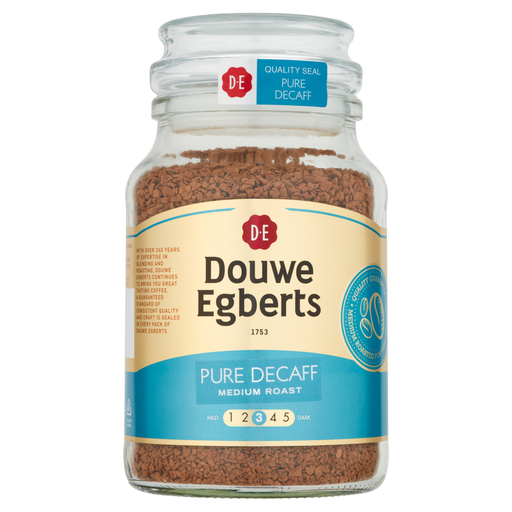
Pure Decaf is a 190g freeze-dried option for organisers considering a medium-roast coffee.
Tesco Decaff Gold provides a 200g own-label freeze-dried option for repeated meeting service.
Gold Roast is a 200g own-label decaffeinated instant coffee to consider for an office cupboard.
The 100g decaffeinated instant coffee offers a smaller pack to consider for an occasional meeting or flavour trial.
These selections include decaf instant-coffee jars for shared meeting service and smaller packs to consider for a trial. The Azera tin is an Americano-style decaf option rather than a plain soluble-only coffee.
 No image available
The 190g jar is a decaf option to consider for a shared meeting cupboard.
Sainsbury’s describes the matching Pure Decaf coffee as freeze-dried and strength 3. Check the jar’s preparation directions for the hot-water service you plan to provide.
 No image available
This 190g decaf coffee is an option for meetings where attendees can prepare individual cups.
Its product description calls the flavour smooth and full-bodied; try it with the group if that flavour choice will determine what you keep in the cupboard.
 No image available
The 300g pack is worth considering when meetings recur and a larger jar is useful for cupboard stock.
This is decaffeinated soluble coffee. NESCAFÉ says most caffeine is removed from Original Decaf; do not serve it as a caffeine-free drink.
 No image available
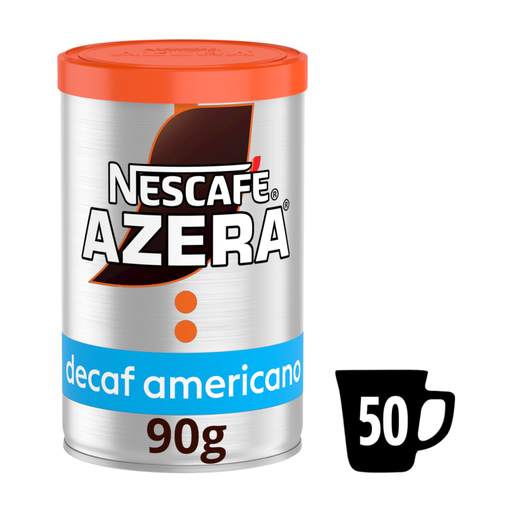
The 90g tin offers a smaller decaf Americano-style option for a meeting-group trial.
It combines decaffeinated soluble coffee with decaffeinated roast-and-ground coffee, so check the ingredients if you want a soluble-only product. Plan cupboard stock using the directions on the tin.
 No image available
The 100g jar is a smaller decaf instant-coffee option to try with a meeting group.
Kenco describes its standard Decaf as intensity 7. If it becomes a regular meeting coffee, use the jar’s preparation directions and the group’s actual usage to plan restocking.
No. Decaf should not be presented as a guarantee of zero caffeine: NESCAFÉ says most caffeine is removed from its Original Decaf. Anyone who needs to avoid caffeine entirely should check the product information and follow their own professional advice.
Start with the directions on the exact jar rather than applying one product’s measure to every coffee. Tesco’s listing for NESCAFÉ Original Decaf 190g gives one teaspoon (1.8g) with 200ml hot water per mug; attendees may prefer a different strength.
For a meeting with different preferences, plain decaf coffee with milk and sweetener offered separately lets attendees prepare their own cups. Keep the packaging for the coffee and additions available so people can check ingredients and allergen information.