Morning-break coffee drinkers reducing caffeine
If you want an instant coffee during a short break, decaf lets you compare familiar coffee formats and stated flavours while reducing caffeine. It does not guarantee a caffeine-free cup.


For a quick morning cup, choose a decaf instant coffee by its stated flavour profile and coffee format: NESCAFÉ describes Original Decaf as full and bold, Kenco describes Decaf as balanced, and Tesco lists Douwe Egberts Pure Decaffeinated as aromatic. If you want roast-and-ground coffee in the mix, check a microground blend instead. Decaf can still contain traces of caffeine, so check the specific pack if you need to manage your intake closely.
If you want an instant coffee during a short break, decaf lets you compare familiar coffee formats and stated flavours while reducing caffeine. It does not guarantee a caffeine-free cup.
Product descriptions distinguish full and bold, balanced, and aromatic profiles. Use the stated roast, intensity and coffee format to narrow your choice, bearing in mind that these descriptions are not independent taste tests.
NESCAFÉ says decaf can retain small traces of caffeine. If pregnancy is relevant, NHS guidance sets a limit of 200mg of caffeine a day; remember to account for caffeine from other food and drinks too.
Start with the kind of cup you want, then check the coffee format, pack size and preparation instructions for the time you have.
| Priority | What to check | Your needs |
|---|---|---|
| Caffeine | Check that the pack says decaffeinated. If you need to manage caffeine closely, check product-specific information rather than assuming decaf means none. | I want less caffeine in my morning coffee, but need to account for any traces and for caffeine from elsewhere. |
| Flavour profile | Compare the maker’s or retailer’s roast, intensity and flavour descriptions. NESCAFÉ calls Original Decaf full and bold; Kenco describes Decaf as balanced with intensity 7; Tesco describes Douwe Egberts Pure Decaffeinated as aromatic. | A full-flavoured cup appeals to me, or I might prefer a product described as balanced or aromatic. I would use those descriptions as a starting point, not a taste guarantee. |
| Coffee format | Distinguish soluble or freeze-dried coffee from blends that also contain roast-and-ground coffee. The Kenco Millicano Decaff formulation listed by ASDA contains 85% decaffeinated instant coffee and 15% decaffeinated roast-and-ground coffee. | I want to know whether I am buying ordinary instant coffee or a blend containing ground coffee, rather than choosing on the word “decaf” alone. |
| Preparation | Read the current jar instructions for the amount of coffee and water temperature. Check the product page before relying on an older description. | My break is short, so I want preparation instructions that fit how I make a cup. |
| Pack and storage | Check the pack quantity and its storage directions. Choose a jar size you expect to use while keeping it as directed on the label. | A smaller pack suits occasional cups; for regular breaks, I may prefer a larger jar that I can store properly. |
NESCAFÉ says decaffeinated coffee can retain small traces of caffeine, which matters when you are keeping track of your total intake.
Check the specific product information and account for other caffeine sources rather than treating the word “decaf” as a zero-caffeine promise.
A stated bold profile, a freeze-dried coffee and a blend containing roast-and-ground coffee describe different choices; the decaf label alone does not tell you which style you will prefer.
Compare the pack’s format and flavour description before switching from a coffee you already know.
A product page may not reflect the pack you are about to use. The checked Joybuy page for Kenco Millicano Americano Decaff, for example, stated that that particular product was no longer available.
Check the current listing and physical label for availability, ingredients, preparation and storage instructions.
These descriptions concern the named decaf products, not every coffee made by each brand.
NESCAFÉ describes Original Decaf as full and bold and Gold Blend Decaf as smoother and balanced.
Kenco describes its standard Decaf as balanced and rounded, with an intensity rating of 7.
Tesco lists Pure Decaffeinated Instant Coffee as freeze-dried and describes its flavour as well-balanced and aromatic.
Tesco describes its 200g Decaffeinated Classic Coffee as mellow and smooth and says it uses Robusta and Arabica beans.
These NESCAFÉ and Kenco options include everyday decaf jars and an Americano-style instant coffee for a morning break. Compare their stated format and pack size with the kind of cup you want.
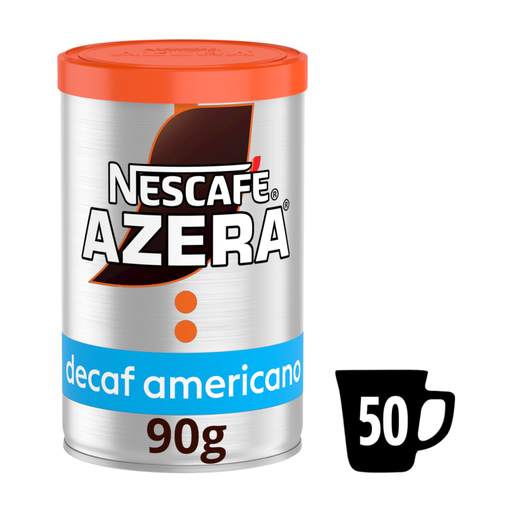 No image available
A 90g decaf Americano-style option if you prefer a smaller pack for morning breaks. Check the label for its coffee format and preparation instructions.
 No image available
A 300g jar for regular morning cups. The Joybuy product description identifies decaffeinated soluble coffee, while NESCAFÉ describes Original Decaf’s flavour as full and bold.
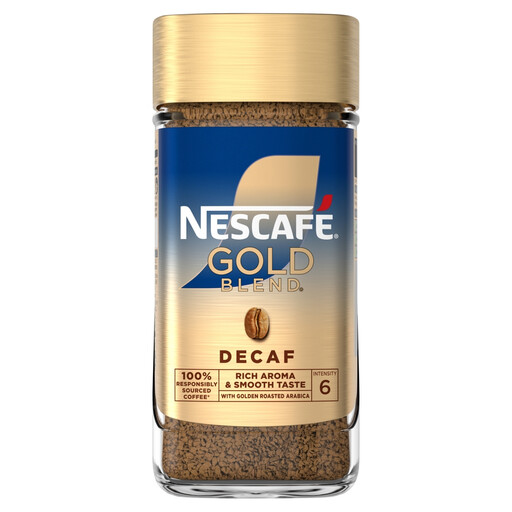 No image available
A 190g decaf jar to consider if NESCAFÉ’s stated smoother, balanced Gold Blend profile appeals to you. Check the current pack for preparation and caffeine information.
 No image available
A 100g decaf instant coffee for a straightforward morning cup. Kenco describes its Decaf profile as balanced and rounded, with an intensity rating of 7.
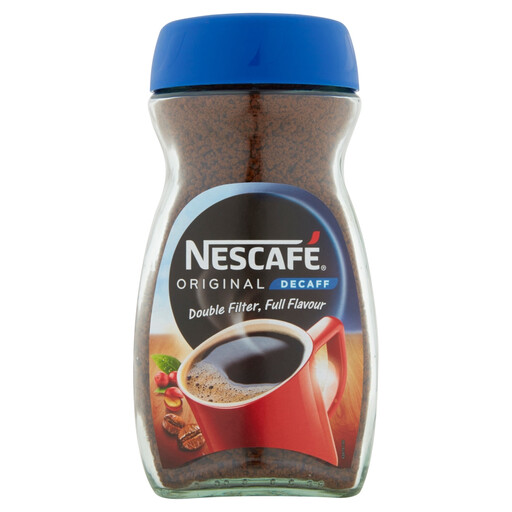 No image available
A 200g decaf option for regular morning cups. Check the label for this variant’s coffee format, preparation directions and caffeine information rather than assuming they match another NESCAFÉ jar.
Not necessarily. NESCAFÉ says decaffeinated coffee can retain small traces of caffeine, so check product-specific information if you need to keep close track of your intake.
Decaf can still contribute some caffeine. NHS guidance says not to have more than 200mg of caffeine a day during pregnancy, so include other food and drinks when considering your total and ask your maternity team for individual advice if needed.
Follow the instructions on your jar for the amount of coffee and water temperature. The listed preparation directions differ by product, so check the pack you actually use rather than assuming every decaf has the same recipe.
It includes roast-and-ground coffee as well as instant coffee. The Kenco Millicano Decaff formulation listed by ASDA contains 85% decaffeinated instant coffee and 15% decaffeinated roast-and-ground coffee; check the specific product’s current availability before choosing that format.
Follow its current label and replace the lid after use. Tesco’s Decaffeinated Classic listing calls for a cool, dark place, while the Kenco Decaf listing specifies dark, dry storage.