Pregnant parents reducing caffeine
Decaf instant coffee can replace a regular coffee in a familiar routine, but it does not make that routine caffeine-free. The NHS advises no more than 200mg of caffeine a day during pregnancy from all sources.


For a quick decaf coffee during a new-parent routine, choose a pack size you will use comfortably and a flavour description you want to try; a refill is practical if you already have a suitable jar. Decaf can still contain caffeine. NHS pregnancy guidance sets a 200mg daily limit from all sources, while NHS breastfeeding pages give differing figures, so account for other sources and seek individual advice when needed.
The reason for reducing caffeine matters as much as the coffee format: pregnancy and breastfeeding call for attention to caffeine from sources beyond the mug.
Decaf instant coffee can replace a regular coffee in a familiar routine, but it does not make that routine caffeine-free. The NHS advises no more than 200mg of caffeine a day during pregnancy from all sources.
Tea, chocolate, cola and energy drinks can contribute caffeine alongside coffee. NHS breastfeeding-and-diet guidance says no more than 200mg a day, while its Best Start in Life page says to try not to exceed 300mg. Ask a health professional for advice that fits your circumstances rather than assuming the two figures mean the same thing.
Instant decaf offers a hot-water preparation route without separate brewing equipment. A smaller jar may suit occasional use; a larger jar or refill may fit a household making it regularly, provided the coffee can be stored as directed.
Start with caffeine and preparation, then choose a flavour description and pack format that fit how often the household will use the coffee.
| Priority | What to check | Your needs |
|---|---|---|
| Caffeine | Check that the pack identifies decaffeinated coffee. Do not equate decaf with zero caffeine; consider caffeine from other drinks, foods and supplements too. | I want to reduce caffeine without overlooking what else I consume. The NHS advises no more than 200mg a day during pregnancy; its breastfeeding pages give differing figures, so individual advice may matter. |
| Preparation | Read the pack directions for the amount of coffee and water. Instant granules and soluble coffee offer a hot-water preparation route without a machine. | When time is interrupted, I want to make one mug without setting up brewing equipment. |
| Flavour | Compare the maker’s stated roast or blend description, such as Kenco’s medium roast or Carte Noire’s Arabica-rich description. Treat these as descriptions, not predictions of your own taste. | I would rather try a smaller pack before committing to a flavour I have not had before. |
| Pack format | Check the stated weight and storage directions. If choosing a refill, make sure you have a suitable container; Kenco offers a Decaf refill as well as a jar. | A larger jar might suit regular household use. For occasional mugs, I would choose a size I expect to finish while it still tastes as I want it to. |
Decaffeinated coffee can retain a small amount of caffeine, as Nescafé explains. This matters when monitoring total intake or following individual advice to avoid caffeine.
Use decaf as a way to reduce caffeine, not proof of a zero-caffeine drink. Check the product information and include other caffeine sources in your routine.
Words such as “balanced”, “aromatic” and “velvety” describe how a maker or retailer positions a coffee; they are not an independent taste result for your cup.
If the flavour is unfamiliar, consider a smaller available pack before moving to a larger jar or refill.
These references describe particular decaf lines and pack formats, not a taste ranking or a promise that every product is currently available.
Original Decaf and Gold Blend Decaf offer different named instant-coffee lines. Nescafé describes Original Decaf as coffee with most caffeine removed using water.
Kenco describes its Decaf instant coffee as a medium-roast blend and also offers a Decaf refill.
Pure Decaffeinated is a named instant-coffee option; the selected 190g product is described as freeze-dried.
Retailer information describes its Decaffeinated instant coffee as freeze-dried and Arabica-rich.
Sainsbury's lists own-label Gold Roast Decaffeinated and Rich Roast Decaffeinated instant coffee granules in 200g formats.
These instant decaf coffees include smaller jars or tins for trying a style and larger jars for a regular household routine. Choose by the stated format and product details rather than assuming that decaf means zero caffeine.
 No image available
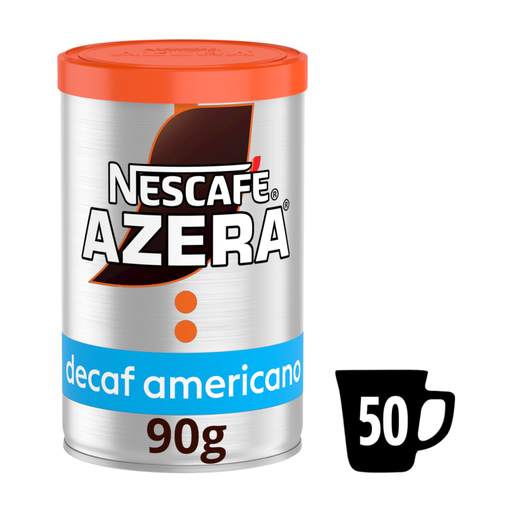
The 90g tin is a smaller format for trying an instant decaf Americano. Its product description lists soluble decaf coffee with 5% decaf roast and ground coffee; follow the pack directions for preparation.
 No image available
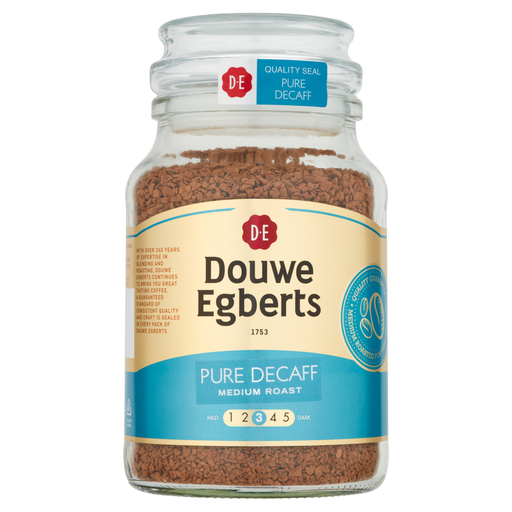
This 190g jar suits someone considering the brand’s stated aromatic profile. The product description identifies freeze-dried decaffeinated instant coffee; its wording does not establish a zero-caffeine serving, so check the pack if you need to track intake closely.
 No image available
The 300g jar is a format to consider when a household makes decaf regularly. Its listed ingredient is decaffeinated soluble coffee; check the pack when monitoring caffeine intake, as decaf does not necessarily mean none.
 No image available
This 190g jar offers the named Gold Blend Decaf style for a hot-water coffee routine. The product description identifies decaffeinated soluble coffee; its flavour wording is a product description, not an independent taste assessment.
 No image available
The 100g jar is a smaller option for a simple cupboard-based routine. Its product instructions describe using one to two teaspoons with hot water; follow the current pack directions and do not assume decaf contains no caffeine.
Decaf can help reduce caffeine compared with regular coffee, but it is not necessarily caffeine-free. The NHS advises no more than 200mg of caffeine a day during pregnancy from all sources, including other drinks, foods and some supplements. Follow advice from your midwife or clinician if you have individual restrictions.
NHS guidance gives differing figures: its breastfeeding-and-diet page recommends no more than 200mg a day, while its Best Start in Life page says to try not to exceed 300mg a day. Because the difference may matter to your feeding plan, consider caffeine from all sources and ask a GP, health visitor or breastfeeding professional for individual advice.
No. Nescafé explains that decaf coffee can retain a small amount of caffeine. The amount can vary with the product and serving, so check the specific pack rather than relying on the word “decaf” if precise intake matters.
Follow the directions for the coffee you buy. A Carte Noire retailer listing calls for one or two teaspoons per cup with hot water just off the boil, while Nescafé instructs one teaspoon of Gold Decaf with 200ml of hot water that need not be fully boiled. Check the pack for its preparation and storage instructions.