Older coffee drinkers cutting back on caffeine
Decaf keeps coffee in a familiar hot-drink routine while reducing caffeine. NESCAFÉ’s explanation of decaf notes that some caffeine remains, so it is not a choice to assume is caffeine-free.


Choose decaf instant coffee if an older person enjoys coffee but wants to reduce caffeine; decaf is not necessarily caffeine-free. NHS guidance says coffee counts towards fluid intake, but it should remain one drink within any individual fluid plan. Plain coffee is not a substitute for meals or nutrition support.
Decaf keeps coffee in a familiar hot-drink routine while reducing caffeine. NESCAFÉ’s explanation of decaf notes that some caffeine remains, so it is not a choice to assume is caffeine-free.
NHS Tayside advises that caffeine can worsen some bladder and bowel symptoms. If a clinician has suggested reducing caffeine, or regular coffee seems to aggravate symptoms, decaf is an option to discuss alongside individual advice.
An instant coffee can be prepared as part of a simple drinks routine. NHS guidance says coffee counts towards fluid intake, while NHS Somerset notes that some older people may have a reduced sense of thirst. Follow any individual fluid plan rather than relying on coffee alone.
Start with the reason for choosing decaf, then check whether the pack size and preparation suit the person’s everyday routine.
| Priority | What to check | Your needs |
|---|---|---|
| Caffeine | Look for a product labelled decaffeinated. Check with a clinician or pharmacist if complete caffeine avoidance is required; NESCAFÉ notes that decaf still contains some caffeine. | I want to keep a coffee routine while cutting back on caffeine, not assume that decaf means none at all. |
| Fluid intake | Consider the prepared drink as part of the day’s fluids: NHS guidance includes coffee in fluid intake. Follow any clinician-directed fluid plan. | It helps if a drink I enjoy fits into a regular drinks routine without replacing the rest of that plan. |
| Flavour and preparation | Use roast and intensity descriptions as preference cues, not taste guarantees. Read the serving directions and consider whether the person can prepare and handle a hot drink safely. | I am more likely to use a coffee whose flavour and preparation suit the person making and drinking it. |
| Nutrition | Check nutrition information for the drink as prepared, including anything added to it. NESCAFÉ lists its Gold Blend Decaf made with water at 2 kcal and 0.1g protein per mug. | If food intake is a concern, I need meals and any individual nutrition plan to remain separate from a plain coffee. |
| Jar size | Match the pack to how often decaf will be used. Check the current label and best-before information, particularly before choosing a larger jar. | A smaller jar makes sense while trying a flavour; a larger one is worth considering when the household drinks it regularly. |
NESCAFÉ notes that decaffeinated coffee retains some caffeine. That distinction matters when complete avoidance has been advised.
Read the label and ask the relevant clinician or pharmacist for individual advice if even residual caffeine is a concern.
NESCAFÉ lists a mug of Gold Blend Decaf prepared with water at 2 kcal and 0.1g protein. A plain serving should not replace food or an individual nutrition plan.
Keep coffee as a drink the person enjoys. Seek individual dietary advice if poor appetite or food intake is a concern.
A flavour the person does not enjoy may leave a large jar unused.
Consider a smaller pack first, then choose a larger format if decaf becomes a regular household drink.
An unfinished larger jar may create waste.
Pack sizes and stock can differ between sellers, so a familiar product name does not by itself identify the pack you intend to order.
Check the current product page for the exact pack, ingredients, stock and delivery details before ordering.
These examples describe particular decaf products and ranges; a brand name alone does not establish the ingredients or preparation of every variant.
Its UK decaf range includes Original Decaf and Gold Blend Decaf. NESCAFÉ describes Gold Blend Decaf as soluble coffee available in 95g and 190g formats.
Kenco describes its Decaf as a medium-roast instant coffee and gives it an intensity rating of 7; its range includes 95g and 190g jars.
Tesco describes Pure Decaffeinated Instant Coffee 190g as a freeze-dried decaf product; its medium-roast description may help with flavour selection.
Sainsbury’s describes Carte Noire Decaffeinated Instant Coffee 100g as a freeze-dried decaf option.
Its own-label Gold Roast Decaffeinated Instant Coffee Granules come in a 200g jar.
These decaf instant-coffee packs offer different jar sizes and named styles for an everyday coffee routine. Choose by the pack and preparation that suit the person; none should be treated as nutrition support or assumed to contain no caffeine.
 No image available
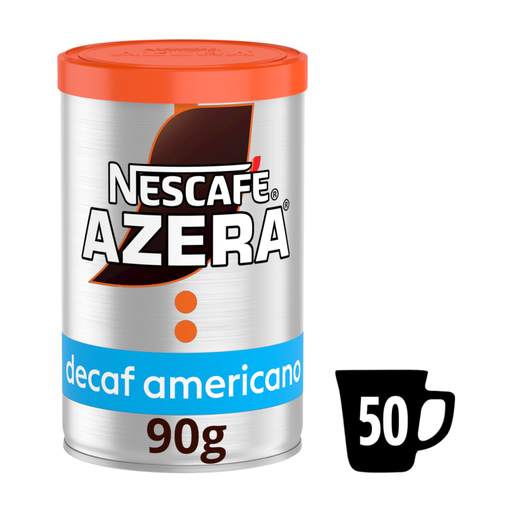
The 90g tin is a smaller format to consider if you want to try a decaf Americano. Check the pack’s serving directions, and do not assume decaf means caffeine-free.
 No image available
This 100g Kenco Decaff pack is an option when a smaller jar suits the coffee routine. Follow the pack directions when preparing a serving; the 100g pack is distinct from Kenco’s 190g decaf jar.
 No image available
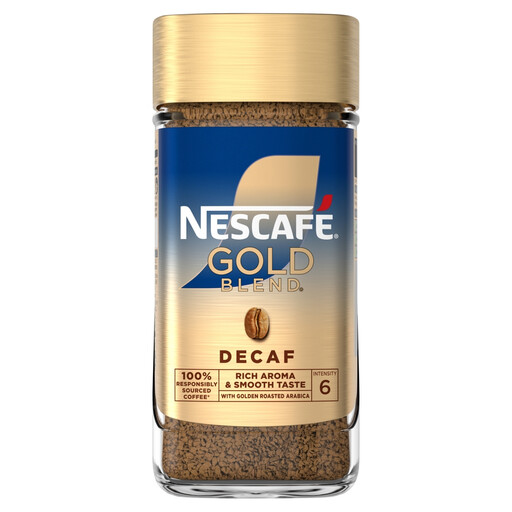
The 190g jar may suit a household that drinks decaf regularly. NESCAFÉ suggests one teaspoon with 200ml of hot water and lists 2 kcal and 0.1g protein per prepared mug; a plain serving is not a replacement for food.
 No image available
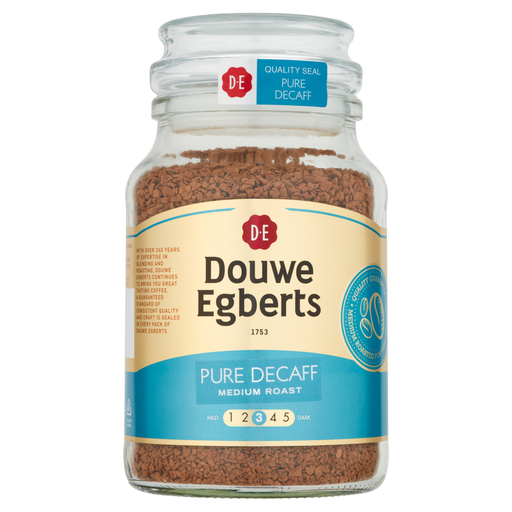
Consider this 190g jar if its size suits regular household use. Tesco describes the same named product as freeze-dried decaf; check the pack directions if a particular hot-drink preparation method matters to you.
 No image available
The 300g jar is worth considering where several people drink decaf or it is used regularly. Joybuy lists decaffeinated soluble coffee as its ingredient; check the current pack for serving directions.
No. NESCAFÉ explains that decaffeinated coffee still contains some caffeine. If complete avoidance is required, ask the relevant clinician or pharmacist rather than assuming a decaf product is suitable.
Yes. NHS guidance includes coffee among drinks that count towards daily fluid intake. It should still fit within any individual fluid plan, alongside other drinks.
No. NESCAFÉ lists a mug of Gold Blend Decaf prepared with water at 2 kcal and 0.1g protein. What is added to coffee changes the prepared drink, but a plain mug should not replace meals or an individual nutrition plan.
NHS Tayside advises that caffeine can worsen some bladder and bowel symptoms, so reducing it may be worth discussing if symptoms occur after regular coffee. Decaf is not a diagnosis or a substitute for assessment of new or worsening symptoms.