Older adults reducing afternoon caffeine
For someone who enjoys coffee after lunch but wants less caffeine, a clearly labelled decaf keeps the coffee routine without assuming the drink is caffeine-free.


For an older person’s afternoon coffee, choose clearly labelled decaf instant coffee if the aim is to reduce caffeine while keeping a familiar drink. University Hospitals of Leicester NHS Trust notes that decaf can still contain very low levels of caffeine. Choose a jar size that suits how often it will be used, and treat flavour descriptions as a starting point rather than a tasting guarantee.
For someone who enjoys coffee after lunch but wants less caffeine, a clearly labelled decaf keeps the coffee routine without assuming the drink is caffeine-free.
When making coffee for someone else, clear decaf labelling, straightforward preparation and a jar size suited to the household routine make the choice easier to repeat.
Decaf ranges offer different stated flavour directions, from bold to balanced or medium-roast. These descriptions come from brands and retailers, not a common taste test.
Start with the decaf label and any individual caffeine restriction, then consider flavour, preparation and how quickly the jar will be used.
| Priority | What to check | Your needs |
|---|---|---|
| Caffeine | Check that the exact product is labelled decaffeinated. University Hospitals of Leicester NHS Trust says decaf can still contain very low caffeine levels; confirm an appropriate drink with a clinician or pharmacist if caffeine must be strictly avoided. | I want an afternoon coffee with less caffeine, rather than a drink I can assume contains none. |
| Flavour | Use product descriptions to shortlist a direction: Nescafé describes Original Decaf as bold, Tesco lists Kenco Decaf as balanced with intensity 7, and Douwe Egberts Pure Decaf as medium-roasted with strength 3. The ratings are not a shared scale. | A familiar coffee flavour matters to me, but I would rather try the stated style than assume a rating predicts how it will taste. |
| Preparation | Read the instructions on the chosen jar for the amount of coffee and water. Sainsbury’s listing for Carte Noire Decaffeinated 100g, for example, specifies one or two teaspoons per cup and water just off the boil. | If I make coffee for someone else, I want a method that is easy to follow and adjust to their preferred strength. |
| Jar size | Compare the stated pack weights and consider how often coffee will be made. Check the best-before date and storage instructions on the jar. | For an occasional afternoon cup, I may prefer a smaller jar; a household serving coffee regularly may find a larger one more practical. |
University Hospitals of Leicester NHS Trust says decaf tea or coffee can still contain very low caffeine levels. That distinction matters if someone has been told to avoid caffeine altogether.
Read decaffeinated as reduced caffeine, not caffeine-free, and check individual restrictions with the relevant clinician or pharmacist.
Bladder or sleep concerns have individual causes; a choice of coffee should not stand in for an assessment of new or persistent symptoms.
Keep the drink choice separate from questions about symptoms, and seek professional advice when those symptoms are troubling.
Words such as bold, balanced and medium-roast describe particular products, but do not establish how one person will experience their flavour.
Use the description to narrow the choice and consider a smaller jar when the drinker’s preference is uncertain.
These are references for particular decaf products, not judgements about every coffee made by each brand.
Nescafé Original Decaf is described by Nescafé as a bold instant coffee made from beans decaffeinated using water.
Tesco lists Kenco Decaf 190g as instant coffee with a balanced, rounded flavour and an intensity rating of 7.
Tesco describes Pure Decaffeinated Instant Coffee 190g as freeze-dried, medium-roasted coffee with strength 3.
Sainsbury’s describes Carte Noire Decaffeinated Instant Coffee in a 100g jar as rich and smooth.
Tesco lists a 200g Decaffeinated Classic Coffee in its own-label instant range.
Sainsbury’s lists Rich Roast Instant Coffee Granules, Decaffeinated, in a 200g pack.
These instant decaf coffees offer different jar sizes and stated flavour styles for an afternoon coffee routine. For a drink served hot, check the preparation directions on the exact pack.
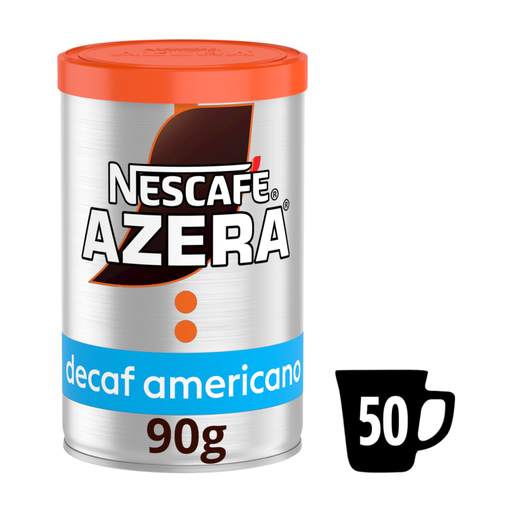 No image available
A 90g decaf instant Americano option for an afternoon cup. Check the tin’s serving directions for the preferred strength.
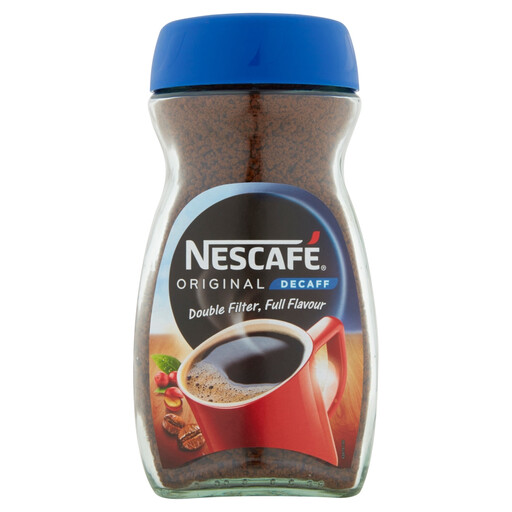
 No image available
A 300g jar of decaffeinated soluble coffee for a household making regular afternoon cups. Nescafé describes Original Decaf’s flavour as bold; check the jar for serving directions.
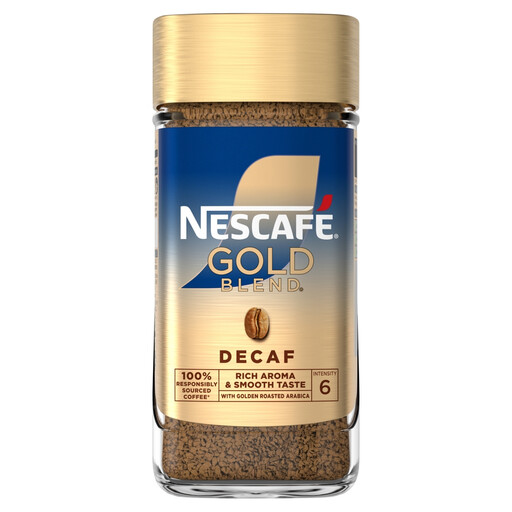 No image available
A 190g decaf coffee jar to consider when that pack size suits the afternoon routine. Follow the jar’s directions when making a cup.
 No image available
A 200g decaf coffee jar for a regular afternoon serving. Check the label for the amount to use per cup and storage instructions.
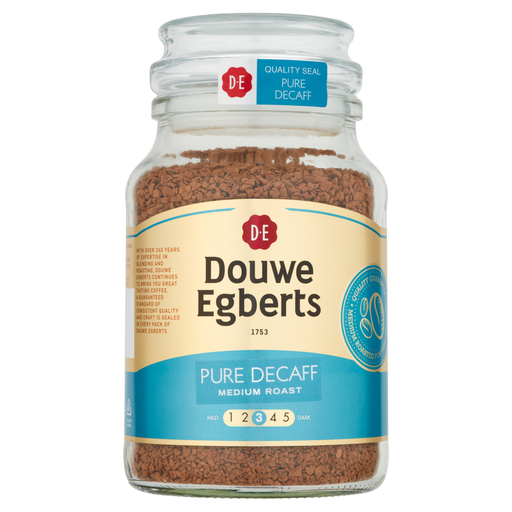 No image available
A 190g decaf instant coffee listed by Tesco as medium-roasted with strength 3. Check the pack’s directions before choosing it for a hot afternoon cup, as the Joybuy product description emphasises chilled serving.
No. University Hospitals of Leicester NHS Trust says decaf tea or coffee can still contain very low caffeine levels. Choose it to reduce caffeine, not as proof that a drink contains none.
Follow the directions on the particular jar. For example, Sainsbury’s listing for Carte Noire Decaffeinated 100g specifies one or two teaspoons per cup with water just off the boil; the preferred flavour strength may call for an adjustment within those directions.
A larger jar may suit a household making coffee frequently, while a smaller one may suit occasional cups or an unfamiliar flavour. Consider how quickly it will be used, and check the best-before date and storage instructions.