Households choosing to reduce caffeine
Decaf lets someone keep an instant-coffee routine while choosing a lower-caffeine drink. It still contains some caffeine, a distinction NESCAFÉ makes in its UK decaf guidance.


Start with an instant coffee clearly labelled decaffeinated, then choose a jar size and flavour profile that suit the person drinking it. NESCAFÉ describes its Original Decaf as water-decaffeinated and bold, while Kenco describes its Decaf as smooth and balanced; those flavour descriptions are the brands’ own. Decaf is not caffeine-free, so someone who needs to avoid caffeine completely should seek individual clinical advice rather than rely on the word “decaf”.
Decaf lets someone keep an instant-coffee routine while choosing a lower-caffeine drink. It still contains some caffeine, a distinction NESCAFÉ makes in its UK decaf guidance.
If a person’s symptoms or care plan call for a change in caffeine intake, their own advice and preferences matter more than their age. Northumbria Healthcare NHS Foundation Trust’s decaf initiative continued to offer caffeinated drinks on request.
Pack size, preparation instructions and the ability to find the same coffee again can matter when several people share a jar. A smaller pack may also be useful when trying an unfamiliar flavour.
Check the decaf label first, then match the flavour, pack and preparation directions to the household’s usual routine.
| Priority | What to check | Your needs |
|---|---|---|
| Caffeine | Look for “decaffeinated” or “decaf” on the product. Do not read it as a promise of zero caffeine; check individual advice if complete avoidance matters. | I want to keep drinking coffee while reducing caffeine, but I need to know whether even a small amount matters to me. |
| Flavour | Compare the brand’s stated roast and flavour description with the drinker’s preference. Kenco calls its Decaf medium-roasted and smooth; NESCAFÉ describes Original Decaf as bold. | A familiar-tasting cup matters if this coffee will replace my usual instant drink. |
| Pack size | Check the weight, storage directions and best-before date. Consider a smaller jar before committing to a larger one if the flavour is unfamiliar. | I would rather try a manageable pack before making decaf the household’s regular coffee. |
| Preparation | Read the directions on the particular jar. The Sainsbury’s listing for NESCAFÉ Original Decaf gives one teaspoon (1.8g) with 200ml hot water; its Carte Noire listing gives one or two teaspoons per cup. | I want a cup I can make to the drinker’s preferred strength without assuming every jar uses the same amount. |
| Personal choice | Keep the drinker’s preferences and any individual clinical advice in view. Evidence from Northumbria Healthcare NHS Foundation Trust’s care-setting initiative does not establish that everyone of retirement age needs to switch. | Someone in my household may prefer decaf, while someone else may still choose a caffeinated drink. |
NESCAFÉ’s UK guidance says decaffeinated coffee still contains some caffeine. That distinction matters particularly when someone has been advised to avoid caffeine completely.
Choose a clearly labelled decaf product, and seek individual clinical advice if complete caffeine avoidance is necessary.
Age alone does not establish an individual need to stop drinking caffeinated coffee. Northumbria Healthcare NHS Foundation Trust kept caffeinated drinks available on request in its decaf initiative.
Ask what the person prefers and take account of any advice specific to them.
A brand’s flavour description cannot tell you whether a particular drinker will enjoy the cup they make at home.
Consider a smaller pack for a first switch, follow its preparation directions and check the storage instructions after opening.
These brand references describe particular decaf products and ranges, not a judgement about every coffee each brand makes.
Its UK range includes Original Decaf and Gold Blend Decaf instant coffee.
Kenco lists its Decaf instant coffee in 95g and 190g jars.
Sainsbury’s lists Douwe Egberts Pure Decaf Instant Coffee in a 190g pack.
Sainsbury’s describes its 100g decaffeinated instant coffee as freeze-dried.
Tesco lists Decaff Gold freeze-dried instant coffee in a 200g jar and a 150g refill format.
Its Gold Roast Decaffeinated Instant Coffee Granules come in a 200g jar and are described as freeze-dried.
These instant-coffee options cover several decaf jar sizes and styles for a household choosing its everyday coffee. Compare each product’s label and preparation directions with the drinker’s preferences.
 No image available
A 100g decaf instant-coffee jar to consider when trying a smaller pack. Kenco describes its Decaf range as smooth and balanced; follow the directions on this jar when preparing a cup.
 No image available
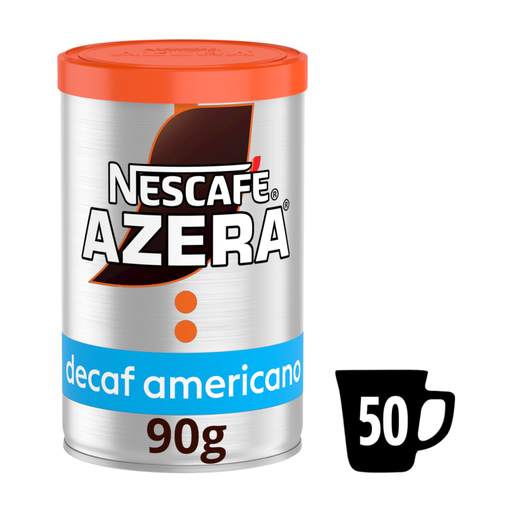
The 90g Azera Decaf Americano is an option for someone specifically looking for an instant Americano-style coffee. Check the pack’s ingredients and cup directions if that style is new to the household.
 No image available
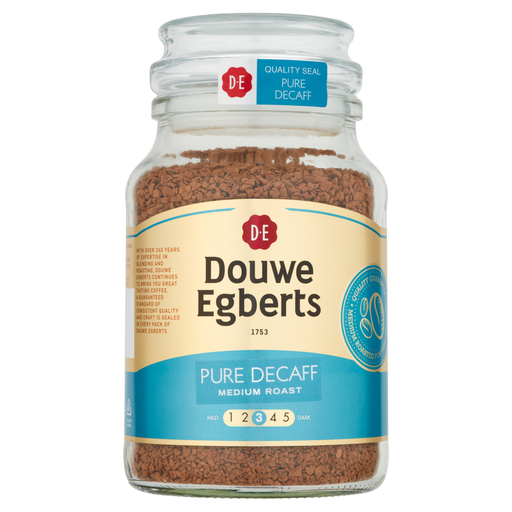
This 190g decaffeinated instant coffee suits a shopper considering a larger named-brand jar. Check its pack for the preparation directions you need, particularly if you usually make a hot cup.
 No image available
The 300g jar is worth considering when Original Decaf is already a household preference. NESCAFÉ says it uses only water to decaffeinate Original Decaf and describes its flavour as bold; neither statement makes it caffeine-free.
 No image available
This 190g Gold Blend Decaf jar provides a different NESCAFÉ range option from Original Decaf. NESCAFÉ describes Gold Blend Decaf as freeze-dried and decaffeinated using only water; choose between the ranges according to the drinker’s flavour preference.
No. NESCAFÉ’s UK guidance says decaffeinated coffee still contains some caffeine. If someone must avoid caffeine completely, seek individual clinical advice rather than assuming a decaf-labelled jar meets that need.
No. Choose according to the individual’s preferences and any advice specific to them, not retirement age alone. Northumbria Healthcare NHS Foundation Trust’s decaf initiative continued to provide caffeinated drinks on request.
Follow the directions for the particular coffee and adjust to the drinker’s preferred strength. The Sainsbury’s listing for NESCAFÉ Original Decaf gives one teaspoon (1.8g) with 200ml hot water, while its Carte Noire listing suggests one or two teaspoons per cup.
Confirm that the coffee is labelled decaffeinated, then read its ingredients, net weight, date marking and storage and preparation directions. UK government food-labelling guidance identifies the food name, ingredients, quantity and date marking among the information required on prepacked foods; use the current pack for details of the coffee you are buying.