Evening coffee drinkers reducing caffeine
A decaf jar lets you keep an after-dinner coffee routine with less caffeine than regular coffee. It still contains some caffeine, so it does not meet a strict caffeine-free requirement.


For a familiar after-dinner cup, start with a classic decaf instant coffee such as Nescafé Original Decaf or Kenco Decaf. If cup style matters more, Nescafé AZERA offers an Americano-style option, while Kenco Millicano Decaff combines instant coffee with finely milled beans; none of these decaf choices is a caffeine-free guarantee.
Decaf suits an after-dinner coffee when the aim is to reduce caffeine while keeping the convenience of an instant cup; the preferred jar depends on how you drink it.
A decaf jar lets you keep an after-dinner coffee routine with less caffeine than regular coffee. It still contains some caffeine, so it does not meet a strict caffeine-free requirement.
If the jar will serve both black coffees and coffees with milk, compare the stated cup style and pack size with how your household will use it.
If a standard instant coffee is not the style you want after dinner, consider an Americano-style decaf or a blend of instant coffee and finely milled beans. These descriptions are useful selection cues, not independent taste-test results.
Decide how much caffeine reduction matters first, then compare the stated cup style, pack size and current label.
| Priority | What to check | Your needs |
|---|---|---|
| Caffeine | Confirm that the coffee is decaffeinated. Do not read “decaf” as “caffeine-free”; check product information if you need a specific caffeine limit. | I want an after-dinner coffee with less caffeine than a regular cup. If I must avoid caffeine entirely, a decaf label alone will not settle the choice. |
| Cup style | Compare descriptions of roast and format. Kenco describes its standard Decaf as balanced; Nescafé describes AZERA as an intense Americano-style coffee, and Kenco Millicano Decaff contains instant coffee and finely milled beans. | For a familiar everyday cup, I would start with a classic jar. If I want a different stated style, I can compare the Americano-style and milled-bean formats without assuming their flavour will suit everyone. |
| Pack size | Check the weight on the exact jar and whether that size suits how often you make coffee. Check the best-before information on the pack. | A jar for regular household use may call for a different pack size from one I am trying for an occasional after-dinner cup. |
| Ingredients | Read the current ingredient list, allergen statement and any precautionary allergen wording, particularly when moving beyond plain soluble coffee to flavoured, milky or sachet products. | If ingredients or allergens affect my choice, I need to check the pack I will use rather than rely on an older online description. |
Decaffeination removes most caffeine, not all of it. Nescafé notes that decaf coffee can still contain caffeine.
Choose decaf when reducing caffeine is the aim. If you have a specific caffeine restriction, check the product information and seek advice appropriate to that restriction.
Classic soluble coffee, Nescafé AZERA's stated Americano style and Kenco Millicano's instant-and-milled-bean format are distinct product descriptions, not interchangeable taste guarantees.
Start with the format that matches the cup you want, then use the pack description to check the particular variant.
Ingredients and retailer availability can change, which matters when planning a dinner shop or checking allergens.
Read the current pack label for ingredients and allergen wording, and confirm availability when you shop.
These brand and retailer descriptions help distinguish decaf formats; they do not establish how any jar will taste to you or whether a particular product is currently in stock.
Its instant-decaf range includes Original Decaf, Gold Blend Decaf and AZERA Americano Decaf.
Kenco offers a standard Decaf instant coffee and Millicano Decaff, which blends instant coffee with finely milled whole beans.
Pure Decaffeinated is a freeze-dried instant coffee available in a 190g jar.
Tesco describes its 100g decaffeinated instant coffee as Arabica-rich, with a rich, velvety style.
Its own-label instant-decaf listings include Decaffeinated Classic Coffee and Decaff Gold Instant Coffee.
Its own-label decaf instant-coffee range includes Gold Roast and Rich Roast granules.
These options cover classic decaf jars, an Americano-style decaf and a freeze-dried alternative for an after-dinner cup. Compare the exact pack and product information for the style you want.
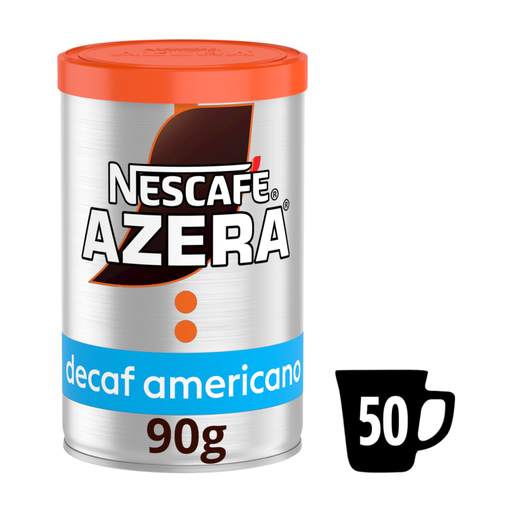 Image unavailable
Consider this decaf if you want the stated Americano-style cup after dinner. The 90g product description lists soluble coffee and 5% decaffeinated roast and ground coffee; its crema and flavour descriptions are product claims, not taste-test findings. It still contains some caffeine.
 Image unavailable
This 300g jar is a straightforward soluble-coffee option for a routine after-dinner cup. Joybuy lists decaffeinated soluble coffee as its ingredient, while Nescafé says Original Decaf is decaffeinated using water. Decaf reduces caffeine but does not eliminate it.
 Image unavailable
This 100g instant coffee suits a shopper looking for a classic decaf format in a smaller stated pack. Joybuy lists its ingredient as 100% decaffeinated instant coffee; Kenco describes its standard Decaf as balanced, with intensity 7. It is not caffeine-free.
 Image unavailable
This 190g Gold Blend jar offers another soluble-coffee format for a regular after-dinner cup. Nescafé describes Gold Blend Decaf as 100% soluble coffee; compare its stated style with the other classic jars rather than assuming they taste the same. Decaf still contains some caffeine.
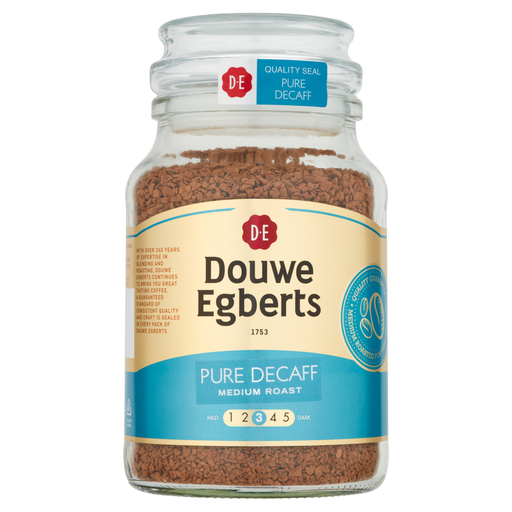 Image unavailable
This 190g freeze-dried decaf is an alternative to the classic jars above. Its product description also suggests chilled serving, so check the preparation guidance if you specifically want a hot after-dinner cup. Decaffeinated does not mean caffeine-free.
No. Nescafé explains that decaffeination removes most caffeine but leaves some behind. If you need to avoid caffeine entirely or follow an individual restriction, do not treat a decaf label as confirmation that the coffee is suitable.
For a familiar instant cup, consider a classic jar such as Nescafé Original Decaf or Kenco Decaf. Nescafé describes AZERA as an intense Americano-style option, while Kenco Millicano Decaff combines instant coffee with finely milled beans. Those are format and manufacturer-description differences, not a universal taste ranking.
Decaf reduces caffeine compared with regular coffee, but does not remove it completely. Oxford Health NHS Foundation Trust's guidance on sleep difficulties advises avoiding caffeinated drinks at least 5–6 hours before bed; a specific caffeine restriction calls for checking the coffee's suitability rather than assuming decaf meets it.
Read the current pack's ingredients, allergen statement and any precautionary allergen wording before using the coffee. The Food Standards Agency explains that precautionary allergen labelling signals possible unintended presence of a regulated allergen; an older retailer listing should not replace the label on your jar.
Follow the storage and best-before instructions on the jar you buy. Tesco's listing for Douwe Egberts Pure Decaffeinated Instant Coffee specifies a cool, dry place, but the pack gives the instructions for the particular product in hand.