Canteen buyers serving varied tastes
A hot-water decaf is straightforward to offer at lunch, but staff may prefer different roast and flavour descriptions. Compare the particular products rather than treating all decaf jars as interchangeable.


For a workplace canteen lunch, choose a decaf instant coffee whose preparation directions staff can follow consistently, then consider the drinkers’ flavour preferences and the jar size needed for service. Decaf should not be presented as caffeine-free; check the delivered pack for ingredients, allergens and serving directions, including when milk or other additions are offered.
A hot-water decaf is straightforward to offer at lunch, but staff may prefer different roast and flavour descriptions. Compare the particular products rather than treating all decaf jars as interchangeable.
Decaf keeps coffee on the drinks menu for people reducing caffeine. It should not be described as caffeine-free; offer another drink where complete caffeine avoidance is required.
Check the label of the coffee actually served. A manufacturer’s statement about one coffee does not cover another product or the milk, creamers and flavourings offered alongside it.
Start with caffeine requirements and a workable serving method, then compare flavour descriptions and the information needed for service.
| Priority | What to check | Your needs |
|---|---|---|
| Caffeine | Check that the exact coffee is labelled decaf. Do not treat decaf as a guarantee of zero caffeine. | I want a coffee option while reducing caffeine. If I need to avoid it completely, I need another drink. |
| Flavour | Compare each product’s stated roast and flavour profile. Kenco calls its Decaf balanced and rates its intensity at 7; Tesco lists Douwe Egberts Pure Decaffeinated as strength 3. Those brand and retailer scales are not a cross-brand taste test. | A stated medium-roast profile may suit our lunch menu better than a product described by its maker as bolder or smoother. |
| Serving method | Read the pack directions for the chosen jar and set a spoon measure and mug size. NESCAFÉ gives one teaspoon with 200ml water for Original and Gold Blend Decaf; the Sainsbury’s listing for Carte Noire allows one or two teaspoons. | Staff need a simple instruction they can use consistently during a busy lunch service. |
| Ingredients and additions | Check the delivered coffee label and the information for any milk, creamers or flavourings served with it. NESCAFÉ describes Gold Blend Decaf as containing 100% soluble coffee with no allergens; that statement applies to that product. | Our team needs ingredient information for the complete drink, not just the coffee jar. |
Decaffeinated coffee can contain residual caffeine, so the two descriptions are not interchangeable for someone who needs complete avoidance.
Label the coffee as decaf and make a suitable non-coffee drink available.
The Sainsbury’s listing estimates approximately 55 cups from Carte Noire’s 100g jar using 1.8g per cup. A different spoon measure changes how many cups the jar makes.
Choose a serving measure and mug size, then use the product’s directions when planning quantities.
Using more coffee per cup than planned means the jar makes fewer servings.
Tesco warns on its Douwe Egberts listing that food ingredients and allergen information can change. Additions served by the canteen are separate products.
Check the delivered coffee label before service and keep ingredient information for milk and other additions separately.
These brand references describe particular decaf products, not every coffee each brand makes.
Original Decaf and Gold Blend Decaf offer two stated flavour styles for canteen buyers to consider.
Kenco describes its Decaf as a smooth, balanced option; its Millicano Decaff combines instant coffee with finely milled whole beans.
Tesco lists Pure Decaffeinated Instant Coffee as a 190g freeze-dried product with a stated strength of 3.
The 100g Decaffeinated Instant Coffee jar is a smaller-format option with a stated serving basis.
These decaf coffee jars and tins offer different formats for a workplace lunch drinks station. Check each pack’s directions before setting a shared serving measure.
 No image available
A 190g decaf coffee jar for a shared drinks station. NESCAFÉ describes Gold Blend Decaf as 100% soluble coffee with no allergens; check the delivered label and any additions served with it.
 No image available
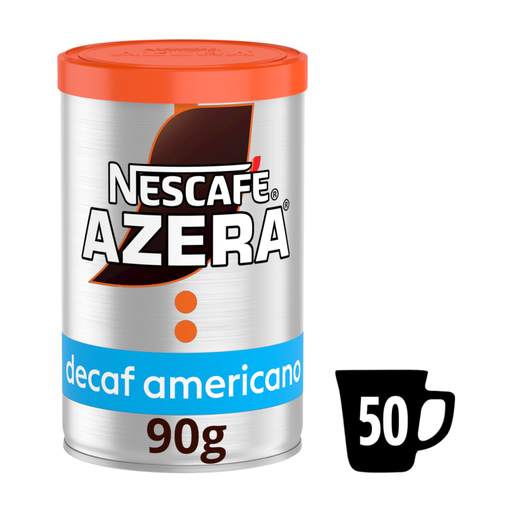
A 90g decaf Americano option for staff who prefer that named coffee style. Check the tin’s preparation and serving directions before using it to plan canteen quantities.
 No image available
A 300g jar for a canteen considering a larger format of NESCAFÉ Original decaf. Set the serving measure from the delivered pack and check its ingredient information before service.
 No image available
A 100g decaf instant coffee jar for a lunch drinks station. Check the pack’s spoon and water directions, then choose one measure for consistent canteen service.
 No image available
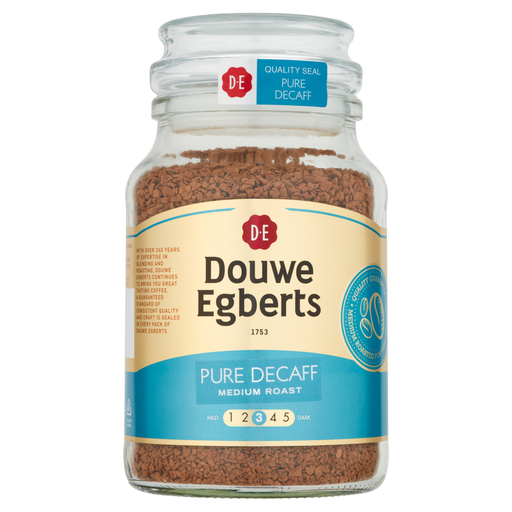
A 190g decaf option for buyers considering a medium-roast profile; Tesco lists this product as freeze-dried with a stated strength of 3. Check the exact pack’s directions before choosing it for hot-water service, as the product descriptions also suggest chilled serving.
No. Decaf should not be treated as a zero-caffeine drink. If a member of staff needs to avoid caffeine completely, provide another beverage rather than describing the decaf coffee as caffeine-free.
Follow the chosen product’s directions and post a spoon measure and mug size. NESCAFÉ gives one teaspoon with 200ml water for Original and Gold Blend Decaf, while the Sainsbury’s Carte Noire listing allows one or two teaspoons; changing the measure also changes how many drinks a jar makes.
No. NESCAFÉ’s no-allergen statement applies specifically to Gold Blend Decaf. Check the delivered label of whichever coffee the canteen serves and assess milk, creamers and other additions separately.
No. Tesco advises on its Douwe Egberts listing that ingredients and allergen information can change. Use the delivered pack label when preparing the information staff will see at service.