Shoppers filling a short gap
A smaller pack may be enough if you need decaf instant coffee only until your next main shop or have limited cupboard space.


Choose a smaller decaf instant pack if you only need coffee until the next main shop; a larger pack makes more sense if you expect to use it regularly. If flavour style matters, compare the product’s stated intensity, roast description or ingredients rather than assuming all decaf instant coffees are alike. A refill is practical only when you already have a suitable container.
A smaller pack may be enough if you need decaf instant coffee only until your next main shop or have limited cupboard space.
If you make decaf often, consider how long the pack is likely to last rather than choosing a small top-up by habit.
Look for product-specific details such as a stated intensity, roast style or roast-and-ground coffee in the ingredients. These descriptions help distinguish options, but they do not predict everyone’s taste.
Start with how much coffee you need before the next shop, then compare the descriptions and format that matter to you.
| Priority | What to check | Your needs |
|---|---|---|
| Pack size | Check the stated weight against how often you make coffee. Tesco lists approximately 55 mugs for Nescafé Original Decaf 100g; that estimate applies to the listed preparation amount, not every way of making a mug. | A small pack will see me through to the next shop without leaving a larger jar in the cupboard. |
| Decaf description | Confirm that the exact pack says decaffeinated instant or soluble coffee. Nescafé says most caffeine is removed from Original Decaf using water; that does not mean zero caffeine. | I want to keep my instant-coffee routine while choosing a product labelled decaf. |
| Flavour style | Compare descriptions for the exact variant: Kenco Decaf 190g is listed with intensity 7, while Sainsbury’s describes Douwe Egberts Pure Decaf 190g as medium roasted with strength 3. The brands’ scales and descriptions are not a taste test. | A stated roast or intensity gives me a way to narrow the choice before I try a jar. |
| Ingredients | Check whether you want soluble coffee alone or a product that also lists roast-and-ground coffee. Tesco lists 5% decaffeinated roast-and-ground coffee in Nescafé Azera Americano Decaf 135g; check other pack sizes separately. | I’m looking for a particular coffee style, so the ingredients matter more to me than a familiar name. |
| Container | Check whether the product is a ready-to-use jar or a refill. Kenco’s decaf refill is intended to refill a jar. | A refill suits me if I already have a clean, dry container for it. |
Nescafé describes Original Decaf as having most of its caffeine removed using water. The word ‘decaf’ alone does not tell you the caffeine amount in a prepared mug.
Check the information for the exact product. If you follow an individual caffeine limit, ask your clinician or dietitian for advice rather than treating a decaf label as personal guidance.
A refill is less convenient for an immediate top-up if you have nowhere suitable to store the coffee after opening it.
Choose a ready-to-use jar for a first purchase, or check that you already have a clean, dry container before selecting a refill.
These examples describe particular decaf products and formats, not every coffee made by each brand.
Original Decaf appears in several pack sizes, while Gold Blend Decaf and Azera Americano Decaf offer other named variants.
Kenco offers decaf instant coffee in jars and a separate refill format.
Pure Decaf 190g is listed by Sainsbury’s as a freeze-dried, medium-roasted instant coffee with strength 3.
Tesco Decaffeinated Classic Coffee is listed as a 200g instant-coffee option.
Sainsbury’s lists a 100g decaffeinated freeze-dried instant coffee under this brand.
These packs offer different sizes for a short top-up or a longer restock. Check the exact product page and pack when a particular ingredient or preparation detail matters to you.
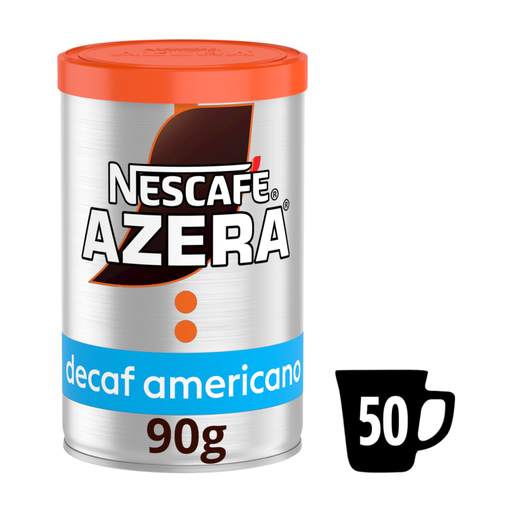 Image unavailable
The 90g pack is a smaller top-up option. If roast-and-ground content is the reason you are considering Azera, check the ingredients on this 90g variant rather than relying on details for another size.
 Image unavailable
This 100g instant-coffee pack suits a smaller top-up. Check its own label if an intensity rating matters: the rating listed for Kenco’s 190g jar should not be assumed for this pack.
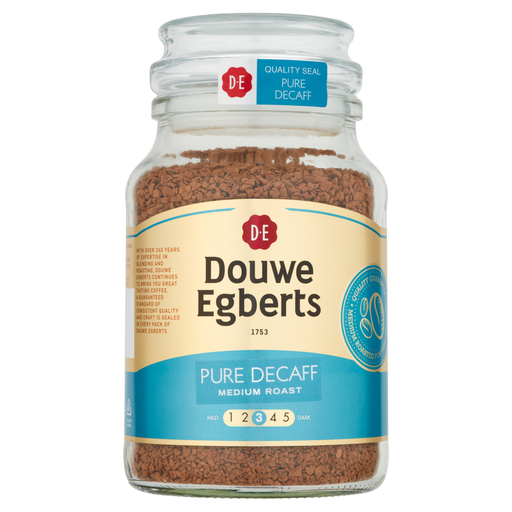 Image unavailable
The 190g pack may suit regular use between shops. Sainsbury’s describes this same-sized Pure Decaf variant as freeze-dried and medium roasted, with strength 3; check the physical pack for preparation directions.
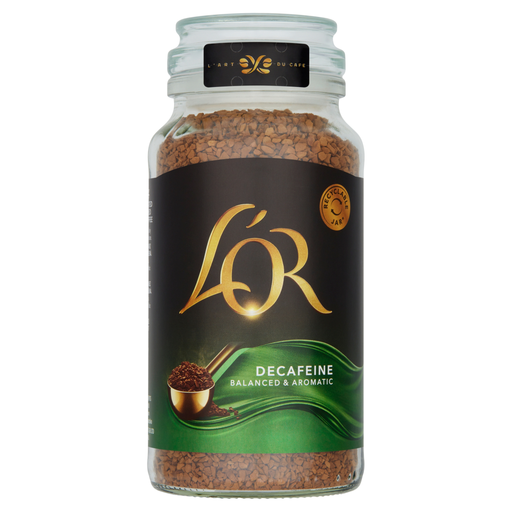 Image unavailable
At 150g, this pack sits between the smaller and larger options shown here. Check the product label for its preparation method and ingredients if either affects your choice.
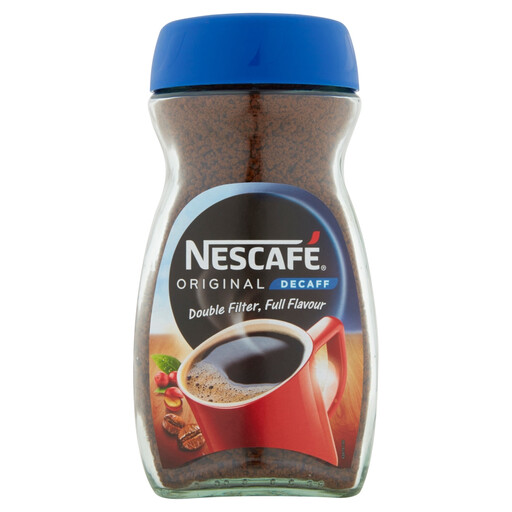 Image unavailable
The 200g pack is a larger option if you expect to use decaf regularly. Confirm the details on this variant’s pack rather than transferring flavour or serving information from another NESCAFÉ product.
Choose according to how much coffee you expect to use before your next main shop. Tesco lists approximately 55 mugs for Nescafé Original Decaf 100g at its stated preparation amount; a larger pack may be more practical if you make decaf regularly.
Do not assume that decaf means zero caffeine. Nescafé says most caffeine is removed from Original Decaf using water; check the exact product information if the amount matters to you.
Its ingredients include roast-and-ground coffee as well as soluble coffee. Tesco lists 5% decaffeinated roast-and-ground coffee in Nescafé Azera Americano Decaf 135g; that ingredient difference alone does not establish which coffee you will prefer.
A ready-to-use jar is more straightforward if you do not already have a suitable container. Kenco’s decaf refill is intended to refill a jar, so check that you have a clean, dry container before choosing it.
Read the physical label for the exact product’s ingredients and preparation directions, particularly if you have a dietary requirement. If you follow an individual caffeine limit, seek advice from your clinician or dietitian rather than relying on the word ‘decaf’ alone.