If the powder must be caffeine-free, choose a clearly labelled matcha-style alternative such as Clearspring Organic Japanese Kuwa Matcha, which contains mulberry leaf rather than tea leaves. If tea-leaf matcha matters more, check a specifically decaffeinated product’s residual caffeine per serving; ordinary matcha contains caffeine, and a drink served with scones, jam and cream need not have added syrup.
Who is this for?
Hosts serving a caffeine-free drink
If the green powder itself must contain no caffeine, look for an explicit caffeine-free label and check the plant named in the ingredients. Clearspring’s Kuwa Matcha uses mulberry leaf, not conventional matcha tea leaves.
Matcha drinkers considering a later cup
If you want tea-leaf matcha but are choosing with caffeine in mind, check the stated amount per serving and how much powder you will use. A decaffeinated product need not be caffeine-free.
Hosts serving guests with different needs
Make the distinction between a caffeine-free alternative and ordinary matcha clear at the table. Keep the powder pack and information for milk, plant drinks, sweeteners and cream-tea foods available for guests checking ingredients.
What should you check?
Decide whether caffeine-free powder or tea-leaf matcha is the priority, then check the serving and everything added to the drink.
Caffeine-free matcha-style powder
Choose when: The powder must contain no caffeine; Clearspring labels its mulberry-leaf Kuwa Matcha naturally caffeine-free.
Trade-off: Mulberry leaf is not tea-leaf matcha, so do not buy it expecting the same ingredient or tea character.
Decaffeinated tea-leaf matcha
Choose when: You want tea-leaf matcha and can accept the residual caffeine stated for the serving you plan to make.
Trade-off: Decaf does not mean zero caffeine: Caff Off claims 7–9mg per serving for its product. Check the current label and a suitable UK product listing before ordering.
Ordinary matcha
Choose when: Conventional tea-leaf matcha is the priority and caffeine is acceptable for the people drinking it.
Trade-off: It cannot meet a caffeine-free requirement. Clearspring states approximately 32mg caffeine per 1g of its dry premium matcha powder.
| Priority | What to check | Your needs |
|---|
| Caffeine |
Read the caffeine statement and serving size. For decaffeinated tea-leaf matcha, check residual caffeine rather than assuming zero; ordinary matcha contains caffeine. |
I need to know whether the powder is caffeine-free or simply has a stated amount of caffeine per serving. |
| Plant ingredient |
Check whether the powder is tea-leaf matcha or a matcha-style alternative. Clearspring identifies Kuwa Matcha as 100% organic Japanese mulberry leaf powder. |
Tea-leaf matcha character matters to me, or I would rather serve a caffeine-free green alternative. |
| Serving with milk |
Check the powder amount and preparation directions before adding milk or a plant drink. Waitrose & Partners’ matcha-latte recipe uses two 1g sachets with 250ml milk or a dairy-free alternative; it uses conventional matcha. |
For a drink beside scones, jam and cream, I would like to decide separately whether to add syrup or another sweetener. |
| Ingredients for guests |
Read the current powder label and check milk, plant drinks, syrups, scones, cream and toppings separately. Keep ingredient information available when serving. |
If someone needs to check allergens or other ingredients, I want them to know what went into both the drink and the food. |
Common buying mistakes
-
Assuming a green latte powder is decaf
Ordinary tea-leaf matcha contains caffeine regardless of how it is served. Clearspring states approximately 32mg per 1g of its dry premium matcha; JING Tea estimates roughly 60–70mg for a typical 1–2g matcha serving.
Check the ingredient list and caffeine statement before choosing a powder for someone avoiding caffeine.
-
Reading “decaf” as “caffeine-free”
A decaffeinated tea-leaf powder can retain caffeine. Caff Off’s own product information claims 7–9mg per serving.
Check the current residual-caffeine figure and serving size. If the powder must contain no caffeine, look instead for an explicitly caffeine-free alternative.
-
Expecting mulberry leaf to be tea-leaf matcha
Clearspring Kuwa Matcha contains mulberry leaf, while Clearspring’s conventional matcha contains green-tea powder. Similar serving methods do not make the ingredients identical.
Choose according to whether caffeine-free powder or conventional matcha character matters more to your guests.
-
Checking the powder but not the finished serving
Milk, plant drinks, toppings and the foods served with the drink have their own ingredients. A single-ingredient powder does not describe the whole cream tea.
Keep each pack or ingredient list available and check the finished drink, scones and accompaniments separately for guests who need that information.
Brand and retailer references
These examples help distinguish caffeine-free alternatives from conventional matcha and separate decaffeinated tea ranges; they do not establish what is in stock for a particular shop or visit.
Clearspring
Offers Kuwa Matcha alongside conventional green-tea matcha powders.
- Clearspring labels Kuwa Matcha naturally caffeine-free and lists 100% organic Japanese mulberry leaf powder as its ingredient.
- Its premium and ceremonial tea-leaf matcha products are different powders; Clearspring states approximately 32mg caffeine per 1g of dry premium matcha.
JING Tea
Its ceremonial and latte-grade products are conventional tea-leaf matcha options.
- JING Tea positions its latte-grade matcha for milk-based drinks.
- JING Tea says matcha contains caffeine and estimates roughly 60–70mg for a typical 1–2g serving; check a specific product rather than treating the latte format as decaf.
teapigs
Lists matcha and caffeine-free tea as separate shopping categories.
- The separate categories offer a useful prompt to check which tea or powder you are selecting.
- A caffeine-free tea category does not establish that a particular matcha product is decaffeinated.
M&S
Describes matcha as ground green-tea leaves and lists decaffeinated teas separately.
- M&S Food’s matcha explanation helps identify the tea-leaf ingredient in a conventional matcha drink.
- A decaffeinated black-tea listing is not a decaffeinated matcha option; check the drink or pack in question.
Waitrose
Provides a matcha-latte recipe using conventional matcha, milk or a dairy-free alternative.
- Waitrose & Partners specifies two 1g matcha sachets and 250ml milk or a dairy-free alternative in its recipe.
- Its separate decaffeinated-tea category does not make the matcha in that recipe decaf.
Tesco
Groups matcha powders, sachets and drinks within a matcha shopping category.
- The category gives shoppers several product formats to distinguish before reading individual labels.
- A matcha category alone does not establish the caffeine status of any particular item; check its current pack.
Joybuy product options
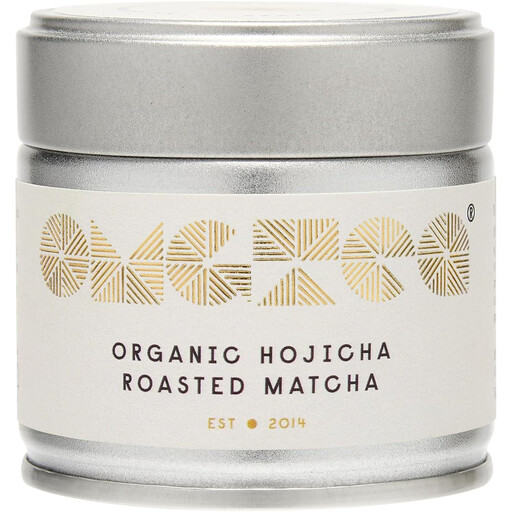
This roasted tea-leaf powder is an option to consider for a milk-based cream-tea drink when caffeine is acceptable. It is not the naturally caffeine-free mulberry-leaf route.
 No image available
OMGTea Organic Hojicha Roasted Matcha 30g
For a milk-based serving beside a cream tea, this 30g roasted matcha powder offers a different choice from a caffeine-free leaf alternative. Check the current pack’s caffeine statement and serving directions before making it for guests; add milk and any sweetener separately.
View on Joybuy
Frequently asked questions
Is decaf matcha the same as caffeine-free matcha?
No. Decaffeinated tea-leaf matcha can retain caffeine: Caff Off claims 7–9mg per serving for its decaf product. Clearspring instead labels its Kuwa Matcha naturally caffeine-free; it contains mulberry leaf, not matcha tea leaves.
What should I buy if the cream-tea drink must be caffeine-free?
Choose a powder explicitly labelled caffeine-free and confirm its ingredient list on the current pack. Clearspring describes Kuwa Matcha as naturally caffeine-free and made from 100% organic Japanese mulberry leaf powder; ordinary matcha is tea-leaf powder and contains caffeine.
How can I make a milk-based matcha drink for cream tea?
Follow the chosen powder’s preparation directions, then add milk or a plant drink and decide on sweetener separately. For an example using conventional matcha, Waitrose & Partners’ latte recipe combines two 1g matcha sachets with 250ml milk or a dairy-free alternative; that recipe does not make the drink decaf.
Which ingredients should guests be able to check?
Keep the powder label and ingredient information for the milk or plant drink, syrup, toppings, scones, jam and cream available. GOV.UK explains that food businesses must provide information about the 14 regulated allergens; if a café serves the drink or food, ask it for the relevant ingredient information.


