What should you check?
Start with the leaf ingredient, then compare caffeine information and the maker’s guidance for preparing the drink with milk.
| Priority |
What to check |
Your needs |
| Leaf ingredient |
Read the ingredient name. Decaffeinated green-tea matcha is a different product from Clearspring’s mulberry-leaf Kuwa Matcha or Wild Cornish’s nettle powder. |
I want tea-leaf matcha, not just a green powder I can whisk into a drink. |
| Caffeine information |
Look for milligrams per stated serving and check how that serving compares with the amount you will use. Enle calls its matcha ‘98% caffeine free’; Caff Off states 7–9 mg per serving for its decaf matcha. These are the brands’ own, differently expressed claims. |
If I need to account for caffeine across the day, I need a serving figure I can apply to my cup; a percentage on its own will not give me that amount. |
| Flavour and milk |
Check whether the maker describes the powder as suitable for lattes or milk drinks, and note the described flavour. Clearspring calls Kuwa Matcha mellow; Wild Cornish describes its nettle powder as earthy and kale-like. |
For guests having scones and cream, I would start with a powder whose stated flavour and milk-preparation guidance suit the drink I plan to serve. |
| Finished drink |
Read the powder’s ingredient and allergen label, then check the milk, plant drink, syrup or toppings used alongside it. |
I need to know what is in the whole drink before offering it to guests with ingredient or allergen concerns. |
Joybuy product options
This roasted matcha option is for a milk drink alongside cream tea when lower caffeine is of interest. Do not treat it as decaffeinated or caffeine-free without checking its product information.
 No image available
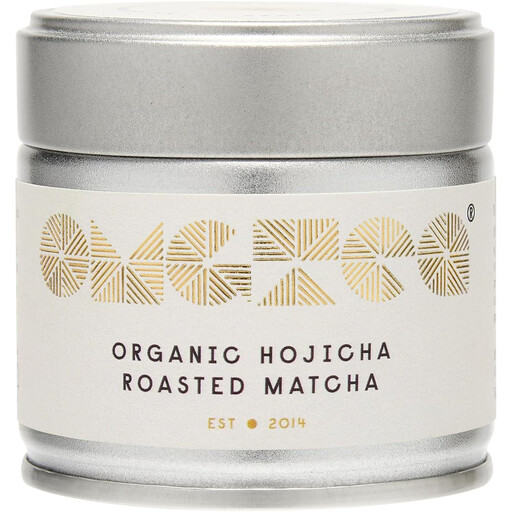
OMGTea Organic Hojicha Roasted Matcha 30g
OMGTea describes this roasted matcha as suitable for frothing with milk, making its preparation relevant to a cream-tea drink. It is presented as a lower-caffeine option, not as a decaffeinated one; check the caffeine information against the amount of powder you intend to use.
View on Joybuy
Frequently asked questions
Does decaf matcha mean caffeine-free?
No: check each product’s own caffeine statement rather than assuming the terms mean the same thing. Enle calls its decaf matcha ‘98% caffeine free’, while Caff Off states 7–9 mg per serving for its product. Clearspring describes Kuwa Matcha as naturally caffeine free, but it is made from mulberry leaf, not green tea.
What if I want tea-leaf matcha with my cream tea?
Look for a product expressly identified as decaffeinated green-tea matcha rather than a mulberry- or nettle-leaf powder. Enle offers a 30 g ceremonial decaf matcha, but its ‘98% caffeine free’ claim does not tell you the caffeine amount in your prepared cup.
Which caffeine-free powder is described as mild with milk?
Clearspring describes its mulberry-leaf Kuwa Matcha as mellow and suitable for lattes. Wild Cornish also describes milk-drink use for its nettle powder, but calls its flavour earthy and kale-like; neither powder is green-tea matcha.
How does decaf matcha fit into caffeine accounting during pregnancy?
The NHS advises no more than 200 mg of caffeine a day during pregnancy from all sources. To account for a prepared matcha drink, check its caffeine amount per serving and the amount of powder used; a percentage claim alone does not provide the milligrams in the cup.
What should I check before serving matcha drinks to guests?
Check the powder’s ingredient and allergen label, then check every addition to the drink, including milk, plant drinks, syrups and toppings. The ingredients in the finished cup may differ from those in the powder alone.


