People avoiding caffeine at lunch
A mulberry- or nettle-based powder may suit a quick green latte, smoothie or iced drink if a caffeine-free option matters more to you than drinking tea matcha.


If avoiding caffeine is the priority at lunch, choose a clearly labelled caffeine-free powder such as Clearspring Kuwa Matcha, while recognising that its mulberry leaf is not green-tea matcha. Ordinary tea matcha contains caffeine: JING Tea estimates roughly 60–70mg in a typical 1–2g serving. If you want genuine decaffeinated tea matcha, check the ingredients and stated residual caffeine per serving before choosing a product.
A mulberry- or nettle-based powder may suit a quick green latte, smoothie or iced drink if a caffeine-free option matters more to you than drinking tea matcha.
If you still want genuine tea matcha, account for its caffeine alongside any other tea or coffee you drink that day. A smaller serving is still not decaf.
Look for mixing directions that fit your break and available equipment, whether you plan to use hot water, milk or ice.
Decide how much caffeine you are willing to have, then check what plant the powder contains and how you will prepare it.
Choose it when: Avoiding caffeine matters more than using green-tea leaves.
Trade-off: Mulberry and nettle powders are matcha-style alternatives, not traditional tea matcha.
Consider it when: You want a tea-leaf product and can check its residual caffeine per serving.
Trade-off: A decaf label alone does not establish that a drink is caffeine-free.
Choose it when: You want genuine matcha and some caffeine is acceptable.
Trade-off: JING Tea estimates roughly 60–70mg of caffeine in a typical 1–2g serving of matcha.
| Priority | What to check | Your needs |
|---|---|---|
| Caffeine | Check whether the product says caffeine-free, decaffeinated or neither. For decaf tea matcha, look for residual caffeine in mg per serving and the serving size. | I want to know how much caffeine my lunchtime drink will add, particularly if I also have tea or coffee. |
| Plant ingredient | Read the ingredient list: traditional matcha is ground green-tea leaf, while Clearspring Kuwa Matcha contains mulberry leaf and Wild Cornish Tea Co Nettle Matcha is nettle-based. | Tea flavour matters to me, or I am happy to choose a different plant to avoid caffeine. |
| Preparation | Check the suggested dose and whether the powder has directions for hot water, milk or iced drinks. Match the method to the equipment you have at your desk. | With a short lunch break, I need a drink I can make using the water, milk or ice available to me. |
| Product wording | Use the ingredients, caffeine statement and mixing directions to make the choice; do not treat wellness wording as a measurable product specification. | I would rather choose on checkable details than on promises about how a drink will make me feel. |
A caffeine-free matcha-style drink may instead contain mulberry leaf or nettle. That distinction matters if you specifically want the ingredient and flavour of green-tea matcha.
Read the plant ingredient before choosing between a tea product and a caffeine-free alternative.
Ordinary matcha contains caffeine regardless of preparation style. JING Tea estimates roughly 60–70mg in a typical 1–2g serving.
If caffeine matters to your choice, check the amount per serving rather than relying on grade or flavour wording. For a decaf tea product, look for a stated residual-caffeine figure.
These examples illustrate different ingredients and product types; a brand name alone does not tell you whether a particular powder is decaf.
Clearspring describes its Kuwa Matcha as a naturally caffeine-free, mulberry-leaf powder for drinks and food.
Its Nettle Matcha is presented as a caffeine-free herbal alternative that can be prepared hot or iced.
JING Tea provides an ordinary tea-matcha reference for people who accept caffeine in their lunchtime drink.
Waitrose lists decaffeinated green-tea bags and matcha products as distinct types of tea.
M&S describes matcha as ground, shade-grown green-tea leaf and lists decaffeinated teas separately.
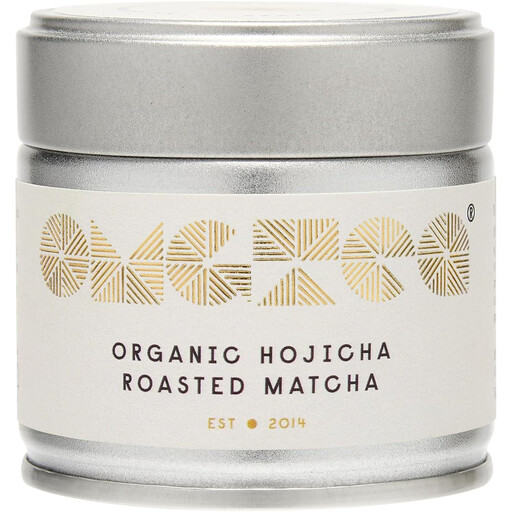
This roasted tea-matcha option is for a quick desk drink when some caffeine is acceptable; it is not a caffeine-free substitute.
 No image available
For a quick hot drink, this roasted matcha can be whisked with hot water or frothed with milk. It contains caffeine, so it does not meet a caffeine-free requirement. Refrigerate after opening.
No. Ordinary matcha is made from tea leaves and naturally contains caffeine. JING Tea estimates roughly 60–70mg in a typical 1–2g serving; check the amount used for your drink rather than assuming every serving is the same.
Not necessarily. Clearspring Kuwa Matcha contains mulberry leaf, while Wild Cornish Tea Co Nettle Matcha is nettle-based. Check the ingredient list if genuine green-tea matcha matters to you.
Choose a powder with mixing directions that fit what you have available. Clearspring suggests Kuwa Matcha for lattes and smoothies, while Wild Cornish Tea Co gives hot-drink and iced-drink directions for its nettle powder.
Check that the ingredient is tea leaf, then look for the residual caffeine in mg per serving and the stated serving size. Confirm the preparation directions and delivery terms for the specific product before ordering; the word decaf alone does not mean caffeine-free.