If avoiding caffeine is essential but you want a whisked lunch drink, consider a naturally caffeine-free powder such as Clearspring Kuwa Matcha: it contains mulberry leaf, not green-tea matcha. Ordinary matcha retains the green-tea ingredient but contains caffeine; if the powder format matters less, a decaffeinated or naturally caffeine-free brewed tea offers another route. Check the exact pack, because ‘decaffeinated’ and ‘naturally caffeine free’ describe different products.
Who is each option for?
The choice depends on whether avoiding caffeine, keeping a matcha-style preparation or drinking actual green-tea matcha matters most at lunch.
Home workers avoiding caffeine
If you still want to whisk a powder into a lunchtime latte, a naturally caffeine-free mulberry-leaf powder offers that preparation style without being green-tea matcha. Check the ingredient and caffeine wording on the pack you choose.
Drinkers who want actual matcha
If ground green tea and its characteristic preparation are the point, choose conventional matcha only when its caffeine content is acceptable. JING Tea and M&S Food both explain that ordinary matcha contains caffeine.
Lunch-break tea drinkers
If a brewed drink is enough, consider decaffeinated tea or a naturally caffeine-free herbal tea instead of matcha powder. They are different drinks, so check which type and caffeine wording the pack specifies.
What should you check before choosing?
Start with the caffeine requirement, then decide whether the ingredient must be green tea and whether you want to whisk a powder or brew a tea bag.
Caffeine-free matcha-style powder
Choose when: You want a whisked lunchtime drink and avoiding caffeine takes priority over drinking actual green-tea matcha.
Trade-off: Clearspring describes its Kuwa Matcha as naturally caffeine free, but its sole ingredient is mulberry leaf rather than green tea.
Conventional matcha
Choose when: Ground green-tea matcha matters more to you than avoiding caffeine.
Trade-off: Ordinary matcha contains caffeine, as JING Tea and M&S Food explain, so it does not meet a caffeine-free requirement.
Brewed tea
Choose when: You would rather make tea than whisk a powder and do not need a matcha-style drink.
Trade-off: Decaffeinated black or green tea and naturally caffeine-free herbal tea are distinct choices; none is powdered matcha.
| Priority |
What to check |
Your needs |
| Caffeine |
Read the exact pack for ‘naturally caffeine free’, ‘decaffeinated’ or a stated caffeine amount. Do not infer caffeine content from ‘matcha’ or ‘latte’. |
I want a lunchtime drink without caffeine, not simply a different way to prepare tea. |
| Tea ingredient |
Check whether the powder is ground green tea or another plant. Clearspring lists 100% organic Japanese mulberry-leaf powder for Kuwa Matcha; M&S Food describes conventional matcha as ground green-tea leaf. |
For me, the green-tea ingredient might matter as much as the whisked format. |
| Preparation |
Choose a powder if you want to whisk a drink; choose tea bags if you want to brew one. Check the preparation directions on the product you buy. |
Between meetings, I would rather brew a tea bag than prepare a powdered drink. |
| Current label |
Check the pack’s ingredients and allergen information, particularly for flavoured powders or drinks made with milk. M&S Food advises checking current product labels because details can change. |
If I add milk or buy a flavoured mix, I need to know what is in that particular product. |
Common buying mistakes
-
Assuming ordinary matcha is decaf
Conventional matcha is ground green tea, and JING Tea and M&S Food both state that it contains caffeine. A matcha label alone does not establish that a drink is caffeine free.
If avoiding caffeine is essential, check the caffeine claim and ingredients on the exact pack rather than relying on terms such as ‘ceremonial’ or ‘latte’.
-
Expecting a caffeine-free substitute to be green-tea matcha
Clearspring’s naturally caffeine-free Kuwa Matcha contains mulberry leaf, not the green-tea leaf used for conventional matcha. Its ingredient identity changes even if you prepare it as a whisked drink.
Choose a mulberry-leaf powder when the preparation style matters more than the green-tea ingredient; choose conventional matcha only when caffeine is acceptable.
-
Buying decaffeinated tea expecting matcha
JING Tea’s decaffeinated Ceylon and Waitrose’s decaffeinated tea bags are brewed teas, not powders for whisking into a matcha-style drink.
Decide whether you want a brewed tea or a powder before comparing decaffeinated products.
-
Relying on an online ingredient listing alone
Ingredients and allergen information can change, as M&S Food notes on its product listings. This matters when selecting a flavoured powder or adding other ingredients to a latte.
Read the current pack for the product you will use, including its ingredient and allergen information.
Brand references
These examples illustrate different drink types; a brand’s matcha range and its decaffeinated tea range should not be treated as the same product.
Clearspring
Clearspring describes Organic Japanese Kuwa Matcha as a naturally caffeine-free mulberry-leaf powder for uses including lattes and smoothies.
- The listed ingredient is 100% organic Japanese mulberry-leaf powder.
- It is a matcha-style alternative, not green-tea matcha.
JING Tea
JING Tea distinguishes its conventional matcha range from a separate collection of decaffeinated and naturally caffeine-free teas.
- Its tea collection includes decaffeinated Ceylon and naturally caffeine-free peppermint tea.
- A decaffeinated tea in that collection is not, by itself, decaffeinated green-tea matcha.
M&S
M&S Food explains that conventional matcha contains caffeine and separately lists decaffeinated tea bags.
- Its matcha explanation helps distinguish ground green-tea powder from brewed tea.
- Its decaffeinated tea bags should not be mistaken for decaf matcha.
Waitrose
Waitrose lists Essential Original Blend Decaf as a brewed-tea option.
- The listed pack contains 80 decaffeinated tea bags made with Malawi tea.
- Tea bags do not provide a powdered matcha-style drink.
Teapigs
Teapigs has a matcha category for shoppers considering conventional matcha.
- Its matcha category provides a place to compare matcha products and formats.
- Check the exact product’s ingredient and caffeine wording before treating it as a decaf option.
Joybuy product options
These options cover two decaffeinated brewed teas and one roasted matcha-style powder that contains caffeine. If avoiding caffeine is non-negotiable, do not treat the roasted powder as a caffeine-free substitute; check the current pack of any decaffeinated tea against your requirement.
 No image available
Tetley Decaffeinated Green Tea, 50 tea bags, 100 g
Choose this for a brewed green-tea drink at lunch rather than a whisked matcha powder. The pack name specifies 50 decaffeinated green-tea bags and 100 g; check its current caffeine information if you need to avoid caffeine strictly.
View on Joybuy
 No image available
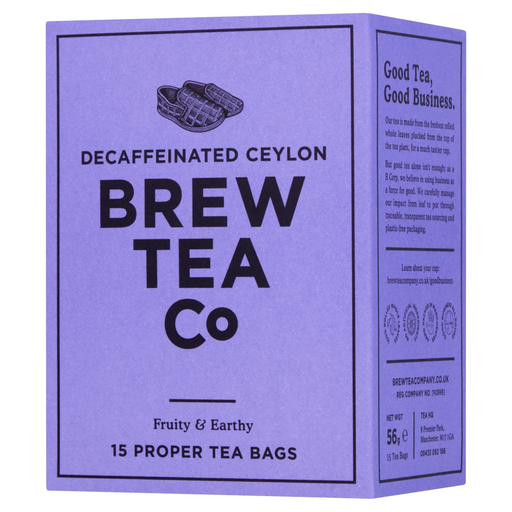
Brew Tea Co CO2 Decaffeinated Tea, 15 tea bags, 56 g
This is a brewed-tea option when you do not need matcha powder. Brew Tea Co describes it as decaffeinated Ceylon tea made using a CO2 method; the pack name specifies 15 tea bags and 56 g. If strict caffeine avoidance matters, check the current pack’s caffeine information rather than assuming ‘decaffeinated’ means caffeine free.
View on Joybuy
 No image available
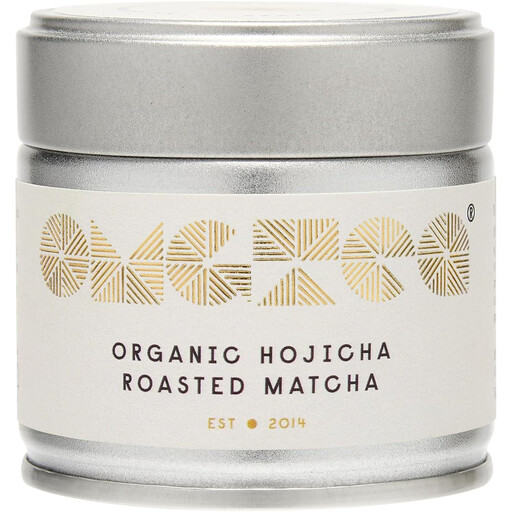
OMGTea Organic Hojicha Roasted Matcha, 30 g
This 30 g roasted matcha-style powder is an option only if a drink containing caffeine fits your lunch plans. It is not labelled as decaffeinated or caffeine free, so it does not meet a strict caffeine-avoidance requirement.
View on Joybuy
Frequently asked questions
Is caffeine-free ‘matcha’ always made from green tea?
No. Clearspring states that its naturally caffeine-free Kuwa Matcha contains 100% organic Japanese mulberry-leaf powder. Conventional matcha is ground green tea and contains caffeine, so read the ingredient list as well as the product name.
What can I use for a caffeine-free matcha-style latte at lunch?
A naturally caffeine-free powder may suit you if you are happy to use an ingredient other than green tea. Clearspring suggests its mulberry-leaf Kuwa Matcha for lattes; it keeps the powder preparation style but is not conventional matcha.
What if I only want a decaffeinated hot drink between meetings?
Consider brewed tea rather than matcha powder. JING Tea lists decaffeinated Ceylon and naturally caffeine-free herbal tea as distinct options, while Waitrose lists decaffeinated Malawi-tea bags. Check the exact pack if your requirement is to avoid caffeine entirely.
Should I check the pack even after reading an online listing?
Yes. Read the current pack for ingredients and allergens, especially if you are buying a flavoured mix or adding milk. M&S Food notes that product information can change and advises checking the label.


