Hosts serving someone who avoids caffeine
Choose by the guest’s requirement, not the word “decaf” alone. A naturally caffeine-free non-tea powder or infusion is a different choice from decaffeinated green tea, which can retain caffeine.


If the guest needs to avoid caffeine entirely, ordinary matcha is not the right choice: it is powdered green tea and contains caffeine. A naturally caffeine-free mulberry-leaf powder keeps the whisked-drink format without being traditional matcha; if a brewed cup will do and reduced caffeine is acceptable, choose a labelled decaffeinated green tea instead. Keep ordinary matcha for someone who does not need a decaf drink, and check the amount of powder used.
Choose by the guest’s requirement, not the word “decaf” alone. A naturally caffeine-free non-tea powder or infusion is a different choice from decaffeinated green tea, which can retain caffeine.
A mulberry-leaf powder can provide a whisked-drink format without using green-tea matcha. Check that the guest is happy with a different ingredient and flavour.
If caffeine does not need to be avoided, measure the powder used and consider other caffeinated drinks that day. Clearspring states that its Premium Grade Matcha contains approximately 32 mg of caffeine per 1 g of dry powder.
Choose when: the guest wants to avoid caffeine but would enjoy a whisked green drink.
Trade-off: mulberry-leaf powder is not traditional green-tea matcha.
Choose when: a brewed cup matters more than a whisked powder drink.
Trade-off: decaffeinated tea can retain caffeine and is not matcha.
Choose when: the guest specifically wants powdered green-tea matcha and does not need a decaf option.
Trade-off: it contains caffeine, and the amount of powder used affects intake.
| Priority | What to check | Your needs |
|---|---|---|
| Caffeine avoidance | Read the caffeine claim and ingredient list. For a naturally caffeine-free matcha-style drink, check for a non-tea ingredient rather than green-tea leaf. | I need to know that the drink I serve is caffeine-free, not merely decaffeinated. |
| Preparation | Check whether the product is a powder for whisking or tea bags for brewing. Clearspring lists its Kuwa Matcha as 100% organic Japanese mulberry-leaf powder. | A whisked green drink is part of our afternoon tea, and a non-tea powder would be acceptable. |
| Brewed tea | Check that the label says decaffeinated green tea rather than ordinary green tea. Waitrose lists Twinings Pure Green Tea Decaffeinated as decaffeinated to 0.2%; that wording does not mean caffeine-free. | We would rather serve a familiar brewed cup than prepare matcha powder. |
| Matcha serving | Check the powder quantity and the maker’s caffeine information for the exact product. Clearspring states approximately 32 mg of caffeine per 1 g of its Premium Grade Matcha. | I want traditional matcha and need to account for its caffeine alongside other drinks. |
Decaffeinated tea can retain caffeine, whereas a naturally caffeine-free non-tea drink takes a different ingredient route.
If complete avoidance matters, check both the caffeine wording and the ingredient list before serving.
A blend may still be mostly ordinary green tea. Tesco lists Tetley Green Tea Matcha as 98% green tea and 2% green matcha granules.
Check whether the base is green tea, decaffeinated tea or a non-tea plant powder.
A general adult guideline cannot establish whether a caffeinated drink suits someone with an individual restriction.
Ask the guest about their caffeine preference or restriction rather than assuming a smaller serving is suitable.
Its Kuwa Matcha and Premium Grade Matcha illustrate two different ingredients behind similar drink formats.
JING Tea distinguishes traditional matcha, decaffeinated tea and caffeine-free infusions in its product guidance.
Waitrose lists a Twinings decaffeinated green tea for shoppers who prefer brewing tea to whisking powder.
These options cover a roasted matcha powder for a guest who is not avoiding caffeine and a decaffeinated green tea for a brewed afternoon cup. Neither should be treated as a naturally caffeine-free matcha-style powder.
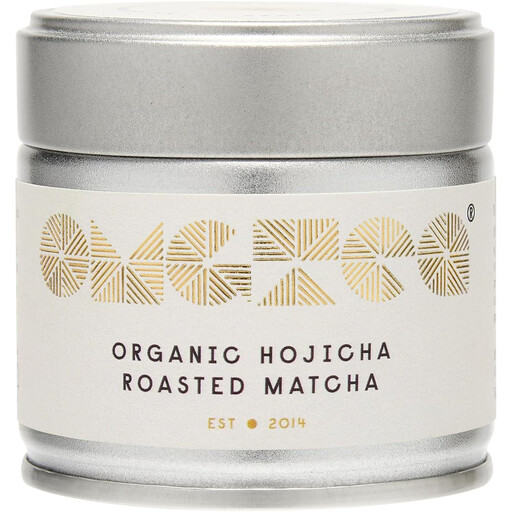 No image available
For a powder-based afternoon drink when caffeine does not need to be avoided. This roasted matcha is not presented as decaffeinated; check the caffeine information and the amount of powder used for each drink.
 No image available
For a brewed green-tea cup rather than whisked matcha. The pack contains 50 tea bags and weighs 100g. Decaffeinated does not mean caffeine-free, so check the pack’s wording if the guest needs to avoid caffeine entirely.
No. Traditional matcha is powdered green tea and contains caffeine, as JING Tea explains. If caffeine must be avoided, check for a naturally caffeine-free product made from a non-tea plant rather than assuming “matcha” means decaf.
No. Decaffeinated green tea has had caffeine removed but can retain some, according to JING Tea. Waitrose’s Twinings Pure Green Tea Decaffeinated listing says it is decaffeinated to 0.2%; it should not be treated as a naturally caffeine-free infusion.
A matcha-style mulberry-leaf powder is one option if the guest is happy with a different ingredient. Clearspring describes its Kuwa Matcha, made from 100% organic Japanese mulberry-leaf powder, as naturally caffeine-free.
It depends on the product and the amount of powder used. Clearspring states that 1 g of its dry Premium Grade Matcha contains approximately 32 mg of caffeine; measure the portion rather than treating every prepared cup as identical.