If you want a winter matcha-style latte without caffeine, look for a powder explicitly labelled caffeine free and check its ingredients: Clearspring describes Kuwa Matcha as mulberry-leaf powder, not green-tea matcha. Conventional matcha contains caffeine, while a decaffeinated tea needs its own label and format checked before you use it in a latte or recipe. Clearspring says its mulberry-leaf powder froths less than conventional matcha.
Who is each option for?
Evening latte drinkers avoiding caffeine
If caffeine avoidance matters more than using green-tea matcha, check for an explicit caffeine-free claim and read the ingredients. Clearspring’s Kuwa Matcha is made from mulberry leaves; conventional matcha is made from green tea and contains caffeine.
Winter bakers and comfort-food cooks
A powder intended for lattes, baking or desserts offers more ways to use it than a drink chosen solely for whisking plain. Clearspring describes Kuwa Matcha for those uses, but says it does not froth as much as conventional matcha.
Pregnant shoppers keeping track of caffeine
The NHS advises a limit of 200mg of caffeine a day during pregnancy, counting all food and drink sources. Conventional matcha contributes caffeine, so the amount in a serving matters alongside other sources.
What should you check before choosing?
Start with the caffeine claim and ingredients, then decide whether the powder’s preparation and flavour suit the drink or food you plan to make.
| Priority |
What to check |
Your needs |
| Caffeine status |
Read the caffeine claim and ingredients together. Clearspring lists its caffeine-free Kuwa Matcha as 100% organic Japanese mulberry-leaf powder; its conventional matcha is green-tea powder. |
I want a drink without caffeine, not just a green powder with a matcha-style name. |
| Warm latte texture |
Check the preparation directions and whether the powder is intended for milk. Clearspring’s Kuwa Matcha latte recipe whisks the powder with warm water before adding warmed milk; the brand says it froths less than conventional matcha. |
For an evening latte, I care more about a smooth drink than the foam I would expect from whisked green-tea matcha. |
| Tea flavour |
Check whether the powder contains green-tea leaves or another plant. JING describes ceremonial green-tea matcha for whisking plain and culinary styles for use with milk or in cooking; conventional matcha still contains caffeine. |
I would choose green-tea matcha for its tea character only when caffeine fits my plans. |
| Recipe format |
Check whether the product is a powder intended for baking or desserts. If considering a decaffeinated tea, check its form and directions rather than assuming it can take the place of powder in a recipe. |
I want to use the ingredient in winter baking as well as drinks, so its format matters. |
What mistakes should you avoid?
-
Assuming a green powder called matcha is caffeine free
Conventional matcha is ground green tea and contains caffeine. Clearspring’s caffeine-free Kuwa Matcha uses mulberry leaves instead, so it is a matcha-style alternative rather than the same tea.
For strict caffeine avoidance, check both the caffeine wording and the full ingredients list on the product you intend to buy.
-
Using ceremonial grade as a caffeine guide
Ceremonial grade describes a type of matcha for preparation, not caffeine removal. JING’s guidance describes ceremonial matcha for whisking plain and also confirms that matcha contains caffeine.
Choose conventional ceremonial matcha for that tea preparation only if caffeine is acceptable; otherwise, check an explicitly caffeine-free alternative.
-
Expecting mulberry-leaf powder to make the same foam
Clearspring says Kuwa Matcha does not froth as much as conventional matcha when whisked. That difference matters if whisked texture is central to the drink you want.
Whisk the powder into warm water before adding warmed milk, as in Clearspring’s latte recipe, and choose based on the resulting drink rather than an expectation of conventional matcha foam.
Which brands help clarify the choice?
These brand references explain product types and preparation; they do not establish what is currently available from each seller.
Clearspring
Clearspring describes both a caffeine-free mulberry-leaf powder for matcha-style uses and conventional Japanese green-tea matcha.
- Its Kuwa Matcha contains 100% organic Japanese mulberry-leaf powder and is described by Clearspring for lattes, baking and desserts.
- Kuwa Matcha is not green-tea matcha and, according to Clearspring, froths less. The brand estimates about 32mg of caffeine per 1g of its conventional Premium Grade Matcha.
JING
JING’s guidance concerns conventional Japanese green-tea matcha, including styles for whisking plain and for use with milk or in cooking.
- JING distinguishes ceremonial matcha for whisking plain from culinary styles intended to retain their flavour alongside milk or sugar.
- JING states that matcha contains caffeine; a ceremonial grade label does not make its green-tea matcha a decaf choice.
M&S Food
M&S Food’s matcha guidance provides a reference for conventional green-tea matcha drinks.
- M&S Food describes matcha as powder made from ground, shade-grown green-tea leaves.
- Its guidance notes that conventional matcha contains caffeine. Check the exact label before treating any particular product as caffeine free.
Joybuy options for winter matcha drinks
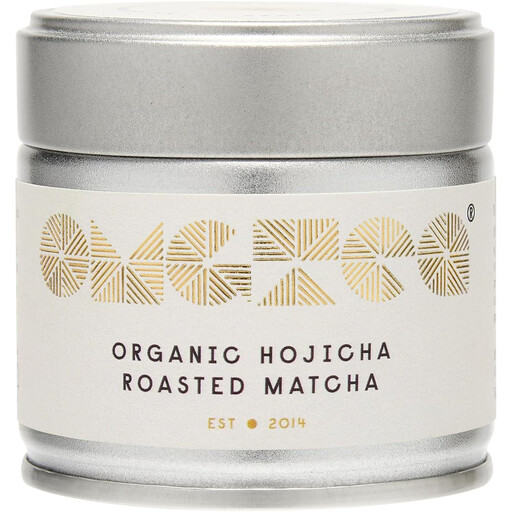
This roasted matcha option is for a winter drink or recipe when reducing caffeine, rather than avoiding it entirely, is the aim. Check its current label for the caffeine amount in the serving you use.
 No image available
OMGTea Organic Hojicha Roasted Matcha 30g
Consider this roasted matcha for a latte or baking when caffeine is acceptable; it is not the caffeine-free mulberry-leaf alternative. Check the current packaging for the amount of caffeine in your serving.
View on Joybuy
Questions about caffeine and matcha
Is caffeine-free matcha always made from green tea?
No. Clearspring’s caffeine-free Kuwa Matcha contains 100% organic Japanese mulberry-leaf powder. It can be used as a matcha-style powder, but it is not conventional matcha made from ground green-tea leaves.
How much caffeine is in ordinary matcha?
The amount depends on the product and serving. Clearspring estimates approximately 32mg of caffeine per 1g of its conventional Premium Grade Matcha. Check the amount of powder you use and the information for your particular product rather than applying that figure to every matcha.
How can I make a warm caffeine-free matcha-style latte?
Clearspring’s Kuwa Matcha recipe starts with 2g of powder and 60ml of warm water, followed by 200ml of warmed plant milk. Whisk the powder into the water first. Clearspring notes that it will not froth as much as conventional matcha.
Does conventional matcha count towards caffeine intake during pregnancy?
Yes. Conventional matcha contains caffeine, and the NHS advises pregnant people not to have more than 200mg of caffeine a day from all food and drink sources. The amount contributed by a matcha drink depends on the product and serving size.


