Who is each option for?
The choice depends on whether you need to avoid caffeine, merely want less of it, or have no caffeine restriction.
Breakfast drinkers avoiding caffeine
Look for an explicitly caffeine-free powder made from a non-tea leaf, such as the mulberry leaves in Clearspring Kuwa Matcha or the nettle leaves in Wild Cornish Tea Co’s Nettle Matcha. These offer a matcha-style drink, not traditional tea-leaf matcha.
Matcha drinkers reducing caffeine
A decaffeinated true-matcha product keeps the tea-leaf ingredient, but decaf need not mean caffeine-free. Compare the stated caffeine per serving with the amount of powder you will use in your weekend drink.
Weekend latte and smoothie makers without a caffeine restriction
Conventional matcha remains an option when caffeine reduction is not part of the decision. Measure the powder for your recipe rather than assuming a smaller-looking drink contains less caffeine.
What should you check before choosing?
Start with the ingredient and caffeine wording, then check the serving used for any stated amount. The three routes differ in whether they use tea leaf and whether caffeine avoidance is the aim.
Caffeine-free matcha-style powder
Choose when: You want to avoid caffeine and are happy to use a powder made from a leaf other than tea.
Trade-off: Mulberry- or nettle-leaf powder is not traditional Camellia sinensis matcha.
Decaffeinated true matcha
Choose when: Keeping tea-leaf matcha matters more than avoiding caffeine altogether, and the product states its caffeine amount per serving.
Trade-off: JING Tea says decaffeinated tea can retain trace caffeine; the stated serving may also differ from your recipe.
Conventional matcha
Choose when: You want traditional matcha for a whisked drink or breakfast recipe and do not need a decaf option.
Trade-off: It remains caffeinated. Clearspring states that its premium matcha contains approximately 32mg of caffeine per 1g of dry powder.
| Priority |
What to check |
Your needs |
| Caffeine status |
Read the exact product’s caffeine wording and ingredient list. JING Tea distinguishes decaffeinated tea, which can retain trace caffeine, from caffeine-free products made without tea leaf. |
If I want to avoid caffeine, I need an explicitly caffeine-free option, not just a pack marked ‘decaf’. |
| Serving size |
Check whether a caffeine figure applies to 1g of powder or to another stated serving, then compare it with the powder quantity in your recipe. |
For my breakfast drink, the amount I actually whisk or blend matters more than a figure without its portion size. |
| Ingredient |
Identify whether the powder is tea-leaf matcha, mulberry leaf or nettle leaf. Similar names do not make these the same ingredient. |
I may want a green powdered drink, but I still want to know whether I am buying traditional matcha or a matcha-style alternative. |
| Product listing |
Check the individual pack rather than relying on a shop category. Waitrose lists decaffeinated green tea separately from matcha products. |
When browsing a green-tea range, I want to confirm the specific powder is labelled for the caffeine option I need. |
Relevant brand references
These brands help distinguish product types and label wording; a brand’s presence here does not mean every matcha product it offers is decaffeinated.
Clearspring
Clearspring describes Kuwa Matcha as a caffeine-free powder made from organic mulberry leaves grown in Kagoshima, Japan. Its premium green-tea matcha is a separate, caffeinated product.
- The named Kuwa Matcha product gives shoppers a non-tea matcha-style option.
- Clearspring states that its premium conventional matcha contains approximately 32mg of caffeine per 1g of dry powder.
JING
JING Tea distinguishes caffeine-free products without tea leaf from decaffeinated tea, which may retain trace caffeine.
- Its guidance helps clarify why ‘decaf’ and ‘caffeine-free’ are different label claims.
- A general explanation of matcha does not establish the caffeine amount of an individual pack.
teapigs
teapigs has a UK matcha category. Its category name alone is not a caffeine statement for an individual product.
- The category provides a starting point for identifying a specific matcha product.
- Check that product’s own ingredients and caffeine wording if you need a decaf option.
M&S
M&S Food explains conventional matcha as a drink made from ground green-tea leaf.
- Its guidance explains why consuming the whole leaf matters when considering caffeine.
- That explanation should not be taken as a decaf claim for a particular M&S matcha drink or product.
Waitrose
Waitrose lists decaffeinated green tea separately from matcha products in its green-tea range.
- The separate listings make it possible to check which individual product you are viewing.
- A decaffeinated green-tea listing does not establish that a neighbouring matcha product is decaffeinated.
Joybuy options for a caffeinated breakfast drink
These powders are options for a weekend matcha-style drink when avoiding caffeine altogether is not required. Neither should be treated as a caffeine-free substitute.
 No image available
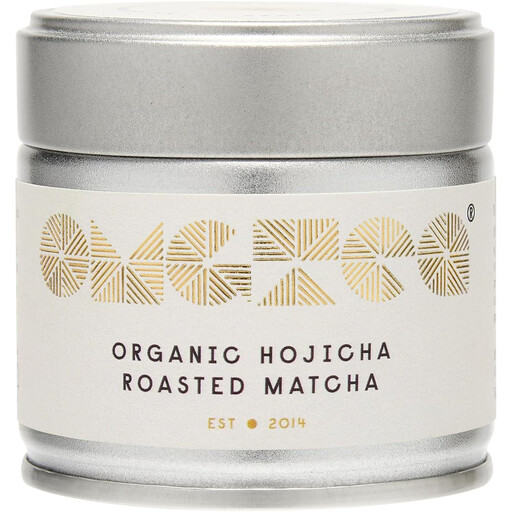
OMGTea Organic Hojicha Roasted Matcha 30g
For a roasted powder in a weekend latte or smoothie, check the caffeine statement against the amount you plan to use. This 30g product is not a caffeine-free choice.
View on Joybuy
 No image available
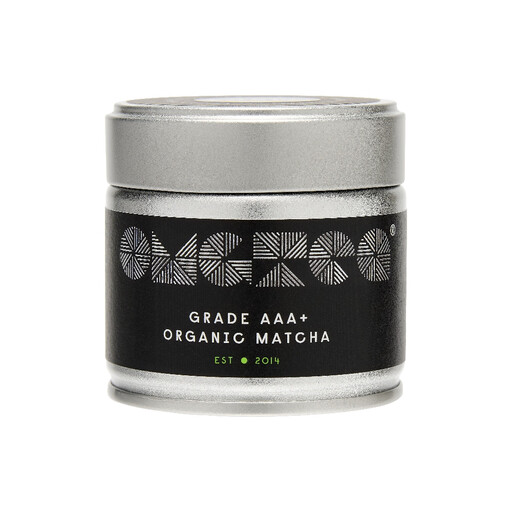
OMGTea Organic Matcha AAA+ 30g
For conventional matcha at weekend breakfast, this 30g powder is an option when you do not need decaf. It is not decaffeinated; check the caffeine information and powder portion for your drink.
View on Joybuy
Questions about decaf matcha
Is decaf matcha the same as a caffeine-free matcha-style powder?
No. Decaffeinated matcha starts as tea leaf, and JING Tea notes that decaffeinated tea can retain trace caffeine. A caffeine-free matcha-style powder can instead be made from a non-tea leaf; check the ingredients and caffeine wording on the exact product.
Does using less ordinary matcha make it decaf?
No. A smaller portion does not decaffeinate conventional matcha. Clearspring states that its premium matcha contains approximately 32mg of caffeine per 1g of dry powder, so measure the amount your recipe uses.
What could I choose if I want to avoid caffeine at breakfast?
Look for a product explicitly labelled caffeine-free and check that its ingredient is a non-tea leaf. Clearspring describes Kuwa Matcha as a mulberry-leaf powder, while Wild Cornish Tea Co describes its Nettle Matcha as a caffeine-free alternative to traditional matcha.
Will a mulberry- or nettle-leaf powder be the same as Japanese matcha?
No. Traditional matcha is made from green-tea leaves, while the named alternatives use mulberry or nettle leaves. Choose them for their stated caffeine-free, non-tea identity rather than expecting the same ingredient or flavour as traditional matcha.
Does a supermarket’s matcha category tell me which products are decaf?
No. Waitrose lists decaffeinated green tea separately from matcha products, so browse-category placement is not a caffeine claim. Read the individual product’s ingredients and caffeine statement before choosing it for breakfast.


