People avoiding caffeine
If you want to whisk a green powder for a drink with biscuits, Clearspring’s caffeine-free Kuwa Matcha is a mulberry-leaf option. It is not green-tea matcha.


If you need a caffeine-free powder, Clearspring describes Kuwa Matcha as caffeine-free, but it is made from mulberry leaves rather than green tea. For a familiar cup with biscuits, decaffeinated tea is another option, though JING Tea notes that traces of caffeine can remain. Choose ordinary matcha only if caffeine is acceptable: Clearspring lists approximately 32 mg per 1 g of its green-tea matcha powder.
If you want to whisk a green powder for a drink with biscuits, Clearspring’s caffeine-free Kuwa Matcha is a mulberry-leaf option. It is not green-tea matcha.
If the ingredient must be green tea, account for caffeine in the amount of powder you use. Clearspring lists approximately 32 mg per 1 g for its green-tea matcha.
If you want a familiar brewed tea rather than a whisked powder, conventional decaffeinated tea bags fit that way of serving it. JING Tea notes that decaffeinated tea can retain traces of caffeine.
Choose it when: You want a whisked powder and need to avoid caffeine.
Trade-off: Clearspring Kuwa Matcha uses mulberry leaves, not the green-tea leaves used for conventional matcha.
Choose it when: A familiar brewed cup matters more than a whisked matcha drink.
Trade-off: Decaffeination can leave trace caffeine, according to JING Tea.
Choose it when: You want matcha made from green tea and caffeine is acceptable.
Trade-off: It is not a decaf choice; Clearspring lists approximately 32 mg caffeine per 1 g of its green-tea matcha powder.
| Priority | What to check | Your needs |
|---|---|---|
| Caffeine avoidance | Check whether the product is described as caffeine-free or decaffeinated. JING Tea notes that decaffeinated tea can retain traces of caffeine. | I need to avoid caffeine, rather than just reduce how much I drink. |
| Ingredient identity | Read the ingredients to distinguish green-tea matcha from a matcha-style powder. Clearspring identifies Kuwa Matcha as mulberry-leaf powder. | The green-tea ingredient matters to me more than finding a caffeine-free powder. |
| Powder quantity | For ordinary matcha, check the caffeine figure and the grams used per drink. Clearspring lists approximately 32 mg caffeine per 1 g of its green-tea powder. | If I choose regular matcha, I want to account for the amount I use. |
| How you serve it | Decide whether you want to whisk a powder or brew tea bags; check the preparation directions for the product you choose. | A straightforward cup of tea with biscuits suits me better than making a powdered drink. |
Clearspring’s Kuwa Matcha is made from mulberry leaves, while conventional matcha is powdered green tea.
Check the ingredient if green-tea matcha matters to you; choose a mulberry-leaf powder only if that different ingredient suits the drink you want.
Regular green-tea matcha contains caffeine. Clearspring lists approximately 32 mg per 1 g of its powder, so the quantity used affects the caffeine in a drink.
If you need to avoid caffeine, choose a product explicitly described as caffeine-free instead of ordinary matcha.
Decaffeination removes most caffeine from tea, but traces can remain, according to JING Tea.
Check the product’s caffeine wording and ingredients if complete avoidance matters to you.
Clearspring describes both a caffeine-free mulberry-leaf powder called Kuwa Matcha and conventional green-tea matcha.
M&S offers decaffeinated tea bags for a brewed cup alongside biscuits.
Tesco Groceries lists matcha powders and decaf tea bags in separate categories.
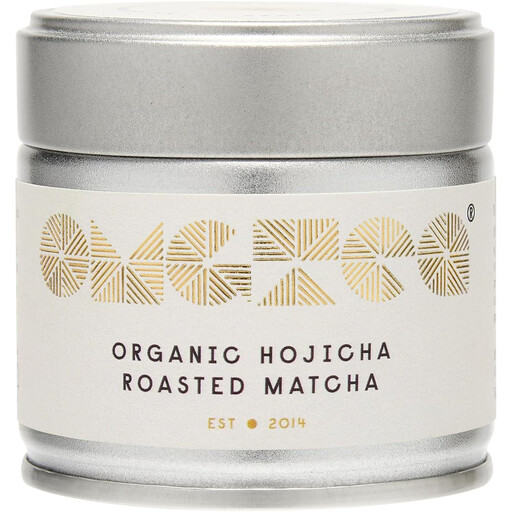
This roasted matcha option is for a powdered tea drink with biscuits when some caffeine is acceptable; it is not a caffeine-free substitute.
 No image available
A roasted matcha powder for a tea-style drink alongside biscuits when caffeine is acceptable. The pack is 30g; do not choose it if you need a caffeine-free drink.
No. Ordinary matcha is powdered green tea, not a decaf product. Clearspring lists approximately 32 mg caffeine per 1 g of its green-tea matcha powder.
No. Clearspring describes Kuwa Matcha as a caffeine-free powder made from mulberry leaves, rather than the green-tea leaves used for conventional matcha.
Conventional decaffeinated tea bags suit a brewed cup if you do not want a whisked powder. M&S offers decaffeinated tea bags, though JING Tea notes that decaffeinated tea can retain traces of caffeine.
Check whether it contains green tea or a different plant, and whether its caffeine wording says decaffeinated or caffeine-free. If a particular caffeine level matters to you, also check the product’s stated caffeine information and the quantity you plan to use.