For an office drink or snack ingredient that avoids caffeine, choose a clearly labelled caffeine-free botanical powder, such as mulberry-leaf or nettle powder, rather than ordinary matcha. These matcha-style powders are not green-tea matcha; Clearspring says its conventional matcha contains approximately 32mg caffeine per 1g of dry powder. If retaining tea-leaf matcha matters more, check whether a product has been decaffeinated and how much caffeine remains in the stated serving before buying.
Who is each option for?
The deciding question is whether caffeine must be avoided or whether a measured amount in genuine tea-leaf matcha is acceptable.
Office snackers avoiding caffeine
A clearly labelled caffeine-free mulberry- or nettle-leaf powder offers a green, whiskable ingredient without choosing conventional tea-leaf matcha. Check the ingredient line as well as the word “matcha” on the front of the pack.
Matcha drinkers reducing caffeine
Ordinary matcha still contributes caffeine. If a smaller serving is part of the plan, check the caffeine statement for that specific powder and account for other drinks and snacks consumed that day.
Pregnant office workers considering matcha
The NHS advises no more than 200mg caffeine a day during pregnancy, counting all sources. Check a tea powder’s caffeine per serving alongside other sources; a botanical powder should be checked for its exact ingredients and caffeine-free labelling.
What should you check before buying?
Start with the ingredient and caffeine wording, then consider whether the powder suits the drink or snack you intend to make at work.
| Priority |
What to check |
Your needs |
| Avoiding caffeine |
Read both the ingredient line and caffeine statement. JING Tea distinguishes naturally caffeine-free botanicals from decaffeinated tea, which has had most of its caffeine removed. |
I want an afternoon office drink or snack ingredient without relying on “decaf” to mean no caffeine. |
| Tea-leaf identity |
Check whether the powder is green tea, mulberry leaf or nettle leaf. Clearspring’s Kuwa Matcha is 100% organic Japanese mulberry leaf powder; Wild Cornish Tea Co describes its alternative as nettle-based. |
If I want conventional matcha flavour and tea-leaf ingredients, a botanical alternative is a different choice even if it is prepared in a similar way. |
| Serving amount |
For conventional matcha, compare the amount used with the product’s caffeine declaration. Clearspring states approximately 32mg caffeine per 1g of its Premium Grade Matcha dry powder; that figure is specific to that product. |
I can include caffeine in my routine, but I want to know what my actual serving contributes alongside other drinks and snacks. |
| Office preparation |
Check the maker’s preparation directions and intended uses. Clearspring lists lattes, smoothies, baking and desserts for Kuwa Matcha; Wild Cornish Tea Co describes its nettle powder as suitable for whisking into water or milk. |
One cupboard ingredient needs to work for the drinks or snack recipes I will actually make at work. |
| Genuine decaf tea |
If tea-leaf matcha is essential, confirm the exact ingredient, whether that variant is decaffeinated and its residual caffeine per stated serving. |
I want to keep tea-leaf matcha while reducing caffeine, rather than switch to a caffeine-free botanical powder. |
Common mix-ups to avoid
-
Assuming every green “matcha” powder is green tea
Clearspring’s Kuwa Matcha is mulberry leaf powder, while Wild Cornish Tea Co’s Nettle Matcha is made from nettle. Neither is conventional green-tea matcha.
Choose which matters more for this purchase: a caffeine-free ingredient or tea-leaf matcha. Check the ingredient line before choosing a flavour or preparation method.
-
Reading “decaf” as “caffeine-free”
JING Tea explains that decaffeinated tea has had most of its caffeine removed, whereas naturally caffeine-free herbal products did not contain caffeine to begin with.
If caffeine avoidance is the requirement, look for explicit caffeine-free labelling. For decaffeinated tea, check the remaining caffeine per serving.
-
Using ordinary matcha as a decaf ingredient
Conventional matcha contains caffeine: Clearspring states that 1g of its Premium Grade Matcha dry powder contains approximately 32mg.
Do not treat “ceremonial”, “latte” or “green tea” as a decaf claim. Read the caffeine information for the exact product and amount you plan to use.
Brand references
These product lines illustrate different meanings of “matcha” and “decaf”; a brand name alone does not establish the ingredients or caffeine content of every product it sells.
Clearspring
Clearspring sells both mulberry-leaf Kuwa Matcha and conventional green-tea matcha.
- Clearspring describes Kuwa Matcha as naturally caffeine free and lists 100% organic Japanese mulberry leaf powder as its ingredient.
- Its Premium Grade Matcha is a different, tea-leaf product: Clearspring states approximately 32mg caffeine per 1g of dry powder.
Wild Cornish Tea Co
Its Nettle Matcha is a nettle-leaf, matcha-style powder rather than green-tea matcha.
- The maker describes it as caffeine free and suitable for whisking into water or milk.
- The maker describes an earthy, kale-like flavour, which is a consideration if conventional matcha flavour is the aim.
JING Tea
JING Tea provides a useful distinction between its matcha, decaffeinated tea and naturally caffeine-free herbal products.
- JING Tea explains that decaffeinated tea is tea leaf with most caffeine removed, unlike naturally caffeine-free herbal ingredients.
- Its matcha and decaffeinated Ceylon are distinct products; neither name establishes a decaffeinated matcha option.
Joybuy tea-powder option
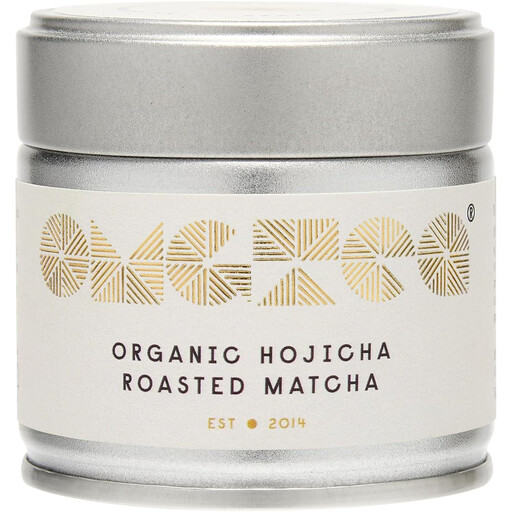
This roasted matcha tea powder is an option for office drinks or snack recipes when tea-leaf ingredients are wanted. Check its caffeine information and decaffeination status if either determines your choice; do not treat it as a caffeine-free botanical alternative.
 No image available
OMGTea Organic Hojicha Roasted Matcha 30g
For an office routine that allows tea-leaf powder, this 30g roasted matcha can be considered for drinks or snack recipes. Confirm its caffeine per serving and whether this exact product has been decaffeinated before choosing it for a decaf requirement.
View on Joybuy
Questions about decaf matcha
Is decaf matcha the same as caffeine-free matcha?
No. JING Tea distinguishes decaffeinated tea, which has had most caffeine removed, from naturally caffeine-free botanical ingredients. If avoiding caffeine is essential, check for explicit caffeine-free labelling and identify the ingredient rather than relying on “decaf”.
Can ordinary matcha be a decaf office snack ingredient?
No, ordinary matcha should not be treated as decaf. Clearspring states that its conventional Premium Grade Matcha contains approximately 32mg caffeine per 1g of dry powder; check the amount used and account for other caffeine sources if you choose it.
Which caffeine-free powder could I whisk into an office drink?
Clearspring describes its caffeine-free mulberry-leaf Kuwa Matcha as suitable for lattes, while Wild Cornish Tea Co describes its caffeine-free nettle powder as suitable for whisking into water or milk. Both are botanical alternatives, not conventional green-tea matcha.
How does matcha count towards caffeine intake during pregnancy?
The NHS advises no more than 200mg caffeine a day during pregnancy from all sources. Conventional matcha contributes to that total, so check the caffeine information for the product and serving alongside other drinks, chocolate and supplements; seek individual advice from a healthcare professional if needed.


