What should you check?
Choose the cup style first, then compare brewing directions, ingredient information and caffeine wording for the exact blend.
| Priority |
What to check |
Your needs |
| Blend style |
Check whether the product is black, green, fruit or herbal tea. For a specified black-tea blend, Twinings identifies Assam, Kenyan and Ceylon teas in its English Breakfast Decaffeinated. |
I want a familiar black-tea cup with an afternoon snack, perhaps with milk, rather than a fruit-led or herbal drink. |
| Brewing |
Follow directions for the particular blend. Twinings advises two to three minutes for English Breakfast Decaffeinated, or four minutes for a stronger cup; Clipper advises two to five minutes for Organic Everyday Decaf. |
If the first cup tastes too light for my snack, I want to try the blend's suggested brewing time before switching teas. |
| Sourcing and ingredients |
Read the exact pack's ingredients and sourcing claims. Clipper describes its Organic Everyday Decaf as organic and Fairtrade, lists decaffeinated organically grown black tea as its ingredient, and says it uses carbon dioxide to decaffeinate it. |
Organic ingredients or Fairtrade sourcing may matter to me alongside flavour; I also want to check the ingredients when changing products or variants. |
| Caffeine wording |
Check the current pack for the exact product. Twinings gives conflicting 0.2% and 0.02% caffeine figures on its English Breakfast Decaffeinated product page, so confirm a precise figure with the manufacturer if needed. |
I'm reducing caffeine and cannot treat the word ‘decaf’ as a precise amount or as a promise that the tea is caffeine-free. |
Decaf tea options on Joybuy
These options cover decaf black tea for an afternoon cup, including organic choices and everyday tea bags. Compare the exact pack when ingredients or caffeine details matter.
 No image available
Clipper Organic Fairtrade Decaf Everyday, 80 tea bags, 277g
An option if organic and Fairtrade claims matter when choosing decaf tea for an afternoon snack. Check the current pack for its ingredients, brewing directions and caffeine wording.
View on Joybuy
 No image available
Taylors of Harrogate Yorkshire Tea Decaf, 250g
Consider this for a conventional decaf black-tea cup: Yorkshire Tea describes its Decaf blend as crafted to retain its character after caffeine removal. That is the brand's flavour description, not a taste comparison; check the pack if you need a precise caffeine figure.
View on Joybuy
 No image available
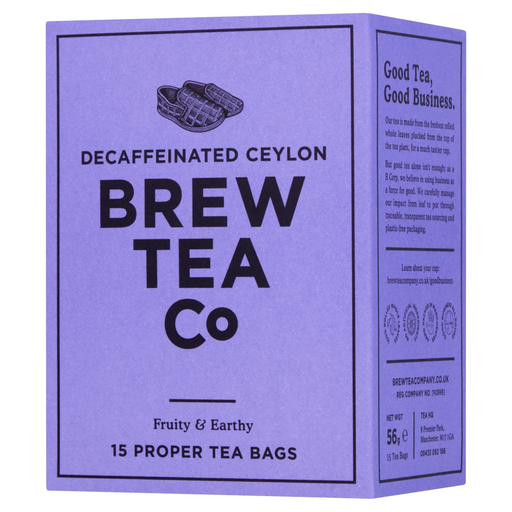
Brew Tea Co CO2 Decaffeinated Tea, 15 tea bags, 56g
The product name identifies CO2 decaffeination, which may matter if you are comparing stated processes. Check the current pack for the exact tea composition and caffeine wording.
View on Joybuy
 No image available
Tetley Decaffeinated Tea Bags, 80 bags, 250g
A bagged decaf tea option for an afternoon cup. Compare its current pack's brewing instructions and caffeine wording with the other blends if either affects your choice.
View on Joybuy
 No image available
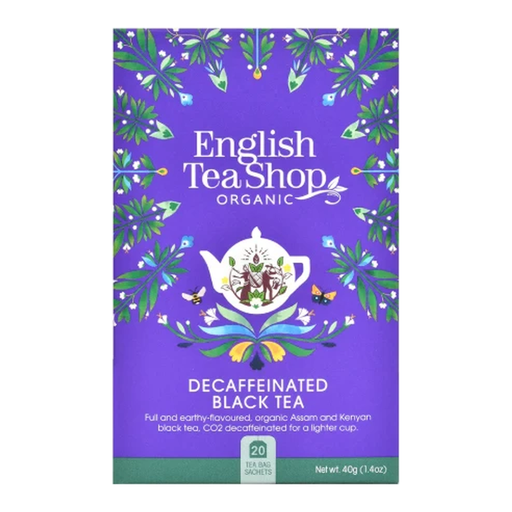
English Tea Shop Organic Decaffeinated Black Tea, 20g
An organic decaf black-tea option if that combination suits your afternoon cup. Check the current pack or ask the manufacturer before relying on a specific caffeine amount.
View on Joybuy
Frequently asked questions
Which decaf tea should I choose with an afternoon snack?
Start with decaf black tea if you want a familiar cup, particularly with milk. Twinings describes its English Breakfast Decaffeinated as a robust Assam, Kenyan and Ceylon blend; compare Clipper Organic Everyday Decaf if its stated organic ingredients and Fairtrade sourcing are more important to your choice.
How can I make a stronger decaf black tea?
Follow the directions for your blend and try the longer suggested brewing time. Twinings advises two to three minutes for its English Breakfast Decaffeinated, or four minutes for a stronger cup; Clipper advises two to five minutes for Organic Everyday Decaf. Yorkshire Tea advises four to five minutes for its tea and adding milk after brewing when making it in a mug.
Does decaf tea mean caffeine-free?
No: do not use ‘decaf’ as a promise of zero caffeine or a precise amount. Twinings gives conflicting 0.2% and 0.02% figures on its English Breakfast Decaffeinated product page, so check the current pack or ask the manufacturer about the exact product if you need a precise figure.
What if an allergy or intolerance affects my tea choice?
Read the current ingredient and allergen information for the exact product before buying or serving it. An ingredient statement for one tea does not establish the composition of another flavour or variant.
Are black, green, fruit and herbal decaf teas interchangeable?
They are different drink styles, so choose according to the cup you want with your snack. Tesco Groceries separates decaf black, green, fruit and herbal teas in its UK category navigation; check the individual product rather than assuming they will brew or taste alike.


