Black-tea drinkers reducing caffeine
If you want tea with sandwiches, scones or cake but prefer to cut back on caffeine later in the day, compare the black-tea style and brewing directions as well as the decaf label.


Choose a decaffeinated black tea according to how you serve afternoon tea: check the suggested brew and milk directions, a stated caffeine measurement if that matters to you, or organic and Fairtrade credentials if sourcing takes priority. Decaf does not necessarily mean caffeine-free: Yorkshire Tea states 1.5–2 mg per 200 ml cup brewed for five minutes, a figure that should not be applied to other preparations or brands.
If you want tea with sandwiches, scones or cake but prefer to cut back on caffeine later in the day, compare the black-tea style and brewing directions as well as the decaf label.
A prepared-cup measurement is more useful than an unspecified decaf claim when the amount matters to your choice. Yorkshire Tea states 1.5–2 mg per 200 ml cup brewed for five minutes; that figure applies to its stated preparation.
Clipper identifies its Everyday Decaf as organic and Fairtrade. If packaging disposal also matters, check the instructions for the particular tea bags rather than assuming all plant-based bags are handled alike.
Start with the type of cup you want to serve, then compare caffeine disclosures and preparation instructions on the same basis.
| Priority | What to check | Your needs |
|---|---|---|
| Residual caffeine | Look for the measurement and its basis. Yorkshire Tea states 1.5–2 mg for 200 ml brewed for five minutes; Tesco lists PG Tips at less than 0.2% caffeine, while Morrisons says Tetley is decaffeinated to 0.2%. A product percentage is not a prepared-cup measurement. | I want to know what the caffeine figure describes, especially if I use a different cup size or brew time. If I need a caffeine-free drink, I will check the product type rather than rely on the word “decaf”. |
| Black-tea style | Compare the stated blend and serving directions. Yorkshire Tea describes its decaf as strong; Twinings describes its English Breakfast Decaffeinated as having body and a light finish. Twinings and Tetley give directions that allow milk after brewing. | I serve tea with milk or alongside afternoon-tea food and want a black-tea style that suits that cup. |
| Brewing time | Check the directions for the exact product: Tesco lists one to two minutes for PG Tips; Twinings gives two to three minutes, or four for a stronger cup; Waitrose lists two to three minutes before milk for Tetley. | A shorter brew fits my routine, or I want to follow the stated method before deciding whether the tea is strong enough for me. |
| Sourcing and disposal | Check credentials on the relevant product. Clipper describes its Everyday Decaf as organic and Fairtrade. For plant-based bags, follow the brand’s disposal instructions and your local collection rules. | Organic or Fairtrade sourcing matters to my purchase, or I need to know where the used bags can go. |
Yorkshire Tea reports caffeine per prepared cup, while PG Tips and Tetley listings give product percentages. Those figures cannot be compared as though they measured the same cup.
If caffeine amount is decisive, check the stated measurement and preparation basis. For a caffeine-free drink, check that the product is a naturally caffeine-free infusion.
Directions differ between products, and changing the brew time also moves away from the preparation behind Yorkshire Tea’s stated per-cup caffeine figure.
Make the first cup according to the directions for that tea, then adjust the brew or milk to your preference.
Yorkshire Tea says its plant-based bags require industrial composting and are not suitable for a home compost heap.
Check the current pack and use a kerbside garden or food-waste collection only where those bags are accepted.
Waitrose cautions that recipes and allergen information can change.
Check the physical pack before use if ingredients, allergens or a particular product claim affect your choice.
Its Decaf is a black-tea option for a conventional afternoon cup.
English Breakfast Decaffeinated offers a black-tea route for a cup served with or without milk.
Organic & Fairtrade Everyday Decaf is relevant when those sourcing attributes matter.
Decaf Black Tea has a short stated brew time for an everyday cup.
Decaf is a black-tea option with directions for adding milk after brewing.
Its 80-bag Decaf is described by Typhoo as an everyday tea made with Kenyan tea.
These decaffeinated black-tea options include packs for a conventional afternoon cup and products with stated organic sourcing attributes. Compare the exact pack and its preparation guidance before choosing.
 No image available
For an afternoon cup where black-tea character and a stated caffeine figure matter. This is a 250g decaf pack; Yorkshire Tea describes its Decaf as strong and states 1.5–2 mg caffeine per 200 ml cup brewed for five minutes. Check the pack’s brewing directions for this pack.
 No image available
For a conventional decaf black tea served with milk. The pack contains 80 bags and weighs 250g; Waitrose advises brewing Tetley Decaf for two to three minutes before adding milk. Morrisons says it is decaffeinated to 0.2%, which is not a prepared-cup caffeine figure. Check the physical pack for current ingredients and allergens.
 No image available
For shoppers who want decaf black tea with organic and Fairtrade attributes. This 277g pack contains 80 bags; Clipper describes the relevant Everyday Decaf blend as robust and says it uses carbon-dioxide decaffeination. Check the pack if brewing directions or caffeine per prepared cup will determine your choice.
 No image available
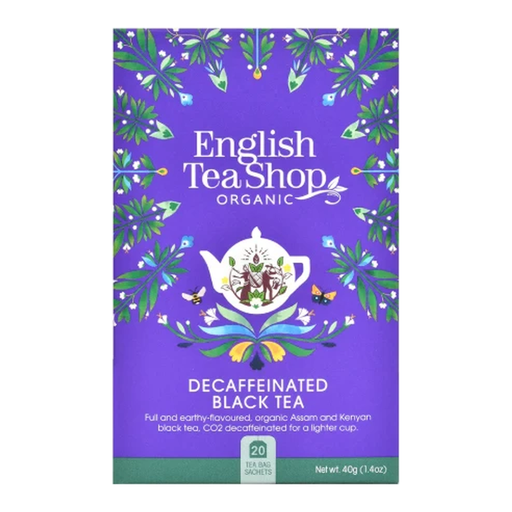
An organic decaffeinated black tea in a 20g pack; its product description calls the tea full-bodied. Check the pack for the bag count and brewing directions. If caffeine quantity matters, confirm the measurement basis before comparing its stated figure with caffeine-per-cup information.
 No image available
A larger decaf black-tea pack for regular afternoon cups, containing 160 bags and weighing 500g. The product information states Rainforest Alliance certification. Check this pack’s brewing directions and caffeine disclosure if either affects your decision; do not assume measurements for another Tetley pack apply to it.
No: a decaf label does not establish zero caffeine. Yorkshire Tea states 1.5–2 mg per 200 ml cup brewed for five minutes, while Tesco lists PG Tips Decaf at less than 0.2% caffeine. Check for a naturally caffeine-free infusion if you need a drink without caffeine.
Twinings English Breakfast Decaffeinated and Tetley Decaf both have milk-compatible directions. Twinings describes its tea as having body and a light finish; Waitrose advises brewing Tetley for two to three minutes before adding milk. Choose the stated style and brew time that suit the cup you want to serve.
Follow the directions for the exact tea rather than using one time for every bag. Tesco gives one to two minutes for PG Tips; Twinings advises two to three minutes, or four for a stronger cup; and Waitrose gives two to three minutes before milk for Tetley. Yorkshire Tea’s stated caffeine-per-cup figure uses a five-minute brew in 200 ml water.
Check the particular bag: Yorkshire Tea says its plant-based bags are not suitable for home composting and need industrial-composting conditions. It advises using kerbside garden or food-waste collection where accepted, so check the current pack and your local collection rules.