Who is this for?
The useful starting point is the drinker’s usual cup and the reason for switching, rather than their age alone.
Black-tea drinkers reducing caffeine
Someone who normally has black tea, perhaps with milk, may want a decaf blend that keeps their afternoon routine familiar. Ask whether they prefer a plain everyday tea or a more distinctive flavour before choosing.
People paying attention to caffeine and bladder symptoms
NHS Tayside describes caffeine as a bladder stimulant that can worsen symptoms including frequency and urgency. Decaf tea may be a practical swap for an ordinary cup, but individual symptoms and any clinician-directed caffeine limit call for personal advice.
Shoppers with ingredient or sourcing preferences
If organic ingredients or Fairtrade sourcing matter to the drinker, check the claims on the exact pack. Clipper’s Everyday Decaf, for example, is described by Clipper as an organic, Fairtrade decaffeinated black tea.
What should you check?
Choose the tea style first, then check its caffeine statement, ingredients and pack size against the person’s needs.
| Priority | What to check | Your needs |
|---|
| Caffeine |
Read the exact pack’s decaf and residual-caffeine wording. Do not equate decaf with zero caffeine: Twinings says UK decaffeinated teas typically contain no more than 0.2% caffeine and states 0.02% for its Everyday Decaffeinated blend. |
I’m switching from regular tea to reduce caffeine. If I have been given a specific limit, I need to check the product against that advice rather than rely on the word ‘decaf’. |
| Tea style |
Check whether it is plain black tea, flavoured Earl Grey or green tea. Use the brewing directions for that product rather than assuming every decaf bag makes the same strength of cup. |
A familiar black tea with milk sounds right for our afternoon tea; bergamot or green tea would be a deliberate change, not a like-for-like substitute. |
| Ingredients and sourcing |
Read the ingredient list for flavourings and check organic or Fairtrade claims on the particular product. Twinings lists bergamot and lemon flavourings in its decaf Earl Grey; Clipper describes its Everyday Decaf as organic and Fairtrade. |
I’d like to avoid an unexpected citrus flavour, or choose a tea whose stated sourcing matches what matters to the drinker. |
| Pack size |
Compare the number of bags and weight on the exact listing. A smaller pack is a practical way to try an unfamiliar blend before committing to more of it. |
If I don’t know whether they will like the flavour, I’d rather try fewer bags first. A larger pack suits a tea they already enjoy regularly. |
Brand references for decaf tea
These examples show how particular decaf lines differ; a brand’s description is not an independent taste test or a promise about every tea it makes.
Twinings
Its UK decaf range includes everyday black tea and flavoured options.
- Twinings states 0.02% caffeine for Everyday Decaffeinated.
- Its Earl Grey Decaffeinated contains bergamot and lemon flavourings, so check whether the drinker wants citrus notes.
Yorkshire Tea
Yorkshire Tea positions its Decaf as a familiar black-tea blend for people reducing caffeine.
- The brand describes a blend intended to retain its character after decaffeination.
- Check the current pack for the caffeine information needed for any specific limit.
Clipper
Its decaf options include Everyday Decaf black tea and decaf green tea.
- Clipper describes Everyday Decaf as decaffeinated organically grown black tea traded in compliance with Fairtrade standards.
- Choose between its black and green teas according to the drinker’s existing preference; they are different styles of cup.
PG Tips
PG Tips Decaf is a plain black-tea option for an everyday cup.
- Tesco’s UK listing for the 70-bag product states decaffeinated black tea, less than 0.2% caffeine and a 1–2 minute brew.
- Follow the directions and disclosures on the pack actually purchased.
Typhoo
Typhoo describes its 80-bag Decaf as an everyday Kenyan black tea.
- The brand states 3.125g of tea per bag for this product.
- Typhoo notes that packaging may vary, so check the current pack for details that matter to you.
Tetley
Tetley’s 160-bag Decaf is a larger-format plain black-tea option.
- The Joybuy listing identifies decaffeinated black tea and a 160-bag, 500g pack.
- Check the pack’s caffeine statement if a specific residual-caffeine figure is important.
Joybuy tea bags to consider
These are decaf black-tea bag options for a familiar afternoon cup, including one with stated organic and Fairtrade sourcing. Compare pack sizes and check the current packaging for any caffeine requirement that affects the choice.
 No image available
Taylors of Harrogate Yorkshire Tea Decaf 250g
A plain decaf black-tea choice for someone who usually drinks black tea at afternoon tea. The listing identifies a 250g pack and describes the blend as bold and full-bodied; check the current pack if a particular caffeine limit matters.
View on Joybuy
 No image available
Tetley 80 Decaffeinated Tea Bags 250g
An 80-bag black-tea option for a regular afternoon cup. The title identifies it as decaffeinated; because the listed ingredient is simply ‘black tea’, check the current pack’s decaf wording and caffeine information if those details are important.
View on Joybuy
 No image available
Tetley 160 Decaf Tea Bags 500g
A larger pack to consider when the drinker already wants an everyday decaf black tea. The listing states decaffeinated black tea, 160 bags and 500g; check the current pack for a residual-caffeine statement if a specific limit applies.
View on Joybuy
 No image available
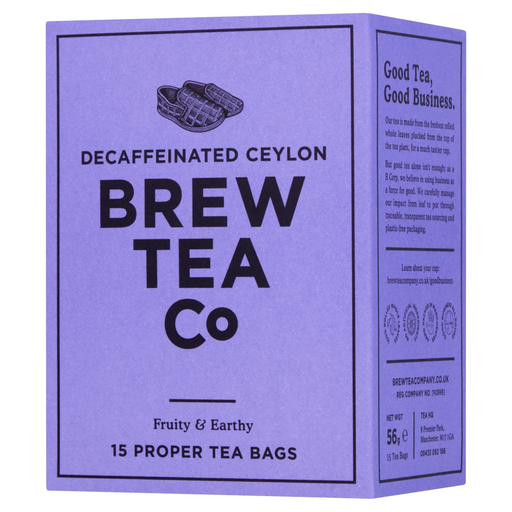
Brew Tea Co CO2 Decaffeinated Tea, 15 bags, 56g
The 15-bag pack offers a smaller quantity for trying an unfamiliar black-tea blend. The listing describes CO2 decaffeination and a Ceylon tea style, while its ingredient wording says ‘Organic Black Tea’; check the current pack’s decaf and caffeine statements if either is decisive.
View on Joybuy
 No image available
Clipper Organic Fairtrade Decaf Everyday 80 Tea Bags 277g
A plain decaf black-tea option when stated organic ingredients and Fairtrade sourcing also matter. The listing identifies 80 bags and 277g; check the current packaging for the sourcing claims and any caffeine information needed for a specific limit.
View on Joybuy
Questions about decaf tea
Does decaf tea contain no caffeine at all?
Not necessarily. Twinings says UK decaffeinated teas typically contain no more than 0.2% caffeine and states 0.02% for its Everyday Decaffeinated blend. Check the exact pack, and ask a clinician or pharmacist if you are following a strict caffeine-avoidance instruction.
Is decaf tea an option for someone concerned about bladder urgency?
It can replace an ordinary caffeinated tea when someone wants to reduce caffeine. NHS Tayside identifies caffeine as a bladder stimulant that can worsen urgency and frequency; this does not establish what is causing an individual’s symptoms. Seek clinical advice about new or persistent symptoms.
Should the person drink less overall when switching to decaf?
A switch to decaf is not, by itself, a reason to cut back on drinks. Gloucestershire Hospitals NHS Foundation Trust’s bladder and bowel guidance emphasises sufficient fluid intake. Follow any individual fluid restriction given by a healthcare professional.
How can I avoid an unwanted flavour?
Check the ingredients and ask what tea the person normally enjoys. Twinings Earl Grey Decaffeinated lists bergamot and lemon flavourings, while Clipper Everyday Decaf lists decaffeinated organically grown black tea. A plain decaf black tea is the closer match for someone who expects an unflavoured cup with milk.
How long should a decaf tea bag brew?
Follow the directions on the exact product rather than using one time for every blend. Tesco’s listing gives 1–2 minutes for PG Tips Decaf; adjust the cup to the drinker’s taste within the guidance on the pack being served.


