Travellers choosing less caffeine
If you want a familiar black-tea drink during a journey or after a late arrival, a decaf-labelled blend gives you a conventional tea-bag option. Pack the bags dry and plan where you can obtain hot water.


Choose clearly labelled decaf black-tea bags if you want a conventional cup of tea with less caffeine, then match the pack size to your trip. Carry them dry: GOV.UK says food in hand luggage may need manual screening, and you will need hot water after security or at your destination. If you need to avoid caffeine entirely, do not rely on a decaf label alone; check the ingredients and caffeine wording of a herbal or fruit infusion instead.
If you want a familiar black-tea drink during a journey or after a late arrival, a decaf-labelled blend gives you a conventional tea-bag option. Pack the bags dry and plan where you can obtain hot water.
A small pack may be easier to fit around other hand luggage when you only expect to make a few cups. Twinings lists an English Breakfast Decaffeinated 20 Envelopes format; check the delivered pack if individual wrapping matters to you.
If organic, Fairtrade or tea-bag material claims influence your choice, compare the wording on the exact pack. A decaf label alone does not tell you how a particular bag is made or disposed of.
Start with the caffeine wording and the number of cups you expect to make, then check what carrying and brewing the tea will involve.
| Priority | What to check | Your needs |
|---|---|---|
| Caffeine wording | Check that the exact product is labelled decaffeinated black tea. If residual caffeine matters, read its own pack statement rather than applying another blend’s wording to it. | I want a conventional black-tea option with less caffeine. If I need to avoid caffeine entirely, I’ll check the ingredients and caffeine wording of a different infusion. |
| Airport packing | Keep tea bags dry and distinguish them from a prepared drink. GOV.UK says food in hand luggage can require manual screening; check the departure and transit airports’ rules. | I want to take tea through security without treating dry bags as though they were a cup of brewed tea. |
| Pack quantity | Compare the stated bag count and weight with the length of the trip and your available luggage space. Check the final pack format if wrapping matters. | For a short stay, I may only use a few bags; for a longer stay or shared supply, a larger box could be useful. |
| Blend and brewing | Read the blend description and the instructions on the chosen pack. Make sure you can obtain the water needed to brew it after security or at your destination. | I want a tea style I recognise, but I also need a practical place to make it rather than just carry the bags. |
| Sourcing and materials | Compare product-specific organic, Fairtrade, decaffeination-method and tea-bag material statements. Follow the waste facilities available where you use the bags. | If sourcing or disposal affects my choice, I want the claim to apply to the pack I’m buying, not merely to the brand. |
A brewed drink is a liquid; dry tea bags are food. GOV.UK says food in hand luggage may need a further manual check, while liquid restrictions apply to drinks.
Pack the bags dry, arrange hot water after security and check the rules at each departure or transit airport.
Decaffeinated black tea should not be treated as a zero-caffeine product. Caffeine wording can also differ between products.
If avoiding caffeine entirely is essential to your choice, check the ingredients and caffeine statement of the exact herbal or fruit infusion instead of relying on “decaf”.
An 80- or 160-bag pack takes up space that may not be warranted if you expect to make only a few cups.
Estimate how many bags you will use, then compare a smaller format with a larger box before packing.
Organic, Fairtrade, decaffeination-method and tea-bag material statements describe particular products. They do not establish how every blend from that brand is made or disposed of.
Read the exact pack’s ingredients and claims, and use the waste facilities available at your destination.
These examples show pack formats and product descriptions worth comparing; a brand name alone does not establish the details of every decaf variant.
Tesco Groceries lists Tetley decaffeinated black tea in 40-bag, 125 g and 80-bag, 250 g formats.
Twinings UK describes its English Breakfast Decaffeinated 20 Envelopes as a blend of Assam, Kenyan and Ceylon teas.
Clipper has an organic decaf black-tea line; a Tesco Groceries listing for a 40-bag product describes Fairtrade sourcing and a CO₂ decaffeination method.
Yorkshire Tea describes a Decaf blend designed, in the brand’s words, to retain its character after caffeine removal.
Typhoo describes its 80 Decaf Premium Tea Bags as an everyday blend made with Kenyan tea.
A Joybuy collection listing identifies PG Tips 70 Decaf Tea Bags 203 g.
These decaf black-tea bag options include smaller quantities for a short trip and larger packs to consider for a longer stay or shared supply. Compare the stated formats with your luggage space and access to hot water.
 Image unavailable
The 80-bag, 250 g format may suit a longer stay or shared tea supply. Tesco Groceries identifies the corresponding 80-bag product as decaffeinated black tea; you will need hot water to make a cup.
 Image unavailable
The 80-bag, 277 g pack is an option for a longer stay or several tea drinkers. Organic and Fairtrade are claims in this product’s name; check the exact pack wording if those claims determine your choice.
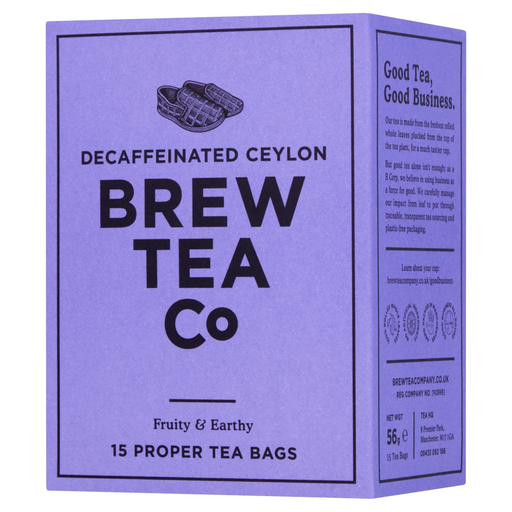 Image unavailable
The stated 15-bag, 56 g quantity is worth considering if you expect to make only a few cups. Check the pack dimensions if hand-luggage space is tight, and its brewing directions before travel.
 Image unavailable
This 40-bag, 200 g variant provides more bags than the separate 15-bag Brew Tea Co listing. Check which quantity fits your trip and read this pack’s brewing instructions.
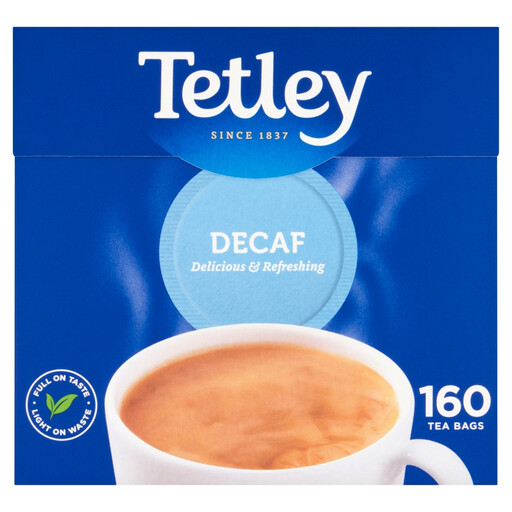 Image unavailable
The stated 160-bag, 500 g quantity may suit a long stay or a shared supply. For a short trip, compare that quantity and weight with the space available in your luggage.
Dry tea bags are not a liquid drink, but they may still be checked. GOV.UK says food in hand luggage can obstruct X-ray images and require manual screening; check the departure airport and any transit airport before travelling.
Brewed tea is a drink, so liquid restrictions apply. GOV.UK says containers over 100 ml cannot pass through security at most UK airports; check the rules at the airport you will use rather than treating dry tea bags and a prepared cup alike.
No: do not assume a decaf black-tea label guarantees zero caffeine. If avoiding caffeine entirely is essential, check the ingredients and caffeine wording of a product labelled caffeine-free rather than relying on “decaf”.
Carry the bags dry, then obtain hot water after security or at your destination. Follow the instructions on your chosen pack; a tea bag on its own is not a ready-to-drink airport beverage.
A smaller quantity is worth considering if you expect to make only a few cups. Compare the stated bag count and weight with your trip length and luggage space; a larger box may make more sense for a longer stay or several tea drinkers.