What should you check before buying?
For a weekday breakfast cup, compare blend style and brewing time first, then check caffeine wording and any sourcing or tea-bag claims that matter to you.
| Priority | What to check | Your needs |
|---|
| Caffeine wording |
Read the exact pack claim. Tesco lists PG Tips Decaf as containing less than 0.2% caffeine; Twinings gives conflicting figures for its English Breakfast Decaffeinated tea on one product page, so neither figure should be used as a confirmed threshold. |
I need to know what the current pack actually says about caffeine remaining, rather than relying on the word “decaf”. |
| Breakfast cup |
Compare an English Breakfast-labelled blend with everyday decaf black tea. Consider the stated blend description and how you intend to serve it, without assuming every decaf tea will taste alike. |
A familiar black-tea cup with breakfast matters more to me than a particular brand name. |
| Brewing time |
Follow the instructions for the exact pack. Tesco lists one to two minutes for PG Tips Decaf and four to five minutes for Yorkshire Tea Decaf; its Tetley 80-bag listing suggests two to three minutes before adding milk. |
On a weekday morning, I want brewing instructions that fit the time I have. |
| Sourcing and bags |
Check each claim separately. Clipper identifies its Everyday Decaf as organic and Fairtrade; a claim about plant-based bags does not, by itself, establish which collection will accept them. |
I want the sourcing or tea-bag material claim to apply to the pack I buy, not just to the brand generally. |
Relevant tea brands
These references concern the named decaf products, not every tea made by each brand.
Twinings
English Breakfast Decaffeinated is a breakfast-labelled black-tea option.
- Twinings describes a blend of Kenyan teas and a cup with body and a light finish.
- Its product page gives conflicting residual-caffeine figures; check the current pack or ask Twinings if a precise figure matters.
Yorkshire Tea
Decaf is an everyday black-tea option for shoppers happy with a longer brew.
- Tesco lists a four-to-five-minute preparation time for the 80-bag Decaf pack.
- Check the exact pack if you need a stated residual-caffeine amount.
PG Tips
Decaf is an everyday black-tea option with short brewing instructions on the reviewed Tesco listing.
- Tesco lists a one-to-two-minute brew and says the product contains less than 0.2% caffeine.
- Use the current pack to confirm that retailer-listed caffeine claim if it is decisive for you.
Clipper
Organic Everyday Decaf addresses shoppers looking for organic and Fairtrade black tea.
- Clipper describes an Assam-based blend and says it uses carbon dioxide for decaffeination.
- Check the exact pack if you need a stated residual-caffeine amount.
Tetley
The 80-bag Decaffeinated pack is an everyday black-tea option.
- Tesco identifies an 80-bag, 250g pack and suggests brewing for two to three minutes before adding milk.
- Do not read “none of the caffeine” wording as a measured zero-caffeine declaration.
Typhoo
The 80-bag Decaf product is an everyday tea that Typhoo describes as made with Kenyan tea.
- Typhoo states a tea weight of 3.125g per bag.
- Its one-to-five-minute brewing range leaves room to choose a time to suit your taste; check the pack if you need a stated residual-caffeine amount.
Joybuy decaf tea options
These decaf tea bags cover everyday breakfast black tea, an organic and Fairtrade option, and different pack sizes. Compare the details of each listed variant rather than applying one pack’s instructions to another.
 No image available
Taylors of Harrogate Yorkshire Tea Decaf 250g
For an everyday decaf breakfast cup, this 250g pack is identified as decaffeinated black tea. Check its current pack for brewing instructions and a caffeine declaration if either affects your choice.
View on Joybuy
 No image available
Clipper Organic Fairtrade Decaf Everyday, 80 bags, 277g
This everyday decaf option is labelled organic and Fairtrade and contains 80 tea bags. Confirm preparation directions on the pack: the product description also suggests chilled serving.
View on Joybuy
 No image available
Tetley Decaffeinated, 80 tea bags, 250g
An everyday decaffeinated black-tea pack with an option to add milk after brewing. Tesco’s listing for this 80-bag, 250g product suggests a two-to-three-minute brew; check the current pack if a precise caffeine declaration matters.
View on Joybuy
 No image available
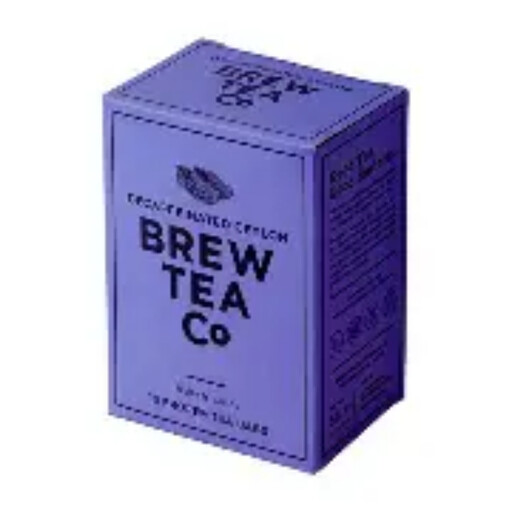
Brew Tea Co CO2 Decaffeinated Tea, 40 bags, 200g
A 40-bag decaf tea option for a smaller breakfast cupboard pack. The product name states CO2 decaffeination; check the pack for its brewing directions and caffeine declaration if these matter to you.
View on Joybuy
 No image available
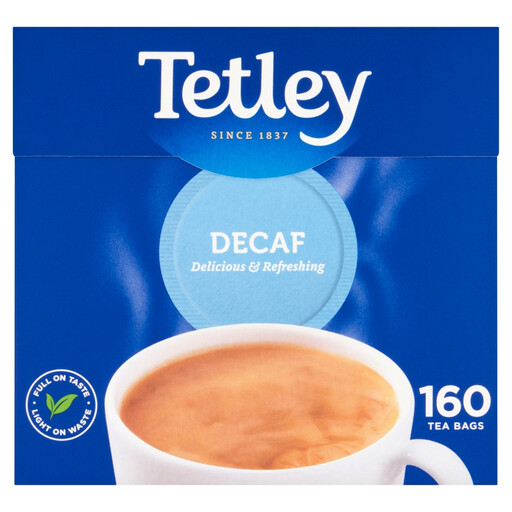
Tetley Decaf, 160 tea bags, 500g
This 160-bag decaf pack suits a routine where a larger cupboard pack is useful. It is a distinct 500g variant; check its own pack for brewing instructions rather than assuming they match the 80-bag product.
View on Joybuy
Questions about decaf tea bags
Does decaf tea mean completely caffeine-free?
No: do not assume the wording means zero caffeine. Tesco says PG Tips Decaf contains less than 0.2% caffeine, and the Twinings English Breakfast Decaffeinated page gives two conflicting figures. Check the current pack or ask the manufacturer if the amount remaining matters to you.
Which type of decaf tea bag suits a weekday breakfast?
Choose by blend style and the time you have to brew it. Twinings has an English Breakfast-labelled decaf blend; Tesco lists a one-to-two-minute brew for PG Tips Decaf and four to five minutes for Yorkshire Tea Decaf. Clipper’s Organic Everyday Decaf is an option when organic and Fairtrade tea are priorities.
How long should I brew a decaf black-tea bag?
Use the directions for the exact pack. Tesco lists one to two minutes for PG Tips Decaf, two to three minutes for Tetley’s 80-bag Decaffeinated pack and four to five minutes for Yorkshire Tea Decaf; those timings should not be treated as a single rule for all decaf teas.
Does decaf tea still count when limiting caffeine during pregnancy?
Check the tea’s caffeine declaration and count caffeine from other foods and drinks too. The NHS advises no more than 200mg of caffeine a day during pregnancy and identifies tea, coffee, cola, energy drinks and chocolate among possible sources.
Can decaf tea bags go in a food-waste collection?
Follow the disposal instructions for the exact tea bag and check what your local collection accepts. Twinings describes its tea bags as industrially compostable where a suitable food-waste collection is available; that does not establish that every decaf tea bag is accepted or suitable for home composting.


