Who is each option for?
The useful distinction is between wanting a familiar tea flavour, protecting bags in a food kit and avoiding caffeine as strictly as possible.
Campers who want an evening cuppa
Decaf black tea keeps the familiar black-tea style without relying on regular tea. Twinings notes that decaffeinated tea can still retain small traces of caffeine, so check the pack if that distinction matters to you.
Campers with limited dry storage
Individually wrapped bags keep unused portions sealed when supplies are opened repeatedly. If you take a standard carton, move the bags into a clean, sealed dry container before the trip.
Campers avoiding caffeine as strictly as possible
A confirmed naturally caffeine-free herbal or fruit infusion is a different choice from decaffeinated black or green tea. Check the exact ingredients, including for mate or guarana, rather than relying on the blend’s name.
What should you check before packing tea?
Choose the drink type first, then check whether its packaging and brewing instructions work with your storage space, water supply and cooking setup.
Decaf black tea
Choose it when: You want a familiar black-tea cup and can keep the bags dry.
Bear in mind: Decaffeination does not guarantee that every trace of caffeine has been removed, according to Twinings.
Decaf green tea
Choose it when: You prefer green tea and can follow the instructions on the particular pack.
Bear in mind: Clipper’s decaf green tea calls for boiled water to cool for a minute before infusion; it is still decaffeinated tea, not a zero-caffeine guarantee.
Herbal or fruit infusion
Choose it when: A confirmed naturally caffeine-free drink matters more than black- or green-tea flavour.
Bear in mind: Check each blend for caffeinated ingredients such as mate or guarana.
| Priority | What to check | Your needs |
|---|
| Caffeine | Read the exact pack’s caffeine wording and ingredient list. Twinings says minor traces can remain in decaffeinated tea; check herbal and fruit blends for mate or guarana. | For an evening black-tea cup, decaf may suit me. If I need to avoid caffeine as strictly as possible, I’ll check a naturally caffeine-free infusion instead. |
| Dry storage | Check whether portions are individually sealed. Keep an opened carton in a clean, sealed dry container; the Food Standards Agency advises sealed containers for camping food. | My food kit may be opened in damp weather, so I need a way to keep unused bags protected. |
| Brewing | Follow the chosen pack’s time and water-temperature instructions. Clipper’s decaf green tea calls for boiled water to cool for one minute before a 1–3 minute infusion. | If I’m making drinks alongside a camp meal, I want a routine that fits my kettle or stove setup. |
| Water and cooking | Confirm a reliable, safe drinking-water source, as The Scout Association advises. Check the campsite’s cooking rules; Home Office guidance for England says open fires in the countryside should be confined to safe, designated areas. | I need to know where I can get drinking water and prepare a hot drink before deciding what to pack. |
| Waste | Check which waste materials the campsite accepts. Industrial-composting or recyclable-packaging descriptions do not establish an outdoor disposal route. | I want somewhere to put used bags and wrappers, or space to take them away with the rest of my rubbish. |
Tea brands and their decaf ranges
These brand examples show differences in format and preparation; a brand’s wider range does not tell you how every individual pack is wrapped or brewed.
Twinings
Twinings lists decaf black and green teas, including All Day Decaf pyramid bags in individual envelopes.
- Twinings describes its 15-bag All Day Decaf pack as sealed in recyclable envelopes for freshness.
- Twinings says decaffeinated tea can retain caffeine traces; check the exact pack rather than applying one caffeine figure across its range.
Clipper
Clipper lists organic, Fairtrade decaf black and green teas.
- Its Organic Everyday Decaf is described by Clipper as decaffeinated organically grown black tea.
- Clipper’s decaf green tea instructions include a one-minute cooling step before infusion.
Tetley
A UK retailer lists Tetley Decaf 80 Tea Bags as decaffeinated black tea in plant-based bags.
- Waitrose & Partners lists a 2–3 minute brew for that 80-bag pack.
- The retailer specifies cool, dry storage; check the physical pack for current ingredients and dietary information.
PG Tips
ASDA lists a 70-bag PG Tips decaf black-tea pack with a 1–2 minute brewing instruction.
- That listing states a caffeine content of less than 0.2% for the specified pack.
- Any industrial-composting description depends on an accepted collection route; it is not permission to discard a bag outdoors.
Yorkshire Tea
Yorkshire Tea describes its decaf blend as intended for people seeking a low-caffeine or bedtime brew.
- It offers a decaf option for those who prefer its traditional black-tea range.
- Check the particular pack for its caffeine wording, bag count and storage format before planning a trip around it.
Typhoo
Typhoo describes an 80-bag decaf blend suited to someone packing a conventional carton.
- Typhoo gives a 1–5 minute suggested brew for its 80-bag product.
- Typhoo says packaging may differ, so check the delivered pack’s details and keep it cool and dry.
Decaf tea bags on Joybuy
These options cover decaf black and green tea bags for camping. Compare their pack sizes with the space in your food kit, and use a sealed dry container where needed.
 No image available
Clipper Organic Fairtrade Decaf Everyday 80 Tea Bags 277g
This decaf black-tea carton may suit a shared trip if you can keep the opened bags dry. The listing specifies 80 bags and 277g; Clipper’s matching Organic Everyday Decaf instructions give a 2–5 minute brew. Check the pack’s caffeine statement if traces matter to you, and use a sealed dry container rather than assuming the bags are individually wrapped.
 No image available
Tetley 80 Decaffeinated Tea Bags 250g
This 80-bag decaf black-tea pack is an option when you want a familiar cup and have room to protect a carton from damp. Its listing gives a 2–3 minute brew and cool, dry storage. Check the pack’s caffeine wording if traces matter, and bring a sealed dry container for an opened pack.
 No image available
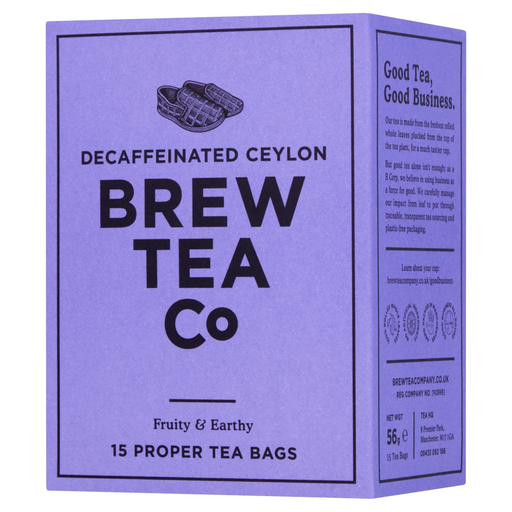
Brew Tea Co CO2 Decaffinated Tea, 15 Proper Tea Bags, 56g
This 15-bag decaf black-tea pack offers a smaller stated quantity for a camping food kit. Its product description claims CO₂ decaffeination and rolled whole-leaf tea; those descriptions do not establish zero caffeine. Check the pack’s caffeine wording, brewing instructions and wrapping before relying on them for your trip.
 No image available
Tetley 160 Decaf Tea Bags 500g
This 160-bag decaf black-tea box may suit a group trip if its size works for your food kit. The listing identifies decaffeinated black tea and specifies cool, dry storage. Keep opened bags in a sealed dry container, and check this pack’s caffeine and brewing instructions where those details affect your choice.
 No image available
Tetley Green Tea Decaffeinated 50 Tea Bags 100g
This 50-bag pack is the green-tea option here for campers who prefer it to black tea. The listing states decaffeination to 0.2%, which does not mean zero caffeine, and specifies cool, dry storage. Check this pack’s water-temperature and brewing instructions before planning your camp routine.
Camping tea questions
Is decaf tea completely caffeine-free?
No. Twinings says minor caffeine traces tend to remain after decaffeination. If you need to avoid caffeine as strictly as possible, check the exact drink’s ingredients and caffeine wording; a naturally caffeine-free infusion must also be checked for ingredients such as mate or guarana.
How should I pack tea bags for a damp or multi-day trip?
Use individually wrapped bags, or put standard bags in a clean, sealed dry container. Twinings says its All Day Decaf pack has 15 pyramid bags sealed in individual envelopes; for an opened carton, a separate container protects the remaining bags when the food kit is accessed repeatedly.
Can I make tea with any campsite water source?
No. The Scout Association advises checking that you have a reliable, safe source of drinking water. If the source is uncertain or the site issues a water notice, follow the site operator’s or water authority’s instructions rather than assuming tea preparation makes the water safe.
Can I use an open fire to boil tea water anywhere in England?
No. Home Office outdoor fire-safety guidance for England says to avoid open fires in the countryside and have them only in safe, designated areas. Check the campsite’s rules and use an appropriate cooking area.
Can used tea bags go in a campsite compost bin?
Only if the collection provided accepts those particular bags. Industrial-composting wording does not mean they can be left outdoors; where there is no suitable collection route, take used bags and wrappers away with your other rubbish.


