Care-home catering teams planning routine service
These teams need a tea residents will choose to drink and a pack they can store and replenish. Pack count matters for ordering, but it cannot establish whether residents will accept the tea.


For routine care-home tea service, consider offering decaf by default while keeping caffeinated tea available on request, as NHS Nottingham and Nottinghamshire Integrated Care Board suggests. Choose the pack format around residents’ preferences and the home’s ordering routine, and check individual care plans and the exact product label: decaf does not necessarily mean caffeine-free.
These teams need a tea residents will choose to drink and a pack they can store and replenish. Pack count matters for ordering, but it cannot establish whether residents will accept the tea.
Decaf can be considered alongside each resident’s preferences and care plan, rather than imposed as the only tea. NHS Nottingham and Nottinghamshire Integrated Care Board describes a decaf-by-default approach that still offers caffeinated drinks on request.
An 80-bag pack or an organic and Fairtrade option may suit a smaller or more varied tea offer. Check the particular product’s pack claims and whether residents prefer it before changing the routine selection.
Decide how tea will be offered to residents, then compare the exact packs that fit that service.
| Priority | What to check | Your needs |
|---|---|---|
| Caffeine information | Read the delivered pack and supplier specification. Check whether any stated caffeine amount depends on cup size or brewing time; do not equate decaf with caffeine-free. | I need a lower-caffeine option, but a resident’s strict restriction calls for product-specific information and advice from their relevant care team. |
| Resident choice | Keep the available tea choices clear and check individual preferences and care plans. For CQC-regulated services in England, the Care Quality Commission’s Regulation 14 guidance says food and drink provision must take assessed needs and preferences into account. | If decaf becomes the usual offer, I still want residents who prefer caffeinated tea to be able to request it. |
| Drinking support | Ask whether residents accept the flavour and can drink the tea in the form served. Account for any individual assistance or drink requirements in their care plans. | A tea residents leave untouched will not meet the aim of offering a drink they enjoy. Somerset NHS Foundation Trust notes that dementia or physical frailty can affect how much support a person needs to drink. |
| Pack format | Compare bag count, net weight, storage instructions and how often the home would reorder. A 160-bag black-tea pack and a smaller pack serve different ordering patterns; neither establishes taste or suitability. | For frequent service, I want a workable replenishment routine. For a smaller offer, I may prefer a pack that lets us assess residents’ response before ordering more. |
| Ingredients and pack claims | Check the current ingredients and any organic or Fairtrade wording on the exact product supplied. Check storage instructions and the best-before date on delivery. | Where a resident has a specific dietary requirement, I need the information on the tea actually being served, not an older product description. |
University Hospitals of Leicester NHS Trust explains that decaf tea can retain very low levels of caffeine. Yorkshire Tea states an average of 1.5–2 mg per cup for its Decaf tea, based on 200 ml of water and five minutes’ brewing; that figure should not be applied to other products or brewing conditions.
Check the exact pack or supplier specification. Refer questions about a resident’s strict caffeine restriction to their relevant healthcare or dietetic team.
A default drink is not the same as a compulsory one. NHS Nottingham and Nottinghamshire Integrated Care Board’s care-setting guidance keeps caffeinated drinks available on request; the Care Quality Commission’s Regulation 14 guidance requires CQC-regulated services in England to account for assessed needs and preferences.
Make both choices available and use the home’s normal care-planning and drinks-service processes to reflect individual needs.
Ingredients, pack claims and storage instructions need to correspond to the product staff actually serve, particularly where a resident has a specific dietary requirement.
Check the delivered pack’s ingredients, relevant allergen information, storage instructions and best-before date before adding it to the drinks service.
These examples describe particular decaf tea lines and pack formats, not every product made by each brand.
A 160-bag, 500 g decaffeinated black-tea pack provides a large-format option for routine service.
PG Tips Decaf Black Tea is listed in a 160-bag, 464 g pack, another large-format choice for regular service.
Yorkshire Tea Decaf provides a stated residual-caffeine figure for a specified brew.
Everyday Decaffeinated is listed by Twinings as an 80-bag, 250 g pack for a smaller tea offer.
Organic Everyday Decaf comes in an 80-bag pack for buyers considering organic and Fairtrade product claims.
These options include decaf black tea in different pack sizes and one decaf green tea for a different tea preference. Compare each pack with the home’s drinks service and residents’ individual requirements.
 No image available
The 160-bag black-tea format is an option for frequent routine service. Check the delivered pack’s caffeine wording before relying on it for a strict restriction, and assess resident preferences before standardising it.
 No image available
This decaf black tea has a stated 250g net weight; confirm the bag count for ordering. Yorkshire Tea states an average of 1.5–2 mg caffeine per 200 ml cup brewed for five minutes, so it should not be treated as caffeine-free.
 No image available
This 80-bag decaf black-tea option is for a smaller or more varied service. Confirm the organic and Fairtrade claims, storage instructions and caffeine information on the supplied pack before relying on them.
 No image available
The 80-bag, 250g format offers a smaller ordering quantity than Tetley’s 160-bag pack. Check the delivered pack’s decaf and ingredient wording, particularly if the tea is intended for a resident with a strict caffeine restriction.
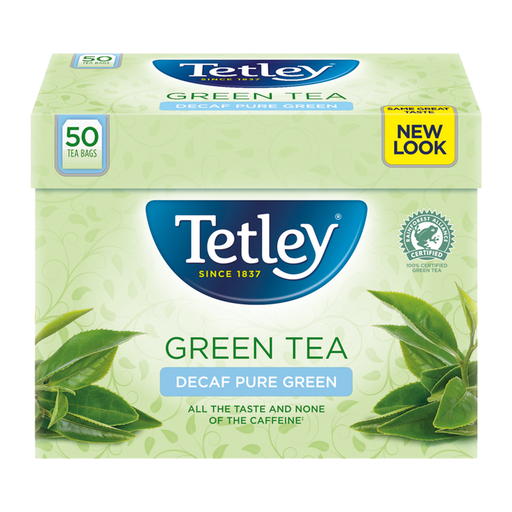 No image available
This 50-bag, 100g pack is green tea rather than the black tea in the other listed options. Confirm that residents want green tea and check the supplied pack’s caffeine information if a precise limit matters.
Yes, provided it remains a choice rather than a blanket substitution. NHS Nottingham and Nottinghamshire Integrated Care Board suggests introducing decaf as the default in care settings while offering caffeinated drinks on request. For CQC-regulated services in England, the Care Quality Commission’s Regulation 14 guidance also requires food and drink provision to reflect assessed needs and preferences.
No such assumption is safe. University Hospitals of Leicester NHS Trust says decaf drinks can retain very low caffeine levels; Yorkshire Tea states an average of 1.5–2 mg per 200 ml cup of its Decaf tea brewed for five minutes. Check the exact product specification if a resident has a strict caffeine restriction.
A 160-bag pack can fit frequent service if residents accept that tea and the home can store and use it within the pack’s date and instructions. An 80-bag option may be more practical for a smaller offer or for assessing preferences before a larger order; pack size alone does not establish suitability.
Check residents’ preferences and individual care plans, then check the delivered tea’s ingredients, relevant allergen information, caffeine wording and storage instructions. For CQC-regulated services in England, the Care Quality Commission’s Regulation 14 guidance requires providers to take assessed nutritional needs and people’s preferences, religious backgrounds and cultural backgrounds into account when providing food and drink.