Hosts serving tea with milk
If guests expect black tea alongside scones, clotted cream and jam, a decaf black blend keeps the familiar tea style. Look at the blend’s flavour description, then brew before adding milk.


For a familiar cream-tea cup with milk, start with decaffeinated black tea and use descriptions such as robust or full-bodied to narrow your choice, rather than treating them as independent taste ratings. Decaf can retain traces of caffeine; if avoiding caffeine entirely matters more than keeping the black-tea flavour, consider a suitable naturally caffeine-free infusion and check its ingredients. Brew the tea in hot water before adding milk, following the pack’s timing.
If guests expect black tea alongside scones, clotted cream and jam, a decaf black blend keeps the familiar tea style. Look at the blend’s flavour description, then brew before adding milk.
Decaf black tea offers a way to reduce caffeine without switching tea styles. Twinings and Lancashire Teaching Hospitals NHS Foundation Trust both note that decaffeinated tea can retain small amounts of caffeine, so it is not automatically a caffeine-free choice.
Some buyers also want to check organic or Fairtrade credentials, a stated decaffeination method, or tea-bag disposal instructions. Check these details for the exact pack: a claim about sourcing does not tell you how to dispose of its bags.
Decide first whether a familiar black-tea cup or avoiding caffeine entirely matters more; then compare brewing directions, serving format and pack details.
Choose it when: You want the conventional black-tea style served with milk at a cream tea.
Keep in mind: Decaffeination can leave traces of caffeine, and brands’ flavour descriptions are not comparable taste-test results.
Choose it when: Avoiding caffeine matters more than reproducing a conventional black-tea cup.
Keep in mind: An infusion tastes different from black tea; check blends for caffeine-containing ingredients such as mate or guarana.
| Priority | What to check | Your needs |
|---|---|---|
| Tea style | Check whether the pack contains decaffeinated black tea or a naturally caffeine-free infusion. Treat descriptions such as robust and full-bodied as brand or retailer descriptions, not standardised measures. | I want a recognisable black-tea cup with milk alongside the scones; a fruit or herbal flavour would be a different choice. |
| Residual caffeine | Read the exact product’s caffeine wording and ingredients. Twinings says minor traces can remain in decaffeinated tea; check infusions for mate or guarana. | If avoiding caffeine entirely is important to me, I cannot assume that a pack marked decaf contains none. |
| Brewing | Follow the product’s stated infusion time and add milk after brewing in hot water. Waitrose & Partners gives 1–2 minutes for its listed PG Tips Decaf; Yorkshire Tea’s general brewing guidance gives 4–5 minutes. | I plan to serve tea with milk, so I want to prepare each blend as directed rather than use one timing for every bag. |
| Serving format | Check the number of bags and whether they are individually wrapped. Twinings describes its 15-bag All Day Decaf pack as individually wrapped pyramid bags. | For guests choosing their own tea, individual wraps may suit how I serve it; for a larger gathering, I need to check the pack count. |
| Sourcing and disposal | Check credentials and disposal directions on the exact pack. Clipper describes its Everyday Decaf as organic and Fairtrade and says it uses carbon dioxide for decaffeination. | I may want a stated sourcing or decaffeination method, but I will check tea-bag and wrapper disposal separately. |
Twinings and Lancashire Teaching Hospitals NHS Foundation Trust note that decaffeinated tea can retain small amounts of caffeine.
If you need to avoid caffeine entirely, check the ingredients of a suitable naturally caffeine-free infusion, including whether it contains mate or guarana.
Yorkshire Tea advises brewing in very hot water before adding milk when making tea directly in a mug.
Infuse the bag first, use the timing for the product you have chosen, and add milk afterwards.
Green, fruit, herbal and flavoured teas do not provide the same flavour as a conventional black-tea cup with milk.
If that familiar cup is the aim, begin with decaf black tea. Offer another style when a guest prefers its flavour or needs a suitable caffeine-free option.
Waitrose & Partners advises that product information can change, while Typhoo says its packaging may vary during updates.
Check the received pack for current ingredients, allergen statements, preparation directions, disposal instructions and best-before information, particularly when serving guests with dietary requirements.
Yorkshire Tea presents its Decaf as a black-tea blend intended to retain its character after decaffeination.
Twinings lists several decaf tea styles, including black tea, Earl Grey and green tea.
Clipper describes its Everyday Decaf as an organic, Fairtrade decaffeinated black-tea blend.
Typhoo describes its Decaf Premium 80-bag product as an everyday Kenyan-tea blend.
Waitrose & Partners lists PG Tips Decaf as decaffeinated black tea in a 70-bag pack.
Tata Consumer Products describes Tetley as a tea brand offering styles for different occasions.
These decaf tea bags are options for serving a black-tea-style cup with a cream tea. Compare pack sizes and any sourcing preferences, then check the received pack for its brewing directions and caffeine wording.
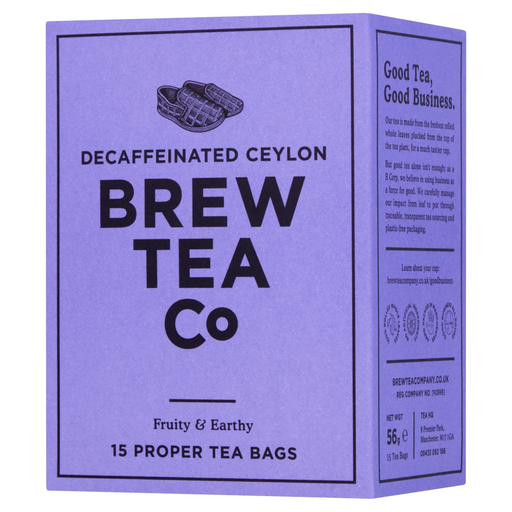 No image available
A smaller decaf tea-bag pack to consider when planning a cream tea for a few guests. The title states CO2 decaffeination; check the received pack for its exact ingredients and brewing directions.
 No image available
This 40-bag pack offers another serving quantity for a cream tea where decaf tea is wanted. Its title states CO2 decaffeination; follow the received pack’s brewing directions.
 No image available
The 80-bag count helps when planning tea for a larger group. Check the received pack’s brewing and caffeine wording; decaffeinated tea should not be assumed to contain no caffeine.
No image available
This decaf black-tea option combines an 80-bag pack with the organic and Fairtrade attributes stated for Clipper Everyday Decaf. Clipper says it uses carbon dioxide to decaffeinate the tea; check the pack for preparation and disposal directions.
 No image available
A decaf option for a conventional tea-and-milk serving. Yorkshire Tea describes its Decaf blend as retaining its character after decaffeination; check the exact pack for its bag count and brewing directions.
No. Twinings says decaffeination removes nearly all the caffeine but minor traces can remain. If avoiding caffeine entirely is the priority, consider a suitable naturally caffeine-free infusion and check for ingredients such as mate or guarana.
Decaffeinated black tea keeps the conventional tea style served with milk. Descriptions such as robust, rich or full-bodied can help you choose which blends to consider, but they are brand or retailer descriptions rather than comparable taste-test scores.
When brewing directly in a mug, infuse the tea in hot water before adding milk. Yorkshire Tea gives that order in its brewing guidance; use the timing on your chosen pack, since products give different directions.
No. Twinings describes the envelopes around its All Day Decaf pyramid bags as recyclable, which does not establish how to dispose of the tea bags themselves. Check the pack’s separate bag-disposal instructions and your local collection rules.