Late-night black-tea drinkers
If you like a traditional cup after supper, perhaps with milk, decaffeinated black tea keeps that style of drink while reducing caffeine compared with ordinary black tea. It is not necessarily caffeine-free.


Choose decaffeinated black tea if you want a familiar cuppa after supper, including tea you can take with milk. Decaf can retain traces of caffeine, so if avoiding caffeine altogether matters more than black-tea flavour, look for a naturally caffeine-free herbal or fruit infusion and check its ingredients.
If you like a traditional cup after supper, perhaps with milk, decaffeinated black tea keeps that style of drink while reducing caffeine compared with ordinary black tea. It is not necessarily caffeine-free.
If even trace caffeine matters to you, distinguish decaf tea from a naturally caffeine-free infusion. Twinings notes that minor traces can remain in decaffeinated tea; check the ingredients of herbal-style blends too.
If organic or Fairtrade certification, tea-bag materials or disposal instructions affect your choice, check the claims on the exact pack. They need not apply to every tea made by the same brand.
Choose it for: A recognisable black-tea cup after supper, including one you can take with milk.
Bear in mind: Decaffeination can leave minor traces of caffeine, as Twinings explains.
Choose it for: A different kind of hot drink when avoiding caffeine takes priority over black-tea flavour.
Bear in mind: Check the ingredients rather than assuming every herbal-style blend is caffeine-free.
| Priority | What to check | Your needs |
|---|---|---|
| Caffeine | Check whether the pack says decaffeinated or naturally caffeine-free. For an infusion, read the ingredient list rather than relying on its herbal description. | I want a hot drink after supper without choosing ordinary black tea close to bedtime. If avoiding caffeine altogether matters, a labelled caffeine-free infusion is the more relevant option. |
| Familiar flavour | Look for decaffeinated black tea if you want a conventional tea-with-milk cup. Follow the selected pack’s infusion guidance and adjust to your taste. | A black-tea brew still sounds right after supper; a lemon or ginger infusion would be a different drink, even if both come in tea bags. |
| Sourcing and materials | Check organic, Fairtrade or other sourcing statements on the exact product. Read its tea-bag disposal instructions separately from claims about the tea. | I care which sourcing claims apply to the pack I am buying, and I want to know how its bags should be disposed of. |
| Pack size | Compare the bag count and net weight of the actual variants. Check the best-before date if the tea will only be an occasional evening drink. | A smaller pack may make more sense for my occasional after-supper cup; a larger one may suit a household that drinks it regularly. |
Twinings explains that decaffeinated tea can retain minor traces of caffeine. A herbal-style name alone does not establish that a blend contains none.
Choose labelled decaf black tea for a traditional cuppa with less caffeine than ordinary tea. If avoiding caffeine altogether is important, choose a labelled caffeine-free infusion and inspect its ingredients.
The tea bags in an occasional evening pack may remain unused as its best-before date approaches.
Compare bag counts and net weights, then check the date on the pack against how regularly you expect to brew it.
These are references for particular decaf tea lines, not claims about every product from each brand or what is currently available to buy.
Yorkshire Tea positions its Decaf blend for people who want black-tea character in an evening cup.
Twinings offers decaffeinated black-tea options including Everyday and English Breakfast.
Clipper’s Organic & Fairtrade Everyday Decaf is a black-tea option for shoppers interested in those stated sourcing credentials.
Typhoo describes its 80 Decaf Premium Tea Bags as an everyday brew made with Kenyan tea.
Tetley Decaffeinated is a familiar black-tea format for an after-supper cuppa.
PG Tips has a decaffeinated black-tea option for shoppers who prefer that brand’s tea.
These options include decaffeinated black teas for a familiar after-supper cup and one herbal infusion for shoppers who prefer a labelled caffeine-free alternative.
 No image available
Consider this decaffeinated black tea if the named product’s organic and Fairtrade credentials matter alongside a traditional tea brew. The pack contains 80 bags; check its disposal instructions and residual caffeine information if either affects your choice.
 No image available
This decaffeinated black tea fits a familiar after-supper cuppa; Yorkshire Tea says its Decaf blend is made to retain character. The stated net weight is 250g. Check the bag count before buying if quantity matters to you.
 No image available
A decaffeinated black-tea option for a conventional cup with or without milk. The listing gives an 80-bag count, 250g net weight and a suggested infusion of 2–3 minutes. Decaf should not be taken to mean zero caffeine.
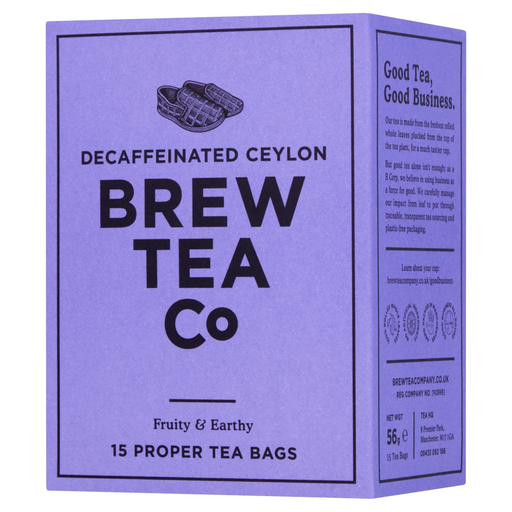 No image available
This 15-bag Ceylon black-tea pack offers a smaller stated quantity for an occasional evening brew. The listing describes a CO2 decaffeination method; check the exact pack if residual caffeine or tea-bag disposal is important to you.
 No image available
Choose this herbal infusion rather than decaf black tea if its labelled caffeine-free status and lemon-and-ginger flavour fit your evening drink. It contains 20 bags, with a stated 3–5 minute infusion time; it is not a like-for-like milk-tea brew.
No. Twinings explains that decaffeination removes nearly all caffeine from tea but can leave minor traces. If avoiding caffeine altogether matters, look for a labelled caffeine-free herbal or fruit infusion and check its ingredients.
Choose a decaffeinated black tea and brew it according to the pack. Twinings describes its Everyday Decaffeinated as a well-rounded cup, while its English Breakfast Decaffeinated is a black-tea option that can be taken with milk.
NHS Borders advises that caffeine-containing drinks can make people feel more awake and disrupt sleep. Decaf black tea reduces caffeine compared with ordinary tea but may retain traces, so a labelled caffeine-free infusion is the more relevant choice if you want to avoid it altogether.
Do not assume so from the word “biodegradable” alone. Check the disposal instructions on the exact pack and what your local council accepts; those instructions may differ from claims about the tea itself.