Students setting up a first tea cupboard
Tea bags can be brewed in a mug without a teapot. A smaller first pack lets you find out whether you like the blend before giving it more cupboard space.


For a first student cupboard, start with a manageable pack of decaf tea bags in the style you already enjoy rather than stocking up before you know how often you will use them. Decaf black tea is not necessarily caffeine-free: Yorkshire Tea, for example, states an average of 1.5–2 mg per 200 ml cup of its Decaf brewed for five minutes. If Organic and Fairtrade credentials matter to you, Clipper offers a decaf black-tea option with both.
Tea bags can be brewed in a mug without a teapot. A smaller first pack lets you find out whether you like the blend before giving it more cupboard space.
If you want a familiar black-tea cup later in the day, check the distinction between decaf and caffeine-free. Yorkshire Tea gives a residual-caffeine figure for its Decaf tea under a specified brewing method.
If Organic ingredients and Fairtrade sourcing affect your choice, Clipper’s Organic Everyday Decaf is a product to compare with conventional decaf black-tea bags.
Choose the tea style and a sensible first-pack quantity, then check the label for caffeine information, brewing instructions and any sourcing claims that matter to you.
| Priority | What to check | Your needs |
|---|---|---|
| Remaining caffeine | Check a product-specific figure and its brewing basis. Yorkshire Tea states an average of 1.5–2 mg per 200 ml cup of its Decaf brewed for five minutes; that figure does not describe other teas or preparations. | I want decaf tea for later in the day, but I do not want to mistake it for a caffeine-free drink. |
| Tea style | Check whether the pack contains decaf black tea or decaf green tea; they are distinct choices. Read the current pack if the precise blend matters. | A familiar black-tea brew matters to me, or I would rather try green tea. |
| Brewing | Check the instructions on your chosen pack. Tesco’s Tetley Decaffeinated listing says one bag per mug and 2–3 minutes; its PG Tips Decaf listing gives 1–2 minutes. | I want to make a mug of tea in a shared kitchen without needing a teapot. |
| Pack quantity | Check the bag count, not just the pack weight. Yorkshire Tea lists 40-, 80- and 160-bag formats for its Decaf range; confirm the count on the particular pack you choose. | I would rather try a manageable quantity before committing cupboard space to a large box. |
| Sourcing and disposal | Check credentials on the specific product. Clipper describes its Organic Everyday Decaf as Organic and Fairtrade; Yorkshire Tea says its PLA-sealed bags should not go in home compost. | Organic or Fairtrade sourcing matters to me, and I want to follow the bag’s disposal instructions. |
Decaf black tea can retain caffeine. Yorkshire Tea’s stated average of 1.5–2 mg applies to a 200 ml cup of its Decaf brewed for five minutes, not to every decaf tea.
Check the current product’s caffeine information. If you need to avoid caffeine completely, do not assume a decaf black tea meets that requirement.
Pack counts vary, and a large box may take up cupboard space long after you discover that you seldom drink it.
Consider a smaller pack first unless you already know the blend or expect to share it with flatmates.
A larger pack also takes more space to store or carry when you move again.
Yorkshire Tea says its PLA-sealed tea bags need conditions that a home compost heap does not provide.
Follow the pack’s disposal instructions and check what your local collection accepts.
These references describe particular decaf products and ranges; check the current pack for the details that determine your choice.
Tetley Decaffeinated is a conventional black-tea-bag option for a straightforward mug brew.
PG Tips Decaf is another black-tea-bag option for a simple mug routine.
Yorkshire Tea Decaf is a black-tea option with a stated brewed-cup caffeine figure.
Twinings offers Everyday and English Breakfast decaf black-tea bags made with Kenyan teas.
Clipper Organic Everyday Decaf is a black-tea option when sourcing credentials influence the choice.
Typhoo presents its 80-bag Decaf Premium product as an everyday tea made with Kenyan tea.
These tea bags offer different first-cup choices for a student cupboard: smaller and larger decaf packs, black tea and green tea, and a Clipper option with Organic and Fairtrade credentials.
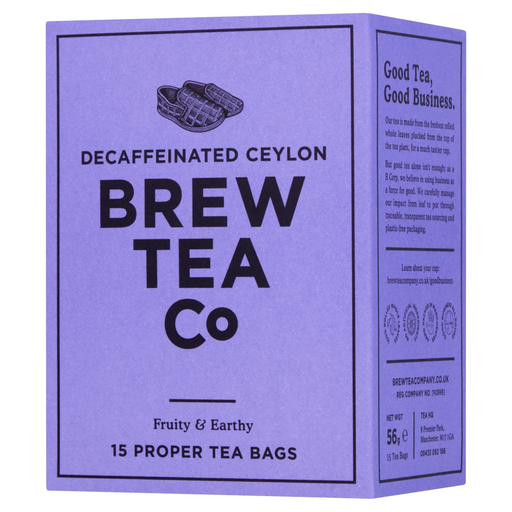 No image available
The 15-bag pack is a smaller quantity to try in a new cupboard. The listing describes Ceylon tea and CO2 decaffeination, but its ingredient line says “Organic Black Tea”; check the current pack’s decaf wording if that distinction matters to you.
 No image available
This 80-bag decaf black-tea pack suits a cupboard where Organic and Fairtrade credentials matter. Clipper describes the matching product as carbon-dioxide decaffeinated; check the current pack if you need a particular residual-caffeine figure or brewing instruction.
 No image available
This is an 80-bag decaf black-tea pack for a familiar mug brew. Its product description gives a 2–3 minute brewing instruction; do not interpret decaf wording as a statement that the brewed tea contains no caffeine.
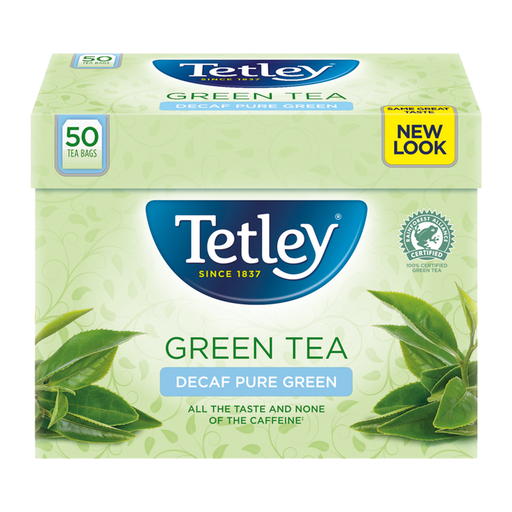 No image available
Choose this 50-bag pack if you want decaf green tea rather than the black-tea style of the other everyday options here. The listing states decaffeination to 0.2%; that statement is not a brewed-cup caffeine figure.
 No image available
This decaf black tea is worth considering if a stated caffeine figure helps you choose: Yorkshire Tea gives an average of 1.5–2 mg per 200 ml cup brewed for five minutes. Check this particular 250g pack’s bag count before comparing quantities.
No. Decaf black tea can retain caffeine: Yorkshire Tea states an average of 1.5–2 mg for a 200 ml cup of its Decaf brewed for five minutes. If you must avoid caffeine completely, check the current product label rather than assuming a decaf tea is suitable.
Yes. Bagged tea can be brewed directly in a mug. Tesco’s Tetley Decaffeinated listing specifies one bag per mug and 2–3 minutes, while its PG Tips Decaf listing gives a 1–2 minute brew; follow the instructions for the pack you buy.
Keep them in a cool, dry place, following the pack’s storage directions. The checked Tetley, Clipper and Typhoo product information gives cool-and-dry guidance, so a damp spot beside the kettle would not fit those instructions.
Not automatically. Yorkshire Tea says its PLA-sealed bags should not go in a home compost heap. Check the instructions for your particular bags and use a local garden- or food-waste collection only if that service accepts them.