Breastfeeding parents managing caffeine
Decaf tea can replace some standard cups, but other sources of caffeine still count. NHS breastfeeding guidance advises people who drink caffeine to try not to exceed 300mg a day.


Choose decaffeinated black tea if you want to keep a familiar tea-bag routine while reducing caffeine, but do not assume decaf means caffeine-free. Compare the tea style and ingredients, then check the current pack for its caffeine wording and size. If you are breastfeeding, caffeine from other food and drinks still contributes to your daily intake.
Decaf tea can replace some standard cups, but other sources of caffeine still count. NHS breastfeeding guidance advises people who drink caffeine to try not to exceed 300mg a day.
A decaffeinated black tea keeps the familiar tea-bag format when you want to reduce caffeine later in the day. Yorkshire Tea describes its Decaf as a blend intended to retain the character of its tea; that is the brand’s description, not an independent taste comparison.
If organic ingredients or Fairtrade sourcing matter to you, Clipper Organic Everyday Decaf is one option to examine. Check the current pack’s ingredients and certification information for the product you buy.
Decide whether you want a black-tea cup, a different tea style or an infusion, then compare the caffeine wording and practical pack details.
| Priority | What to check | Your needs |
|---|---|---|
| Caffeine | Read the current pack’s decaf and caffeine wording. If you need a precise amount, check what any figure measures; a percentage does not by itself give the caffeine in a brewed cup. | I want to swap some standard cups for decaf while keeping track of caffeine from other food and drinks. |
| Tea style | Check whether the bags contain decaffeinated black tea, green tea or an herbal or fruit infusion. Follow the product’s own brewing instructions if preparation time matters. | A familiar black tea matters to me, including the option to add milk; a green tea or infusion would be a different cup. |
| Ingredients | Read the ingredients and allergen information on the delivered pack. Check organic or Fairtrade claims on the particular product rather than assuming they apply across a brand. | I need to know what is in the bags, whether for a household allergy, an ingredient preference or a sourcing preference. |
| Pack format | Compare the stated bag count and net weight. Check the date marking and storage directions on the pack you receive. | For a regularly used household tea, I want a pack size I can assess before stocking the cupboard. |
Decaffeinated tea can retain traces of caffeine, so the word “decaf” is not a zero-caffeine guarantee.
If avoiding residual caffeine is important, consider an appropriate herbal or fruit infusion instead, and check the ingredients: blends containing mate or guarana are not necessarily caffeine-free.
Twinings English Breakfast Decaffeinated product information includes differing 0.2% and 0.02% statements. Those figures should not be treated as an unambiguous amount per brewed cup.
If an exact residual-caffeine figure affects your choice, check the current packaging and ask the manufacturer what its statement measures.
Ingredients and other food information can change between a listing and the pack delivered to your home.
Check the packaging when it arrives, particularly its ingredients, allergens, date marking and storage instructions.
Its Decaf is a conventional black-tea option for a familiar everyday cup.
English Breakfast Decaffeinated offers a named black-tea style for buyers who want that type of cup.
Organic Everyday Decaf is a black-tea option for buyers interested in organic and Fairtrade credentials.
PG Tips Decaf is an everyday decaffeinated black-tea format.
Tetley Decaffeinated provides a plain black-tea option in the 80-bag product listed by Tesco Groceries.
Typhoo presents its Decaf as an everyday Kenyan-tea blend.
These options include decaffeinated black tea for a familiar cup and one decaffeinated green tea for a different tea style. Check each pack’s current details against the caffeine, ingredient and size information you need.
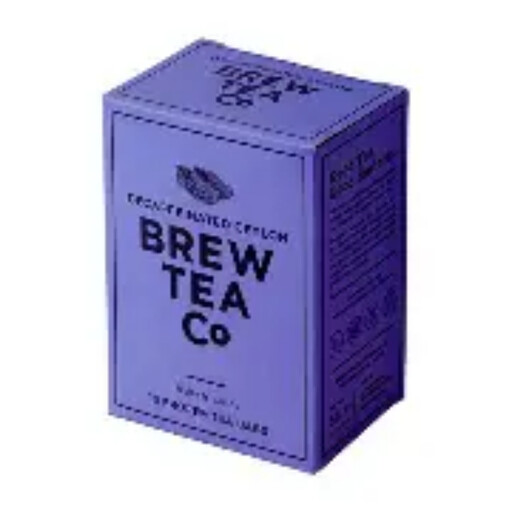 No image available
Consider this for a tea-bag routine when a stated CO2 decaffeination method matters to you. Check the current pack’s caffeine wording if you need to track a precise amount.
 No image available
Consider this larger everyday pack if organic and Fairtrade labelling matter to you. Check the delivered pack’s ingredient and decaffeination wording before relying on it for your caffeine choices.
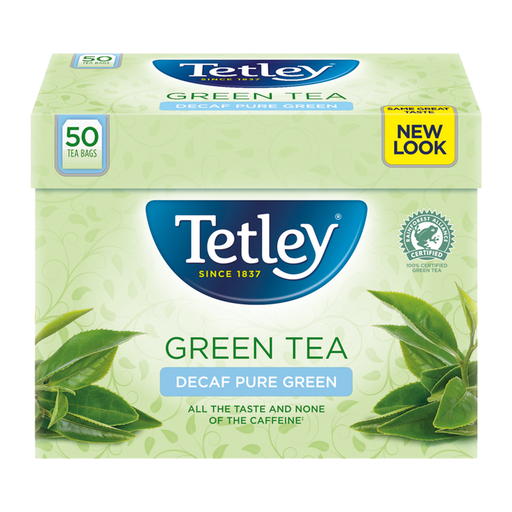 No image available
Choose this style if you want decaffeinated green tea rather than a black-tea cup. Check the pack’s caffeine wording if you need an amount for a brewed serving.
 No image available
Consider this for a familiar Yorkshire Tea decaf cup. Check the pack for its bag count and caffeine wording if either affects your choice.
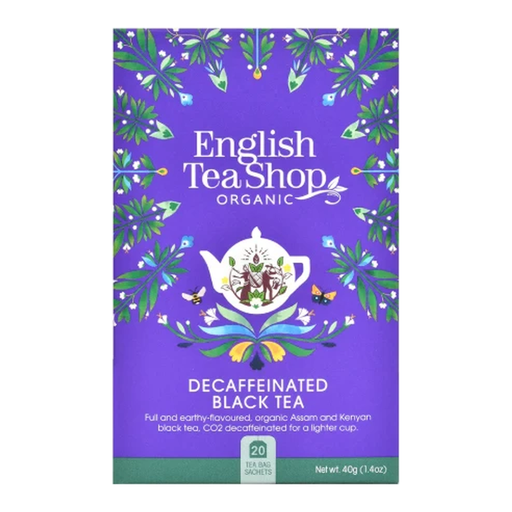 No image available
Consider this if you want an organic decaffeinated black-tea option. Confirm the bag count and what any caffeine figure on the pack measures before using it to track intake.
No. Decaffeinated tea can retain traces of caffeine. A figure stated for dry tea should not be treated as the amount in every brewed cup; check what the current pack’s caffeine statement measures.
Decaf can replace some standard cups, but caffeine from other food and drinks still contributes to total intake. NHS breastfeeding guidance advises people who drink caffeine to try not to exceed 300mg a day.
Choose decaffeinated black tea when a familiar tea flavour and milk-friendly routine matter more to you. If avoiding the residual caffeine that can remain in decaf is the priority, consider an appropriate herbal or fruit infusion and check its ingredients for caffeine-containing additions such as mate or guarana.
Check the ingredients and allergen information, net quantity, date marking and storage directions on the pack you receive. If you are comparing decaf products for caffeine management, read their current caffeine wording as well.
Follow the storage instructions on the pack. For example, Typhoo advises closing the lid and keeping its tea bags in a cool, dry place; directions can differ by product and packaging format.