Choose decaf black tea bags for a traditional kettle-brewed cup; the Yorkshire Tea, Tetley, PG Tips, Twinings and Clipper options discussed here are tea bags, while the decaf pod ranges described by Nespresso UK and NESCAFÉ Dolce Gusto UK are coffee. If you want to use a capsule machine, check that a listing says tea and names your exact machine system. Decaf tea can still contain caffeine, so check the product information if the amount matters to you.
Who is each format for?
Evening black-tea drinkers
If you want a familiar cup of black tea after dinner, a decaf tea bag gives you the conventional kettle-and-cup method. Decaf does not necessarily mean caffeine-free, so check the particular tea if you are keeping track of your intake.
Capsule-machine owners
If you already have a machine, look for a capsule explicitly described as tea and check its stated compatibility with your exact system. A decaf coffee pod will make coffee, not tea.
Shoppers choosing by sourcing or process
If organic or Fairtrade claims, or a named decaffeination process, influence your choice, check them on the specific pack. Clipper describes its Everyday Decaf black tea as organic and Fairtrade and says it uses carbon dioxide for decaffeination.
What should you check before buying?
Decaf black tea bags
Choose when: You want to brew black tea with hot water and add milk if you wish.
Bear in mind: Tea bags do not go in a capsule machine, and decaf tea may retain some caffeine.
Machine-compatible tea capsules
Choose when: You own a compatible machine and the capsule listing identifies the drink as tea.
Bear in mind: Capsule systems differ; Nespresso UK and NESCAFÉ Dolce Gusto UK describe their decaf pod ranges as coffee.
| Priority | What to check | Your needs |
|---|
| Drink and format |
Read the drink description and ingredients for tea rather than coffee. For capsules, match the stated system to your machine. |
I want tea, not a decaf coffee drink. If I use a machine, the capsule must fit the one I own. |
| Residual caffeine |
Check the product’s caffeine information and any preparation basis. Yorkshire Tea states 1.5–2 mg for an average 200 ml cup brewed for five minutes; that figure does not describe every decaf tea. |
I keep track of caffeine from several drinks, so a figure for the particular tea and cup preparation matters to me. |
| Blend and brewing |
Choose a stated black-tea blend if that is the drink you want, then follow its brewing guidance. Tesco lists 2–3 minutes before milk for Tetley’s 80-bag decaf tea and 1–2 minutes for its listed PG Tips decaf tea. |
For a winter cup with milk, I want to choose the tea style first and brew it as directed, rather than assume every decaf product is prepared alike. |
| Sourcing and process |
Check organic and Fairtrade claims on the exact product. Clipper says its Everyday Decaf uses carbon dioxide for decaffeination; the process name alone does not establish its caffeine level or flavour relative to another tea. |
Organic or Fairtrade credentials may matter more to my choice than a particular pack size. |
Common buying mistakes
-
Picking up decaf coffee pods when you meant tea
Nespresso UK and NESCAFÉ Dolce Gusto UK describe their decaf pod ranges as coffee. The word “decaf” identifies neither tea nor a capsule that fits your machine.
Check the drink type first, then the compatible machine system stated on any tea-capsule listing.
-
Assuming decaf means no caffeine
Twinings says minor traces of caffeine tend to remain in decaffeinated tea. Yorkshire Tea states 1.5–2 mg for an average 200 ml cup brewed for five minutes, showing why the product and preparation basis matter.
Use information for the tea you are buying rather than applying another blend’s cup figure to it.
-
Choosing the machine format before the drink
A capsule only makes sense for this purchase if it is tea and fits your machine. The decaf black-tea products from the named tea brands discussed here are bagged products.
Decide whether you want a kettle-brewed black tea or a machine-made drink, then check the product type and format.
Decaf tea brand references
These references describe particular decaf tea products and ranges, not which brands are available in the Joybuy selection below.
Yorkshire Tea
Yorkshire Tea Decaf is a bagged black tea for a conventional brewed cup.
- Yorkshire Tea states that an average 200 ml cup brewed for five minutes contains 1.5–2 mg caffeine.
- That prepared-cup figure is not a zero-caffeine claim, and the product is tea bags rather than pods.
Tetley
Tesco identifies its listed Tetley 80-bag product as decaffeinated black tea.
- The listing gives a suggested brew of 2–3 minutes before adding milk.
- The listed product is tea bags, not machine capsules.
PG Tips
Tesco lists PG Tips Decaf as bagged decaffeinated black tea.
- The listed 70-bag product gives a suggested brewing time of 1–2 minutes.
- Its stated caffeine figure of less than 0.2% is not a prepared-cup amount or a claim of zero caffeine.
Twinings
Twinings lists several decaf tea styles, including Everyday, English Breakfast, Earl Grey and green tea.
- For its 80-bag Everyday Decaffeinated Kenyan black-tea blend, Twinings suggests brewing for 2–3 minutes.
- Twinings says minor caffeine traces tend to remain after decaffeination; the products described here are tea bags, not coffee-machine capsules.
Clipper
Clipper describes its Everyday Decaf as an organic and Fairtrade black-tea blend.
- Clipper says it uses carbon dioxide to decaffeinate this tea.
- Those sourcing and process claims do not establish a lower caffeine level or a stronger cup than another decaf tea.
Decaf tea bags on Joybuy
These are bagged decaf teas for a kettle-brewed cup. They are not capsules for a coffee-pod machine; choose between them by pack format and the product attributes that matter to you.
 No image available
Tetley 80 Decaffeinated Tea Bags 250g
An 80-bag format for a conventional brewed cup rather than a capsule machine. Tesco’s listing for the corresponding Tetley 80-bag decaf tea suggests brewing for 2–3 minutes before adding milk; check the pack for caffeine information if you need a product-specific amount.
View on Joybuy
 No image available
Tetley 160 Decaf Tea Bags 500g
A 160-bag, 500g pack of decaf tea for a kettle-and-cup routine, not a capsule machine. Check the pack’s brewing directions and caffeine information if either affects your choice.
View on Joybuy
 No image available
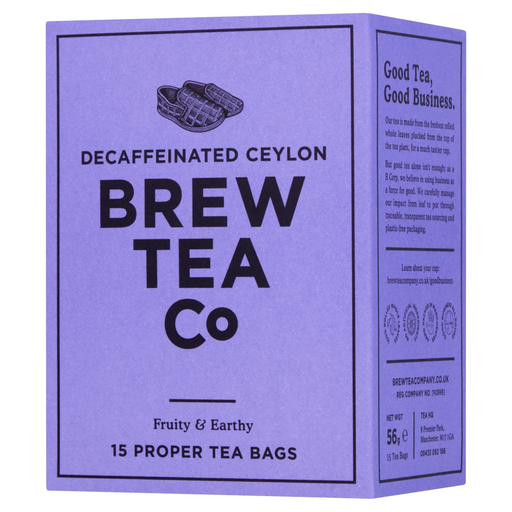
Brew Tea Co CO2 Decaffeinated Tea, 15 Tea Bags, 56g
A 15-bag, 56g pack if you want bagged tea with a named CO2 decaffeination process. The process name does not tell you the caffeine amount in a prepared cup; check the pack if that amount matters to you.
View on Joybuy
 No image available
Clipper Organic Fairtrade Decaf Everyday 80 Tea Bags 277g
An 80-bag, 277g decaf tea pack to consider when the stated organic and Fairtrade attributes matter to you. It is bagged tea rather than a machine capsule; check the pack for preparation and caffeine details relevant to your choice.
View on Joybuy
Questions about decaf tea
Are decaf tea pods the same as decaf tea bags?
No. Tea bags are brewed in hot water, while capsules are made for particular machine systems. Nespresso UK and NESCAFÉ Dolce Gusto UK describe their decaf pod ranges as coffee, so check both the drink type and machine compatibility if you want a tea capsule.
Can decaf tea still contain caffeine?
Yes. Twinings says minor traces tend to remain in decaffeinated tea, and Yorkshire Tea states 1.5–2 mg for an average 200 ml cup brewed for five minutes. Use the information for your chosen product and its stated preparation rather than applying that figure to all decaf teas.
Which format makes a traditional winter cup of tea with milk?
Choose decaf black tea bags rather than decaf coffee pods if you want a conventional brewed tea with milk. Follow the particular tea’s directions: Tesco lists 4–5 minutes for Yorkshire Tea Decaf’s 40-bag pack, 2–3 minutes before milk for Tetley’s 80-bag pack and 1–2 minutes for its listed PG Tips decaf tea; Twinings suggests 2–3 minutes for Everyday Decaffeinated.


