Guests who prefer traditional tea
Decaf black tea is worth considering when an older guest wants a familiar afternoon cup, with or without milk, but is reducing caffeine rather than switching to coffee.


For a familiar afternoon cup of tea with less caffeine, choose decaf black-tea bags: Tesco Groceries lists decaf tea bags, while the decaf capsules identified by Tesco Groceries and Nespresso UK contain coffee. A decaf coffee pod makes sense only if the guest wants coffee and the capsule fits their machine. Decaf tea can retain traces of caffeine; if complete avoidance matters, check a caffeine-free herbal or fruit infusion’s ingredients for mate and guarana.
Decaf black tea is worth considering when an older guest wants a familiar afternoon cup, with or without milk, but is reducing caffeine rather than switching to coffee.
If a healthcare professional has advised someone to reduce or avoid caffeine, distinguish decaf tea from a caffeine-free drink and follow that person’s individual advice.
A decaf coffee capsule is an option when the guest wants coffee. Check the exact machine system before buying; a coffee capsule will not make a conventional cup of tea.
Decide whether you are serving tea or coffee before comparing caffeine information, preparation and pack size.
| Priority | What to check | Your needs |
|---|---|---|
| Drink and format | Check whether the product contains tea or coffee. Tesco Groceries lists decaf tea bags separately from decaf coffee pods. | I’m serving a conventional cup of tea, so coffee capsules would be the wrong drink. |
| Caffeine | Read the decaf description and infusion ingredients. Twinings notes that decaf tea can retain traces of caffeine and that some herbal blends contain mate or guarana. | If caffeine must be avoided completely, I need to check the actual blend rather than assume that “decaf” or “herbal” means caffeine-free. |
| Tea style | Choose between black tea, green tea and an herbal or fruit infusion. For preparation, Twinings suggests a 2–3 minute infusion for its Everyday Decaffeinated bags. | I want to offer the sort of black-tea cup my guest normally enjoys; a green or herbal drink would be a different choice. |
| Capsule fit | If coffee is wanted, match the capsule to the machine. Nespresso UK distinguishes its Original and Vertuo decaf coffee formats. | There’s already a capsule machine at home, and I need coffee pods made for that exact system. |
| Pack size | Check the number of tea bags and consider how often you will serve them. Tesco Groceries lists decaf black-tea packs in different counts. | A smaller pack suits an occasional guest or a first taste trial; regular tea service calls for a pack count that fits the household. |
The decaf capsules described by Nespresso UK and Tesco Groceries contain coffee. They will not produce the black-tea cup expected at a traditional afternoon tea.
Choose the drink first: use decaf tea bags for tea, or select a decaf coffee capsule that matches the machine if the guest wants coffee.
Twinings explains that minor traces of caffeine can remain in decaffeinated tea. That distinction matters when someone has been told to avoid caffeine completely.
Check the product description and ingredients. For a caffeine-free herbal or fruit infusion, check that the blend does not contain mate or guarana.
A switch to decaf changes caffeine intake for someone who regularly drinks caffeinated tea.
Lancashire Teaching Hospitals NHS Foundation Trust advises reducing intake gradually. Follow individual clinical advice where it applies.
Its Decaf black-tea bags are a familiar-style option for a conventional afternoon cup; Tesco Groceries lists a 160-bag pack.
Tetley offers everyday decaf tea bags; Tesco Groceries lists a 75-bag Smooth Decaf pack.
Tesco Groceries lists PG Tips Decaf Black Tea in a 160-bag pack for households seeking black tea in bags.
Twinings describes a range of decaffeinated teas, including an 80-bag Everyday Decaffeinated product.
Clipper’s Organic Decaf Black Tea is a 20-pyramid-bag option described by its own shop as Fairtrade and organic.
Tesco Groceries lists its own-label Decaff Original Tea in an 80-bag, 250 g pack.
These Joybuy options are decaffeinated tea bags for ordinary tea preparation, not capsules for a coffee machine. Four are black-tea choices; the Tetley green tea offers a different tea style.
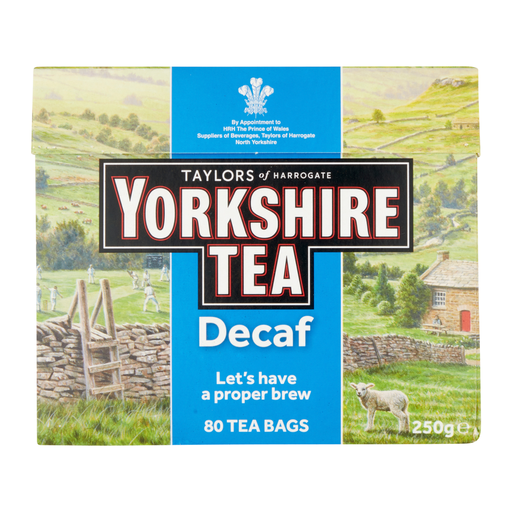
 No image available
Decaf black tea bags for a conventional afternoon cup. The pack contains 80 bags and weighs 250 g. If complete caffeine avoidance is required, check the product’s caffeine information before buying.
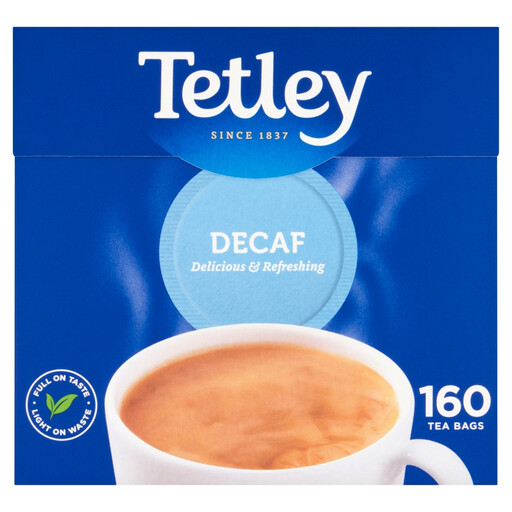 No image available
Decaf black tea bags in a 160-bag, 500 g pack for households serving tea repeatedly. Do not assume decaf means no residual caffeine if complete avoidance matters.
 No image available
Decaffeinated black tea for a traditional afternoon cup, in a 250 g pack. Check the pack’s tea-bag count if the number of servings matters to you.
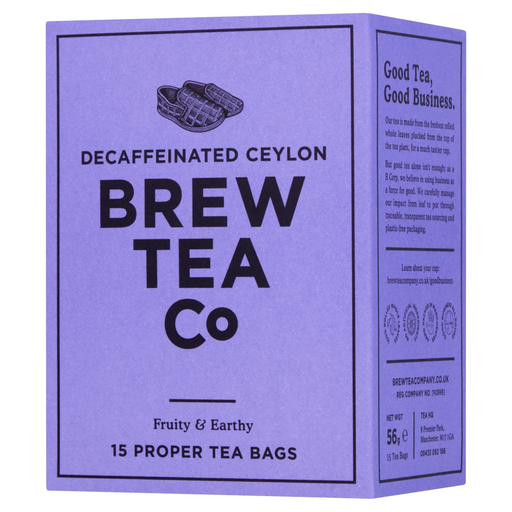 No image available
Decaffeinated Ceylon black tea bags for ordinary hot-tea preparation. This 56 g pack contains 15 bags; its CO2 wording describes the process claimed in the product listing.
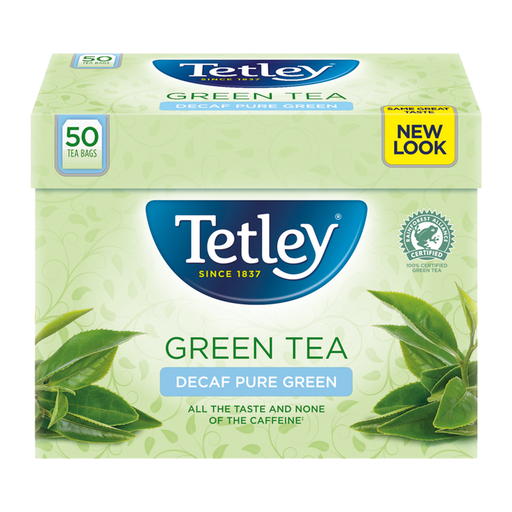 No image available
A decaf green-tea choice rather than the black tea usually served with milk. The pack contains 50 bags and weighs 100 g; the product listing describes it as decaffeinated to 0.2%, not as a zero-caffeine drink.
Not necessarily. Twinings says decaffeinated tea can retain minor traces of caffeine. If complete avoidance is required, check a caffeine-free herbal or fruit infusion’s ingredients, including for mate and guarana.
No: the decaf capsules described by Nespresso UK contain coffee. Use decaf tea bags for a conventional tea service, or buy coffee capsules only when coffee is wanted and the format matches the machine.
Follow the instructions for the particular tea rather than assuming every bag needs the same infusion time. Twinings suggests 2–3 minutes for Everyday Decaffeinated, while Clipper suggests 3–5 minutes for its Organic Decaf Black Tea pyramid bags.
Decaf tea is a reduced-caffeine option, but it can retain traces and may not meet advice to avoid caffeine altogether. Check the person’s specific clinical advice before choosing their drink.
Lancashire Teaching Hospitals NHS Foundation Trust advises gradual caffeine reduction for habitual consumers. If the person has individual medical advice about caffeine, use that to guide the change.