Choose decaf tea bags if you want tea without depending on a pod machine; check the pack size, blend and caffeine information for the product you choose. A tea pod makes sense only if it fits your machine and is explicitly labelled as decaffeinated tea—a decaf coffee pod is not a substitute. Decaf tea can still contain caffeine, so parents reducing their intake should consider other foods and drinks too.
Who is this for?
Breastfeeding parents reducing caffeine
Decaf tea may fit a familiar tea routine, but it is not necessarily caffeine-free. The NHS advises considering caffeine intake while breastfeeding; tea, coffee, chocolate, energy drinks and soft drinks can all contribute.
Tea drinkers without a pod machine
Tea bags let you make decaf tea with a kettle or teapot rather than a machine-specific capsule. The blend, brewing instructions and pack size still differ by product.
Pod-machine households looking for tea
If you already own a pod machine, check its exact pod format, the drink inside the pod and whether that tea is labelled decaffeinated. A machine-compatible decaf coffee pod still makes coffee.
What should you check?
Decide whether you want bagged tea or tea made in your existing pod machine, then check the particular product’s drink type and caffeine information. Blend and pack size can help distinguish the bagged options.
| Priority | What to check | Your needs |
|---|
| Caffeine information |
Check whether the figure is for a prepared cup or a percentage, and note the brewing basis. Yorkshire Tea states an average of 1.5mg–2mg per 200ml cup brewed for five minutes; unlike measures do not establish a cross-brand ranking. |
I want to reduce caffeine without assuming that decaf means none. The NHS advises breastfeeding parents who consume caffeine to try not to exceed 300mg a day across foods and drinks. |
| Drink and pod type |
Confirm that a pod contains tea, is labelled decaffeinated and fits your exact machine. TASSIMO lists tea pods separately from decaf coffee pods and says its tea T-DISCs work with TASSIMO machines. |
If I use my pod machine for tea, I need the right drink as well as the right capsule format—not a decaf coffee pod. |
| Brewing format |
Tea bags need hot water and a brewing period; machine-specific pods need the matching machine. Check the product’s own brewing directions rather than applying one time to every tea. |
I may prefer bags if I make tea with a kettle, or a compatible tea pod if I already use a machine. |
| Blend and sourcing |
Check the stated tea style and ingredients. Yorkshire Tea describes a strong decaf blend; Twinings describes its English Breakfast Decaffeinated as having a light finish; Clipper describes its Everyday Decaf as organic and Fairtrade. |
I want a black tea that fits my usual taste, or a product with the sourcing attributes I look for. |
| Pack size |
Check the bag count and weight on the exact pack. Do not assume that two products from the same brand contain the same number of bags. |
A smaller pack may suit an occasional cup; for frequent tea-making, I want to know how many bags I am buying. |
Buying mistakes to avoid
-
Assuming decaf means caffeine-free
Decaffeinated tea can retain caffeine. Yorkshire Tea states an average of 1.5mg–2mg per 200ml cup of its Decaf tea when brewed for five minutes.
Check the caffeine information and preparation basis for the tea you buy. If you are breastfeeding and tracking caffeine, include other foods and drinks; the NHS advises those who consume caffeine to try not to exceed 300mg a day.
-
Choosing a decaf coffee pod for a tea drink
TASSIMO separates its tea pods from its decaf coffee pods. Compatibility with a machine does not change a coffee pod into tea.
Before buying, check the drink name, decaffeinated status and compatibility with your exact machine.
An unsuitable pod may leave you with capsules you cannot use for the drink you wanted.
-
Ranking unlike caffeine figures
Yorkshire Tea gives an amount per prepared cup, while Tesco’s listings for Tetley and PG Tips use percentage-based decaffeination statements. Those figures do not provide the same per-cup comparison.
If a particular caffeine figure matters to your choice, look for an amount per prepared cup with its preparation conditions or ask the manufacturer about the exact product.
Decaf tea brand references
These brand examples describe particular bagged teas, not every product made by each brand or the products available on Joybuy.
Yorkshire Tea
Yorkshire Tea Decaf is a bagged black tea with a stated caffeine estimate for a prepared cup.
- Yorkshire Tea states an average of 1.5mg–2mg caffeine per 200ml cup brewed for five minutes.
- That brand figure depends on the stated cup size and brewing time; it is not a like-for-like test of other teas.
Twinings
English Breakfast Decaffeinated is a bagged Kenyan-tea blend that Twinings describes as having body and a light finish.
- The Twinings product page lists an 80-bag pack.
- Twinings gives differing decaffeination percentages on its product page. Check the current pack rather than using those figures for a precise caffeine comparison.
Clipper
Clipper describes its Everyday Decaf as a black-tea blend for shoppers seeking organic and Fairtrade product attributes.
- Clipper lists decaffeinated organically grown black tea as the ingredient and says it uses carbon-dioxide decaffeination.
- Those manufacturer details do not give a caffeine amount per prepared cup.
Tetley
Tetley Decaffeinated is a bagged black tea listed by Tesco in the UK.
- The Tesco listing states that the tea is decaffeinated to 0.2% and gives a 2–3 minute brewing instruction.
- That percentage is not an amount of caffeine per prepared cup.
PG Tips
PG Tips Decaf is a bagged black tea whose Tesco listing recommends a 1–2 minute brew.
- The listing states that the product contains less than 0.2% caffeine.
- The percentage does not establish a comparable per-cup caffeine amount.
Tesco
Tesco Decaff Original Tea is an own-brand bagged option for everyday black tea.
- Tesco lists an 80-bag pack and recommends a 4–5 minute brew.
- Check the current pack for product details before buying, as food information can change.
Decaf tea options on Joybuy
These are bagged decaf tea options for making tea without a pod machine. If you want to use a machine instead, check a tea pod’s decaffeinated label and compatibility separately.
 No image available
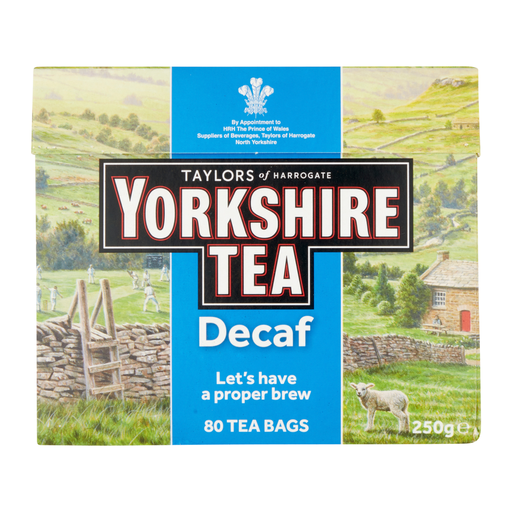
Taylors of Harrogate Yorkshire Tea Decaf 250g
For a decaf black tea with a stated serving basis: Yorkshire Tea gives an average of 1.5mg–2mg caffeine per 200ml cup brewed for five minutes. Check the pack format and bag count for this 250g product.
View on Joybuy
 No image available
Clipper Organic Fairtrade Decaf Everyday 80 Tea Bags 277g
A bagged decaf black tea to consider if the listed organic and Fairtrade attributes matter to you. This pack is labelled as 80 tea bags, 277g; check the pack’s caffeine information if you need a figure per prepared cup.
View on Joybuy
 No image available
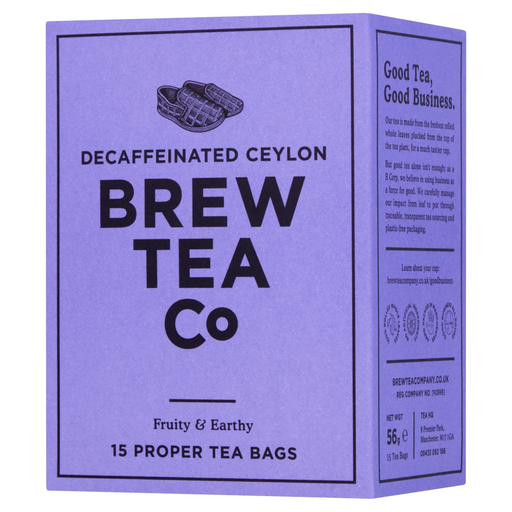
Brew Tea Co CO₂ Decaffeinated Tea, 15 bags, 56g
A smaller bagged pack described as decaffeinated Ceylon tea made using a CO₂ process. The pack contains 15 bags and weighs 56g. Check the current pack’s decaf label: the product description calls it decaffeinated, while its ingredient line says “Organic Black Tea”.
View on Joybuy
 No image available
Tetley Decaffeinated Tea, 80 bags, 250g
A bagged decaf black tea in an 80-bag, 250g pack. The product information recommends brewing for 2–3 minutes; check the exact pack if you need caffeine stated per prepared cup.
View on Joybuy
 No image available
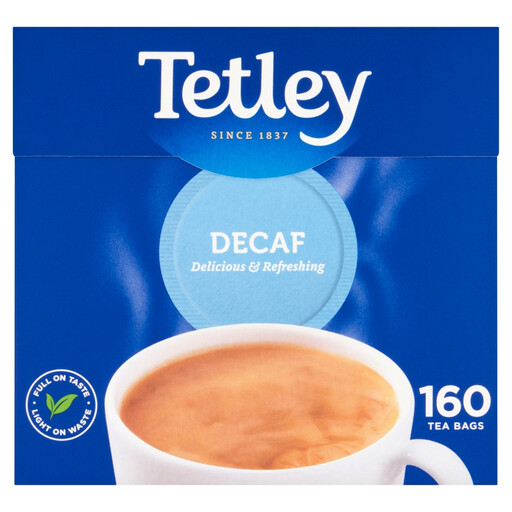
Tetley Decaf Tea, 160 bags, 500g
A larger bagged decaf black-tea pack for households that use it regularly, labelled as 160 bags and 500g. The product information carries a Rainforest Alliance sourcing claim; check the current pack if that attribute or a per-cup caffeine figure matters to you.
View on Joybuy
Frequently asked questions
Is decaf tea completely caffeine-free?
Not necessarily. Yorkshire Tea states that its Decaf tea contains an average of 1.5mg–2mg caffeine per 200ml cup brewed for five minutes. Check the information for the exact tea and preparation you use rather than treating “decaf” as a promise of zero caffeine.
What should a breastfeeding parent consider when choosing decaf tea?
Decaf tea can still contribute caffeine. The NHS advises breastfeeding parents who consume caffeine to try not to exceed 300mg a day, so consider tea alongside coffee, chocolate, energy drinks and soft drinks. Speak to a health visitor or GP if you have concerns about your baby.
Can I use a decaf coffee pod to make decaf tea?
No. A decaf coffee pod makes coffee, not tea. TASSIMO lists tea pods separately from decaf coffee pods; check that the product is labelled both tea and decaffeinated before buying it for a tea drink.
Will a tea pod work in any pod machine?
No. Pod compatibility depends on the machine system. TASSIMO says its tea T-DISCs work with TASSIMO machines; check the specified format against your exact machine before purchasing.


