Choose decaf tea bags for a familiar afternoon brew without having to match a capsule to a machine. If you want a pod, check both its tea ingredients and its exact machine compatibility: a decaf coffee capsule is not decaf tea. Black tea suits a conventional cup with milk, while green or flavoured tea and stated organic or Fairtrade sourcing offer different reasons to choose a bag; decaf does not necessarily mean caffeine-free.
Who is choosing?
The useful starting point is whether you want a conventional cup of tea, a different flavour or a capsule for a machine you already own.
Black-tea drinkers cutting back on caffeine
If tea with milk is part of your afternoon snack, decaf black-tea bags from Yorkshire Tea, Tetley and PG Tips offer a familiar format. Check the exact product’s caffeine wording rather than assuming decaf means none remains.
Drinkers looking for a different flavour
If a standard black tea is not what you want with your snack, Twinings lists decaf options including Earl Grey and Pure Green. Its Earl Grey contains bergamot and lemon flavourings.
Pod-machine owners looking for tea
Tea capsules are sold for different machine systems, including Nespresso, Tassimo and Dolce Gusto, as shown by MaxiCoffee UK’s tea-pod range. Check the precise system and ingredients: Joybuy’s Tassimo Kenco and Nescafé Dolce Gusto decaf pod listings describe coffee, not tea.
What should you check?
Decide on the drink and format first, then compare the caffeine information, flavour and pack details of products that fit.
| Priority | What to check | Your needs |
|---|
| Tea or coffee |
Read the drink name and ingredients. A decaf capsule containing roast and ground coffee will make coffee, not tea. |
I want tea with my afternoon snack, so a pod labelled only “decaf” is not enough to settle the choice. |
| Format and machine |
Choose between bags prepared with hot water and capsules made for your exact machine system. Do not assume capsules for different systems interchange. |
If I use a pod machine, the capsule must fit the machine I own; otherwise, tea bags avoid that compatibility decision. |
| Remaining caffeine |
Check the exact product and the basis of its caffeine statement. Yorkshire Tea gives 1.5–2 mg for a 200 ml cup brewed for five minutes; Tesco Groceries lists Tetley’s 160-bag product as decaffeinated to 0.2%. |
I want less caffeine, but I do not want to mistake “decaf” for a promise of a caffeine-free cup. |
| Tea flavour |
Compare plain black or green tea with flavoured blends. Twinings describes its decaf Earl Grey as tea with bergamot and lemon flavourings. |
A conventional black tea might suit my cup with milk; for a different flavour, I would look at green tea or Earl Grey. |
| Sourcing and disposal |
Check organic or Fairtrade wording on the specific pack. Follow its tea-bag disposal instructions and the collection rules where you live. |
If sourcing or what happens to the bag afterwards matters to me, I want the pack’s specific claims and instructions. |
Mistakes to avoid
-
Assuming decaf means zero caffeine
Decaf tea can retain caffeine. Yorkshire Tea estimates 1.5–2 mg in a 200 ml cup brewed for five minutes, and Twinings says minor traces remain in its decaf teas.
Read the caffeine wording for the exact tea and note any serving size or brewing conditions before comparing claims.
-
Confusing decaf coffee pods with tea pods
Joybuy’s Tassimo Kenco and Nescafé Dolce Gusto decaf pod listings give decaffeinated roast and ground coffee as the ingredient. A compatible coffee pod still will not make the tea you intended to buy.
Check both the ingredients and the capsule system. If you want tea and cannot establish those details for a pod, choose an identifiable tea product instead.
-
Assuming a plant-based tea bag belongs in home compost
Tea-bag disposal depends on the pack instructions and the waste collections available locally; a broad packaging description does not settle where the used bag belongs.
Follow the current pack instructions and check which materials your local collection accepts.
Decaf tea brand references
These brand ranges illustrate tea-bag choices, not a selection of compatible decaf tea pods.
Yorkshire Tea
Yorkshire Tea Decaf is a black-tea-bag choice for a conventional afternoon cup.
- Yorkshire Tea gives an estimated 1.5–2 mg caffeine per 200 ml cup brewed for five minutes.
- That estimate does not describe a caffeine-free drink or every brewing method.
Tetley
Tetley offers decaf black tea in everyday tea-bag packs, including a 160-bag product.
- Tesco Groceries describes the 160-bag product as decaffeinated to 0.2%.
- The stated level should not be read as zero caffeine; these bags are not machine capsules.
PG Tips
PG Tips Decaf is another black-tea-bag option for a familiar cup.
- The PG Tips Decaf listing at Tesco Groceries states less than 0.2% caffeine.
- Check the current pack for preparation and disposal instructions rather than applying another tea’s directions.
Twinings
Twinings lists decaf black, green and flavoured tea-bag choices.
- Its decaf Earl Grey contains bergamot and lemon flavourings if you want a cup distinct from plain black tea.
- Twinings notes that minor traces of caffeine can remain in decaf tea.
Clipper
Clipper Everyday Decaf is a black-tea-bag option for shoppers interested in its stated organic and Fairtrade sourcing.
- The Clipper listing at Tesco Groceries says its organic tea is decaffeinated using CO2.
- A process or sourcing claim does not establish a flavour or health advantage over another tea.
Tesco
Tesco Decaff Original provides an own-label black-tea-bag alternative.
- Tesco Groceries lists it as a pack of 80 decaffeinated tea bags.
- Check the current pack for ingredients and dietary information, which can change.
Joybuy decaf tea-bag options
These products are decaf tea bags for an afternoon brew, with black- and green-tea options. If a machine capsule is essential, check a tea pod’s ingredients and compatibility separately.
 No image available
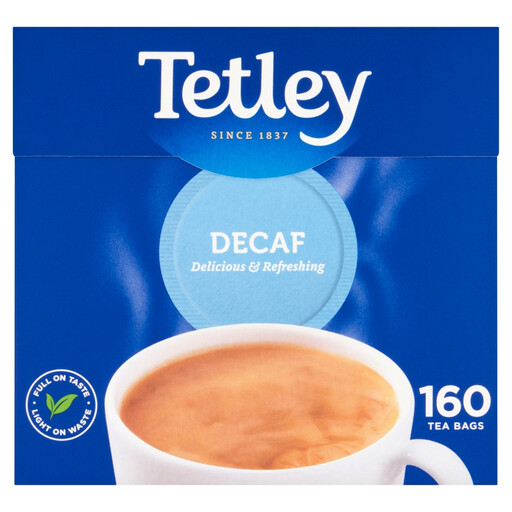
Tetley Decaf Black Tea, 160 bags, 500 g
A black-tea-bag option for a conventional afternoon cup; the 160-bag pack suits shoppers looking for a larger quantity. Tesco Groceries describes this product as decaffeinated to 0.2%, not caffeine-free.
View on Joybuy
 No image available
Tetley Decaffeinated Green Tea, 50 bags, 100 g
Choose this tea-bag format if you want green tea rather than a conventional black-tea cup with your snack. It contains 50 bags; check the pack’s caffeine wording if the remaining amount matters to you.
View on Joybuy
 No image available
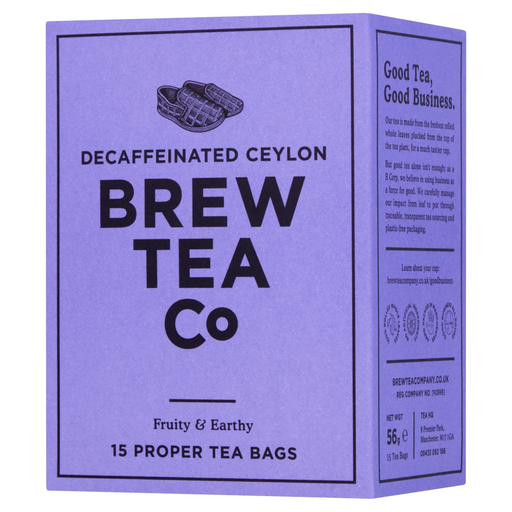
Brew Tea Co CO2 Decaf Tea, 15 bags, 56 g
A black-tea-bag choice for an afternoon brew when the stated decaffeination process interests you. The product listing describes Ceylon black tea and a CO2 process; check the current pack for its caffeine information.
View on Joybuy
 No image available
Clipper Organic Fairtrade Decaf Everyday, 80 bags, 277 g
A black-tea-bag option if the pack’s stated organic and Fairtrade sourcing matters alongside your afternoon drink. It contains 80 bags; check the current pack for certification wording and caffeine information.
View on Joybuy
 No image available
Tetley Decaffeinated Black Tea, 80 bags, 250 g
A smaller pack than the 160-bag Tetley option for a conventional black-tea cup, with or without milk. The listing gives a 2–3 minute brew; check this pack’s own caffeine wording rather than applying a figure from another variant.
View on Joybuy
Common questions
Is decaf tea caffeine-free?
No. Decaf tea can retain caffeine: Yorkshire Tea estimates 1.5–2 mg in a 200 ml cup brewed for five minutes, and Twinings says minor traces remain in its decaf teas. Check the exact product and serving conditions if the amount matters to you.
Can I use any tea pod in my coffee machine?
No. Tea pods are sold for different systems, including Nespresso, Tassimo and Dolce Gusto, according to MaxiCoffee UK. Confirm the exact machine system on the product pack as well as whether the capsule contains tea.
Will a decaf coffee pod replace decaf tea with a snack?
Not if you want tea. Joybuy’s Tassimo Kenco and Nescafé Dolce Gusto decaf pod listings identify decaffeinated roast and ground coffee; choose those products for coffee, not as tea substitutes.
How should I brew a decaf black-tea bag?
Use the water and brewing instructions on the exact pack. Brewing directions differ between products, and a cup-level caffeine estimate tied to a particular volume and brewing time should not be applied to a differently prepared tea.


