Breakfast-tea drinkers reducing caffeine
If you take milk with tea, look for a decaf black tea described as having body or a robust flavour, together with preparation guidance for adding milk.


For a decaf cuppa with milk beside a full Scottish breakfast, start with a black tea whose description mentions body or richness and whose brewing directions suit the way you serve it. Twinings English Breakfast Decaffeinated is the most direct named breakfast-style option here; Clipper Organic Everyday Decaf offers a robust blend with organic and Fairtrade claims, but is not labelled English Breakfast. If a particular residual-caffeine level matters, check the current pack rather than relying on the word “decaf”.
If you take milk with tea, look for a decaf black tea described as having body or a robust flavour, together with preparation guidance for adding milk.
Compare residual-caffeine wording on the exact product. If you need a precise figure, check the current pack, particularly where an online description gives conflicting figures.
If organic, Fairtrade or Rainforest Alliance claims affect your choice, check that the claim applies to the particular decaf tea you intend to buy.
Choose the type of black-tea cup you want beside breakfast, then compare the exact pack’s caffeine wording and brewing directions.
| Priority | What to check | Your needs |
|---|---|---|
| Breakfast-tea character | Look for a decaf black tea described as having body or a robust blend. Twinings UK describes its English Breakfast Decaffeinated as having body and gives instructions for serving it with milk. | I want a black-tea cuppa that I can serve with milk alongside a cooked breakfast. |
| Residual caffeine | Read the declaration for the exact product. Tesco Groceries UK lists PG Tips Decaf as containing less than 0.2% caffeine; Twinings UK’s online wording gives conflicting figures for its English Breakfast Decaffeinated. | If an exact caffeine level matters to me, I need to check the current pack rather than assume every decaf tea has the same level. |
| Brewing and milk | Follow the blend’s own directions: Tesco lists one to two minutes for PG Tips; Twinings UK and Waitrose & Partners give two to three minutes for Twinings and Tetley respectively. Check when to add milk. | A clear brewing time helps me make the cup I want while preparing breakfast. |
| Sourcing claims | Check claims on the individual product. Clipper describes its Organic Everyday Decaf as made with organically grown decaffeinated black tea and as Fairtrade. | Organic or Fairtrade sourcing may matter to me, but those claims alone do not tell me how the tea will taste with milk. |
Residual-caffeine statements differ by product. Tesco Groceries UK lists PG Tips Decaf as containing less than 0.2% caffeine, while Twinings UK’s online wording for its English Breakfast Decaffeinated gives conflicting figures.
Check the current pack or ask the manufacturer if a precise level matters.
A decaf label does not describe whether the tea has the black-tea character or milk-serving guidance you want with a cooked breakfast.
Compare the blend description and preparation directions; Twinings UK describes body and recommends a splash of milk for its English Breakfast Decaffeinated.
Directions vary: Tesco lists one to two minutes for PG Tips, while Twinings UK and Waitrose & Partners give two to three minutes for Twinings and Tetley.
Start with the directions on your pack, then adjust the cup to your taste.
Waitrose & Partners warns that recipes and allergen information can change.
Read the current pack’s ingredients and allergen information if either affects what you can buy.
Its English Breakfast Decaffeinated is a named breakfast-style black tea; Twinings UK describes body and recommends serving it with a splash of milk.
Clipper describes Organic Everyday Decaf as a robust black-tea blend with organic and Fairtrade claims.
An everyday decaf black tea with a short brewing direction in its Tesco Groceries UK listing.
Its Decaf tea has conventional milk-tea preparation guidance in the Waitrose & Partners listing.
Yorkshire Tea describes its Decaf as a blend intended to retain tea character after decaffeination.
Typhoo describes its Decaf Premium Tea Bags as an everyday Kenyan-tea brew.
These decaf tea options offer different starting points for a black-tea cup beside breakfast. Compare their pack information for brewing, milk serving and residual caffeine before choosing.
 No image available
For tea with milk beside breakfast, the listed preparation is a two-to-three-minute brew followed by milk. Check the current pack’s ingredient and residual-caffeine wording if you need a precise caffeine figure.
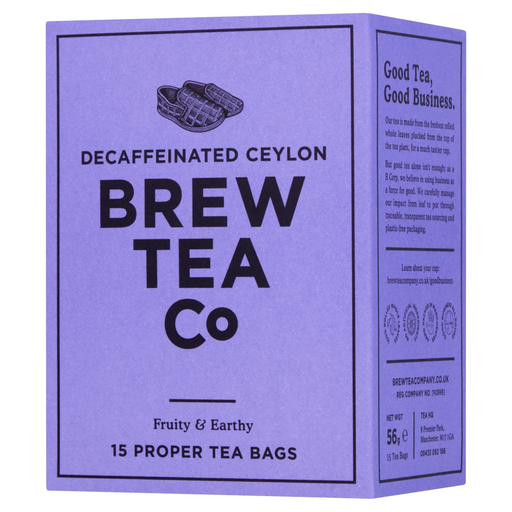 No image available
The description calls this decaffeinated black tea full-bodied. For a breakfast cup with milk, check the pack’s brewing and serving directions; check its caffeine declaration if an exact level matters.
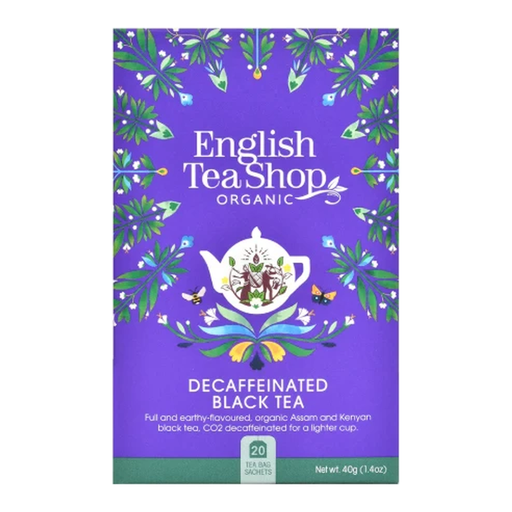 No image available
This is an organic decaf black-tea option to consider for breakfast. Check the pack for brewing and milk-serving directions. Its description gives inconsistent caffeine wording, so confirm the current declaration if a precise level matters.
Do not assume it contains none. Tesco Groceries UK lists PG Tips Decaf as containing less than 0.2% caffeine, while Twinings UK gives conflicting figures online for its English Breakfast Decaffeinated. Check the current pack or ask the manufacturer if you need an exact value.
Twinings UK describes its English Breakfast Decaffeinated as having body and advises a two-to-three-minute brew with a splash of milk. Waitrose & Partners also lists a two-to-three-minute brew before adding milk for Tetley Decaf; compare the blends if the named English Breakfast style matters to you.
Follow the exact blend’s directions rather than using one time for every bag. Tesco Groceries UK lists one to two minutes for PG Tips; Twinings UK and Waitrose & Partners give two to three minutes for Twinings and Tetley respectively.
Check the current packaging for the exact product. Waitrose & Partners warns that recipes and allergen information can change, so an online listing should not replace the pack label when those details matter to you.
No: those claims concern sourcing, not a guaranteed flavour or strength. Clipper describes its Organic Everyday Decaf as a robust blend, but it is not labelled English Breakfast; consider the stated blend character separately from its organic and Fairtrade claims.