Breakfast tea drinkers reducing caffeine
If you normally have black tea with breakfast, perhaps with milk, a decaf black-tea blend keeps that type of cup in consideration without switching to a herbal infusion.


For a familiar breakfast cup with milk, start with decaf black tea rather than a herbal infusion. Yorkshire Tea Decaf is worth considering if a published caffeine figure matters: Yorkshire Tea gives an average of 1.5–2mg per 200ml cup brewed for five minutes. Twinings offers an English Breakfast decaf blend, while Clipper offers an organic and Fairtrade option; check the exact pack if caffeine content or tea-bag disposal is decisive.
If you normally have black tea with breakfast, perhaps with milk, a decaf black-tea blend keeps that type of cup in consideration without switching to a herbal infusion.
Look for a figure and its measurement basis, not just the word “decaf”. Yorkshire Tea states an average of 1.5–2mg per 200ml cup brewed for five minutes; a percentage printed on another pack is a different measure.
Check organic or Fairtrade claims against the exact tea you are buying, and read the bag-disposal instructions separately. Plant-based does not necessarily mean suitable for home composting.
Choose the black-tea style you would like at breakfast, then compare caffeine statements and pack instructions where they matter to you.
| Priority | What to check | Your needs |
|---|---|---|
| Residual caffeine | Read the exact pack statement and its units. Yorkshire Tea’s average 1.5–2mg figure applies to a 200ml cup brewed for five minutes; PG Tips’ less-than-0.2% statement uses a different measure. | I want a stated figure I can assess against my own requirement, rather than assuming decaf means no caffeine. |
| Breakfast cup | Check whether the product is decaf black tea and read its stated flavour and brewing guidance. Twinings describes its English Breakfast Decaffeinated tea as having body with a light finish. | With breakfast, I would prefer a familiar black-tea cup, including when I add milk. |
| Sourcing and bags | Check product-specific organic and Fairtrade claims, bag materials and disposal instructions. Yorkshire Tea says its UK plant-based bags need a suitable kerbside garden or food-waste collection, not home composting. | Certified sourcing matters to me, or I need to know which collection service can take the used bags. |
Yorkshire Tea states an average 1.5–2mg per defined cup, while the PG Tips listing states less than 0.2% caffeine. The measures are not interchangeable.
If you have a particular limit in mind, check the current pack’s figure, units and brewing basis rather than applying one tea’s statement to another.
The stated infusion times differ between these teas, so a cup made for too short a time may not reflect the maker’s intended preparation.
Start with the instructions for your chosen pack, including when to add milk if the maker specifies a sequence.
Yorkshire Tea says its UK plant-based bags need the conditions of kerbside garden or food-waste processing and should not go in a home compost heap.
Read the exact pack’s instructions and check what your local collection service accepts.
Typhoo says shoppers may receive old or new packaging during a packaging change. Wording and logos on a particular box therefore deserve a check.
If a certification, ingredient or disposal instruction affects your choice, confirm it on the pack you receive.
Yorkshire Tea Decaf is a black-tea blend for a conventional breakfast cup.
English Breakfast Decaffeinated is an 80-bag black-tea option that Twinings describes as having body with a light finish.
Organic Everyday Decaf is a decaf black-tea blend described by Clipper as organic and Fairtrade.
PG Tips Decaf is listed as a 70-bag decaf black tea in a pyramid-bag format.
Tetley Everyday Decaffeinated is listed as an 80-bag decaf black tea.
Typhoo describes its 80-bag Decaf Premium product as a Kenyan-tea blend.
These decaf black-tea bags offer different pack formats and sourcing choices for a weekend breakfast cup. Compare the exact pack if a caffeine figure, brewing instruction or disposal route is central to your choice.
 No image available
A decaf black-tea option for a familiar breakfast cup with milk. The product description recommends brewing for two to three minutes before adding milk; check the current pack if you need a quantified caffeine figure.
 No image available
Decaf black tea described as bold and full-bodied for a breakfast-style cup. Yorkshire Tea states an average 1.5–2mg caffeine per 200ml cup brewed for five minutes; that figure does not establish the amount for other cup sizes or brewing times.
 No image available
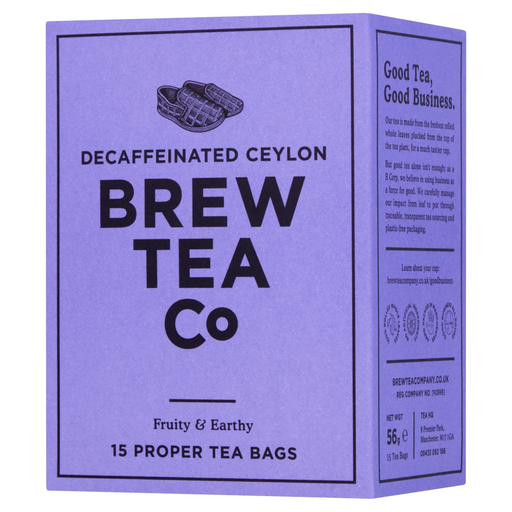
A smaller pack of decaf Ceylon black-tea bags if you want to consider the stated decaffeination method. The product description specifies CO2 processing and 3¾g of tea per bag; check the pack for brewing directions and any caffeine figure relevant to your needs.
 No image available
A decaf black-tea option when organic and Fairtrade sourcing are part of the breakfast-tea decision. The product information states both claims for this 80-bag pack; follow the exact pack and local collection guidance if tea-bag disposal also matters.
 No image available
Decaf Ceylon black tea in a 40-bag format. The product description specifies CO2 decaffeination and whole-leaf tea in pyramid bags; check the pack for its brewing guidance and disposal instructions rather than assuming the bag format determines either.
Do not assume it contains none. Yorkshire Tea states an average of 1.5–2mg per 200ml cup brewed for five minutes, while the PG Tips Decaf listing states less than 0.2% caffeine. Check the exact pack and the units used if you need a particular limit.
Start with a decaf black-tea blend whose stated style appeals to you. Yorkshire Tea describes its Decaf as strong, while Twinings describes English Breakfast Decaffeinated as having body with a light finish and suggests adding milk after brewing.
Follow the instructions for the particular tea rather than using one time for every bag. Twinings suggests two to three minutes for English Breakfast Decaffeinated, or four for a stronger cup; the PG Tips Decaf listing gives one to two minutes. Yorkshire Tea’s published per-cup caffeine estimate is based on a five-minute brew in 200ml water.
Not necessarily. Yorkshire Tea says its UK plant-based bags should go to a suitable kerbside garden or food-waste collection, not a home compost heap. Check both the exact pack instructions and what your local collection service accepts.