Decaf black tea bags suit a workplace canteen that wants a familiar lunchtime tea option with less caffeine than regular black tea, but decaf does not necessarily mean caffeine-free. Choose a pack format that fits the service, check its own brewing and ingredient information, and assess any sourcing or tea-bag disposal claims against the workplace’s requirements.
Who is this for?
Buyers stocking an everyday decaf tea
If the lunch service offers a conventional black-tea option, look for a decaf black tea with a pack size and preparation method that work at the tea station. Check the particular product’s instructions before setting a standard brew time.
Canteens serving people who monitor caffeine
An explicitly labelled decaf product makes the choice easier to identify. Twinings notes that traces of caffeine can remain after decaffeination, so staff-facing information should follow the current product label rather than call every decaf tea caffeine-free.
Teams applying purchasing criteria
Where a workplace considers organic status, Fairtrade or other sourcing claims, compare the credential on the exact product. Tea-bag material and the site’s waste collection arrangements are separate checks.
What should a canteen check?
Start with what staff will be told and how the tea will be prepared, then compare pack formats and any purchasing-policy requirements.
| Priority | What to check | Your needs |
|---|
| Caffeine wording |
Check the exact pack’s decaf statement and any stated caffeine measure. Tesco’s listing for PG Tips Decaf says less than 0.2% caffeine; Twinings explains that traces can remain in decaf tea. |
I want staff to recognise the lower-caffeine option without being told that decaf always means caffeine-free. |
| Brewing |
Use the selected product’s starting instructions rather than a time borrowed from another tea. Tesco lists 1–2 minutes for PG Tips Decaf, while Typhoo gives 1–5 minutes for its 80-bag decaf product. |
A straightforward method matters when people make tea for themselves at lunch. |
| Pack format |
Check bag count, storage instructions and whether the supplier’s format suits the way the canteen stocks and serves tea. Confirm any individually wrapped or catering format for the exact product. |
I need a pack that fits the tea station and the frequency of restocking. |
| Ingredients and allergens |
Keep the current pack and supplier information accessible when products change. GOV.UK’s guidance for retail and catering food businesses covers allergen information for prepacked and non-prepacked food and drink, as well as staff training. |
Service staff need to be able to answer ingredient and allergen questions using current information, including for drinks served with accompaniments. |
| Sourcing and disposal |
Check which claim applies to the exact tea: Clipper describes its Organic Everyday Decaf as organic and Fairtrade, for example. Check tea-bag disposal wording separately against the site’s collection arrangements. |
If our purchasing policy specifies a sourcing credential, I want evidence for that product rather than a general claim about its brand. |
Common buying mistakes
-
Calling every decaf tea caffeine-free
Decaffeination can leave trace caffeine. Twinings describes decaf tea this way, and Tesco’s PG Tips Decaf listing states less than 0.2% caffeine rather than zero.
Use the wording on the current pack or supplier specification when describing the canteen’s tea to staff.
-
Keeping an old listing as the ingredient record
Packaging can change: Typhoo warns that its decaf tea may arrive in old or new packaging. An earlier online description may therefore be a poor substitute for the pack being served.
Check the delivered pack’s ingredients and allergen information, update the product record when supplies change, and make it accessible to service staff.
-
Treating one sourcing claim as a complete purchasing decision
Organic, Fairtrade and tea-bag disposal claims address different questions. A claim about bag material also does not establish what the workplace’s waste collection accepts.
Set the relevant purchasing criterion, confirm the claim for the exact product and check the local disposal route separately.
-
Using one brew time for every decaf bag
The cited product instructions vary: Tesco gives 1–2 minutes for PG Tips Decaf, while Typhoo gives 1–5 minutes for its decaf tea. One shared instruction may not reflect the tea actually stocked.
Start with the chosen product’s directions and try it using the canteen’s cups, hot-water supply and usual milk service before displaying a house method.
Brand references for decaf black tea
These references describe particular decaf products or blends, not every tea made by each brand or the products available in a given canteen.
Tetley
Tetley Original Decaf is a straightforward black-tea option for an everyday tea station.
- One Stop’s UK product information identifies 100% decaffeinated black tea and suggests one bag per mug with freshly boiled water.
- Check the current pack for any caffeine figure needed in staff-facing information.
PG Tips
PG Tips Decaf has a stated caffeine measure and a short suggested brew time.
- Tesco lists decaffeinated black tea, less than 0.2% caffeine and a 1–2 minute brew for its 70-bag product.
- Apply those details to that product and check the pack if purchasing a different variant.
Yorkshire Tea
Yorkshire Tea presents its Decaf blend as a black tea for people seeking a low-caffeine brew.
- The brand says it developed the blend to retain its character after caffeine removal.
- That flavour description is the brand’s own position, not a like-for-like taste comparison. Check the exact pack for preparation and caffeine details.
Twinings
Twinings English Breakfast Decaffeinated is an English Breakfast-style option with product-specific documentation.
- Twinings lists an 80-bag pack and 100% black tea as the ingredient.
- Twinings’ product information contains differing decimal figures for decaffeination. Confirm the wording on the current pack or supplier specification before recording an exact figure.
Clipper
Clipper Organic Everyday Decaf is relevant where the purchasing policy calls for organic and Fairtrade tea.
- Clipper’s shop describes its 80-bag product as decaffeinated organically grown black tea, Fairtrade-compliant and decaffeinated using carbon dioxide.
- Those product and sourcing statements do not determine whether its format or tea-bag disposal route fits a particular canteen.
Typhoo
Typhoo’s 80-bag Decaf product provides a stated bag weight and a broad brewing window.
- Typhoo specifies 3.125g of tea per bag and suggests brewing for 1–5 minutes.
- Typhoo says packaging may vary, so check the delivered pack when updating canteen product information.
Decaf tea options on Joybuy
These decaf black teas offer different stated pack sizes, including organic-labelled options. Compare each current pack’s instructions and product information before using it for a canteen service.
 No image available
Clipper Organic Fairtrade Decaf Everyday, 80 tea bags, 277g
The 80-bag format is an option when the workplace’s purchasing criteria include organic and Fairtrade tea. The listing identifies decaffeinated organically grown black tea; check the current pack for brewing directions and the caffeine wording used in staff information.
View on Joybuy
 No image available
Tetley Decaffeinated Tea, 80 bags, 250g
This decaffeinated black tea has an 80-bag format for a routine tea station. Its listing suggests brewing for 2–3 minutes; check the current pack before giving staff a specific caffeine figure.
View on Joybuy
 No image available
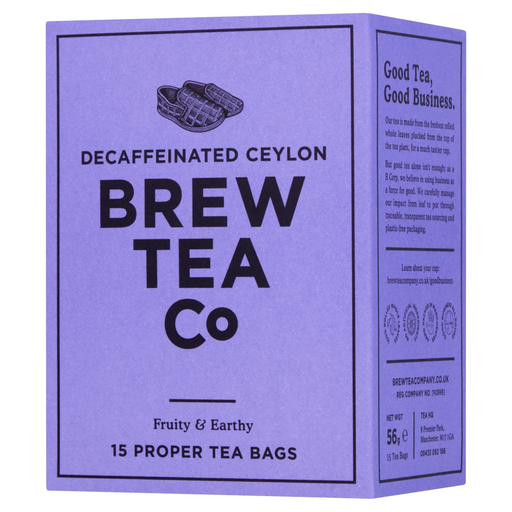
Brew Tea Co CO₂ Decaffeinated Tea, 15 bags, 56g
The 15-bag pack offers a smaller quantity if the canteen wants to try a decaf tea before choosing a regular line. Its listing describes decaffeinated Ceylon black tea and a CO₂ decaffeination process; check the pack for brewing directions and caffeine information.
View on Joybuy
 No image available
Tetley Decaf Tea, 160 bags, 500g
The stated 160-bag pack gives a canteen another format to consider for routine stocking. The listed ingredient is decaffeinated black tea; use the current pack for brewing instructions and describe it as decaf, not necessarily caffeine-free.
View on Joybuy
 No image available
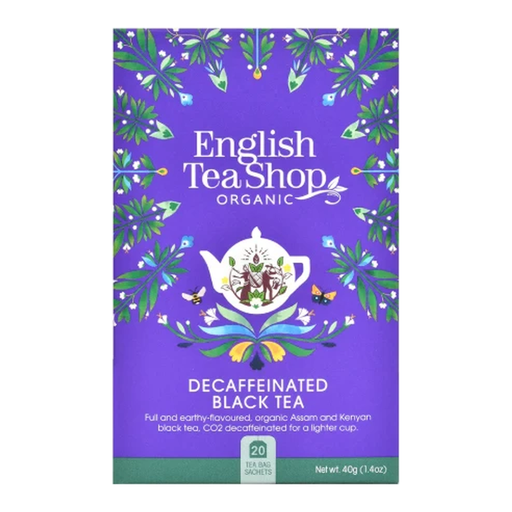
English Tea Shop Organic Decaffeinated Black Tea, 20g
The listed ingredient is decaffeinated organically grown black tea. Before choosing this 20g product for ongoing canteen service, check the pack’s tea-bag count, brewing method and the basis of any caffeine figure used in staff information.
View on Joybuy
Questions about canteen decaf tea
Does decaf tea mean caffeine-free?
No. Twinings explains that minor traces of caffeine can remain after decaffeination, and Tesco states that its listed PG Tips Decaf contains less than 0.2% caffeine. Use the exact current product’s wording when describing a canteen tea to staff.
How long should decaf black tea bags brew in a canteen?
Follow the tea being served rather than setting one time for every decaf bag. Tesco gives 1–2 minutes for its PG Tips Decaf listing; Typhoo suggests 1–5 minutes for its 80-bag Decaf product. Display the selected product’s starting instructions near the tea station.
How should a canteen handle allergen information for tea service?
Keep current ingredient and allergen information accessible to the people serving the drinks. GOV.UK’s guidance for retail and catering food businesses covers allergen information for prepacked and non-prepacked food and drink and staff training; update canteen records when the supplied product or packaging changes.
Can decaf tea bags go in the workplace food-waste bin?
Check both the exact tea bag’s disposal instructions and what the workplace’s waste collection accepts. A brand’s compostability or biodegradability claim alone does not establish that a particular local collection will take it.


