For car boot sale refreshments, choose a clearly labelled decaf black tea in a pack size that fits the number of cups you plan to serve, then check its brewing instructions and any credentials that matter to you. If you will sell or regularly supply drinks, check with your local authority whether your activity needs food-business registration, and plan how you will handle milk and ingredient information.
Who is serving decaf tea?
Car boot sellers serving hot drinks
If you expect to make several cups, bag count and straightforward brewing instructions help you plan stock and service. Check whether your food activity requires registration with the local authority, and keep ingredient information available when offering milk or other additions.
Stallholders offering a familiar cuppa
A decaf black tea lets visitors choose a conventional tea with optional milk or sugar. Check the exact pack label rather than assuming decaf means caffeine-free.
Buyers with ingredient or sourcing preferences
If organic or Fairtrade credentials affect your choice, look for them on the particular pack you intend to serve. Check that pack’s disposal instructions separately from its tea credentials.
What should you check before buying?
Start with the number of cups you expect to make, then check how the chosen tea fits your serving routine and any pack-specific preferences.
| Priority | What to check | Your needs |
|---|
| Decaf black tea |
Read the exact pack’s tea description and decaffeination statement. Keep its ingredients available for customer questions. |
I want to offer a familiar black tea to visitors who prefer decaf, without describing it as caffeine-free. |
| Pack and brewing |
Check the bag count against planned cups and follow the product’s portion and brew-time instructions. One Stop’s Tetley 80-bag information advises one bag per mug or per person in a teapot; Typhoo gives a 1–5 minute range for its 80-bag product. |
At a busy stall, I need enough bags and a brewing routine that is easy to repeat. |
| Pack credentials |
Check organic, Fairtrade and other claims on the exact variant. For example, Tesco lists a Clipper 40-pack as organic and Fairtrade; that listing does not establish the labelling of every Clipper pack. |
Particular sourcing credentials matter to me, so I want the pack I buy to carry the claims I intend to describe. |
| Serving responsibilities |
Ask the local authority whether your activity requires food-business registration. Keep drinks safe to serve and check ingredient information for additions such as milk. The Food Standards Agency and GOV.UK say that selling or handling food may bring an activity within food-business registration requirements. |
Before I offer tea at a car boot sale, I want to know what applies to my stall and be able to answer questions about what is served. |
What can catch stallholders out?
-
Assuming decaf means caffeine-free
Decaffeination statements vary by product. Twinings states that its English Breakfast Decaffeinated tea is decaffeinated to 0.2%; that is not a statement about every decaf tea.
Use the wording on the pack you serve, and do not promise that it meets an individual visitor’s medical requirements.
-
Buying by brand without checking the pack
Bag counts and brewing guidance differ between products. An 80-bag pack and a 160-bag pack call for different stock planning, even when they share a brand.
Estimate your planned cups, check the exact bag count and read the brewing instructions before setting a serving routine.
If planned cups exceed the bags on hand, you will need additional packs.
-
Assuming a temporary stall needs no registration
Food Standards Agency and GOV.UK guidance says selling or handling food may make an activity a food business. Its guidance for community and charity events says a local authority may decide that very limited, infrequent food activity does not need registration; that is not a blanket exemption for car boot stalls.
Ask the relevant local authority about your circumstances before trading. If registration is required, the Food Standards Agency says to register at least 28 days before trading or starting food operations.
-
Applying one pack’s claims to another
Organic, Fairtrade and tea-bag disposal statements concern particular products and packaging; a different pack or variant may carry different instructions.
Check the pack received before describing its credentials or telling visitors how to dispose of the bags.
Which brands offer relevant options?
These product references illustrate different pack formats and stated attributes; check the current variant before relying on a particular label or instruction.
Tetley
One Stop’s Tetley Decaf 80-bag product information describes decaffeinated black tea and advises one bag per mug or per person in a teapot.
- The stated portion guidance is useful when planning a mug-by-mug service.
- Check the count and instructions on the Tetley pack you actually buy.
PG Tips
Tesco lists a PG Tips Decaf Black Tea pack containing 160 bags.
- The stated bag count gives a basis for cup planning.
- Use the chosen pack for its brewing and ingredient instructions.
Yorkshire Tea
Yorkshire Tea describes its Decaf blend as an option for people reducing caffeine or choosing tea later in the day.
- A decaf black-tea option for a conventional tea service.
- The brand’s description of its flavour is not an independent taste comparison; check the exact pack format for stock planning.
Twinings
Twinings describes its English Breakfast Decaffeinated 40-bag product as a Kenyan-tea blend and recommends brewing it for two to three minutes.
- The named blend and stated brew time give specific product information to plan around.
- A 40-bag pack may mean using multiple packs if you expect to serve more cups.
Clipper
Clipper describes its Organic Everyday Decaf as decaffeinated organically grown black tea. Tesco lists a separate 40-pack as organic and Fairtrade.
- The stated credentials give buyers particular pack labels to look for.
- Confirm those credentials and any disposal instructions on the exact pack purchased.
Typhoo
Typhoo’s 80-bag Decaf product page states 3.125 g of tea per bag and a suggested 1–5 minute brew.
- The stated bag weight and brewing range provide product-specific details for setting a service routine.
- Typhoo says customers may receive old or new packaging, so check the information on the pack received.
Decaf tea bags on Joybuy
These decaf black-tea options cover different stated pack sizes and labelling preferences for a car boot sale tea service. Check the current pack before serving.
 No image available
Tetley 80 Decaffeinated Tea Bags 250g
The stated 80-bag count helps you plan individual cups for a stall. One Stop’s Tetley 80-bag product information advises one bag per mug; check the current pack’s ingredients and brewing directions before serving.
View on Joybuy
 No image available
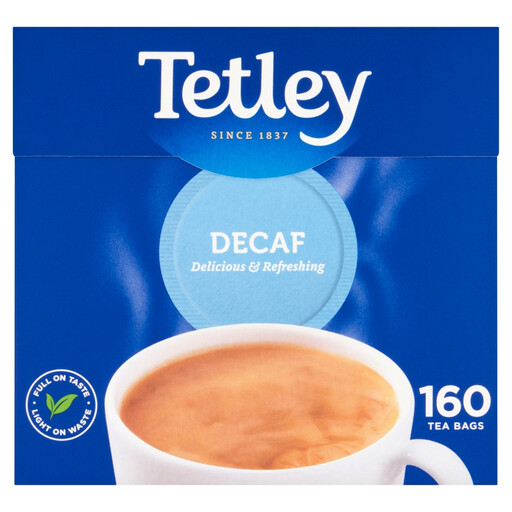
Tetley 160 Decaf Tea Bags 500g
The stated 160-bag count may suit a stall planning more cups from one pack. Check this pack’s brewing directions and current ingredient and certification wording before setting up service.
View on Joybuy
 No image available
Clipper Organic Fairtrade Decaf Everyday 80 Tea Bags 277g
This stated 80-bag pack is an option if organic and Fairtrade labelling matters to your choice. Check the current pack for its credentials, brewing instructions and tea-bag disposal directions.
View on Joybuy
 No image available
Taylors of Harrogate Yorkshire Tea Decaf 250g
This Yorkshire Tea Decaf pack offers another black-tea option for a conventional stall service. Check its bag count before estimating cups from the stated 250g weight, and read the pack’s brewing directions.
View on Joybuy
Questions about serving decaf tea
Do I need to register to sell tea at a car boot sale?
You may need to register if your activity counts as a food business. Food Standards Agency and GOV.UK guidance says selling or handling food may bring an activity within registration requirements; a local authority may decide that very limited, infrequent activity does not require registration, but you should not assume that applies to your stall. Ask the relevant authority about your circumstances. If registration is required, the Food Standards Agency says to register at least 28 days before trading or starting food operations.
Does decaf tea mean caffeine-free?
No: do not describe a decaf tea as caffeine-free on the strength of the word “decaf” alone. Twinings states that its English Breakfast Decaffeinated product is decaffeinated to 0.2%; check the statement on the exact tea you serve rather than making a medical-suitability promise.
How many tea bags should I plan for?
Start with the number of mugs you expect to serve and the portion guidance for your chosen tea, then allow for unexpected demand. One Stop’s Tetley 80-bag product information advises one bag per mug or per person in a teapot. Check the bag count on the pack you buy instead of estimating it from pack weight.
What should I check when offering milk with tea?
Keep the milk packaging available so you can check its ingredients and give accurate information when asked; milk is an allergen. Check the food-safety and allergen requirements that apply to your stall with the relevant local authority rather than assuming a temporary setup has no responsibilities.
Can decaf tea bags go in any food-waste bin?
Do not assume they can. Check the disposal wording on the exact tea-bag pack and the rules for the collection you intend to use before giving visitors instructions.


