Black-tea drinkers cutting back on caffeine
If a mid-morning tea normally accompanies your snack, decaf black tea keeps the choice within a familiar tea style while reducing caffeine.


For a familiar cup alongside a mid-morning snack, start with decaffeinated black tea, then compare the exact blend, ingredients and brewing instructions. Decaf does not necessarily mean caffeine-free: check the pack’s caffeine wording if avoiding caffeine completely matters to you. PG Tips states less than 0.2% caffeine for its 70-bag Decaf product, while Clipper’s Organic Everyday Decaf offers an organic and Fairtrade black-tea option.
If a mid-morning tea normally accompanies your snack, decaf black tea keeps the choice within a familiar tea style while reducing caffeine.
If the difference between decaf and caffeine-free matters to you, check the caffeine statement and ingredients on the individual product rather than relying on its category name.
If organic, Fairtrade, Rainforest Alliance or tea-bag disposal claims influence your choice, compare the claims on the specific pack. They are not interchangeable across products.
Choose the tea style you want with your snack, then check the individual product’s caffeine wording, ingredients and preparation guidance.
| Priority | What to check | Your needs |
|---|---|---|
| Caffeine wording | Read the exact pack’s residual-caffeine statement. Twinings notes that decaffeinated tea can retain traces; Sainsbury’s lists PG Tips Decaf 70 bags as containing less than 0.2% caffeine. | I want less caffeine in my usual tea. If I need to avoid it completely, a decaf label alone will not settle my choice. |
| Tea style and ingredients | Distinguish plain decaffeinated black tea from flavoured blends, green tea and caffeine-free infusions. Sainsbury’s lists natural flavouring in PG Tips Decaf 70 bags. | A conventional black-tea cup suits my snack better than a citrus-flavoured or herbal drink. |
| Brewing guidance | Follow the range on the chosen pack before adjusting to taste. Sainsbury’s gives 2–3 minutes for Tetley’s 80-bag decaf listing; Typhoo suggests 1–5 minutes for its 80-bag decaf. | I prefer to start with the maker’s instructions, then adjust the brew for the cup I like. |
| Sourcing and disposal | Check which certification or materials claim applies to the exact product. Clipper describes its Organic Everyday Decaf as organic and Fairtrade; check the pack and local collection rules before disposing of tea bags. | Organic or Fairtrade sourcing matters to me, and I want to know where the used bags can go locally. |
Decaffeinated black tea can retain caffeine traces, so the distinction matters when complete avoidance is required.
Check the exact pack’s caffeine statement. If you need a caffeine-free drink, choose one explicitly identified as such rather than assuming any decaf tea qualifies.
A brand may offer several tea styles, and an individual product may contain flavouring. The name on the box alone may not tell you whether it will resemble your usual black tea.
Check the tea type and ingredients before choosing between an everyday black tea, a flavoured blend or another infusion.
Suggested brewing times differ between products, so preparing two bags for the same length of time is not a like-for-like taste comparison.
Begin with the instructions on each pack, then adjust the infusion time to suit your cup.
A plant-based or biodegradable tea bag is not automatically accepted by every local food-waste collection.
Check the physical pack and your council’s collection guidance for tea bags, wrappers and outer packaging.
A conventional decaf black-tea option for an everyday cup.
A decaf black-tea option sold in a 70-bag pyramid-bag format.
Yorkshire Tea describes its Decaf blend as intended for people seeking a lower-caffeine tea with familiar black-tea character.
Twinings offers decaf choices including Everyday, English Breakfast, Earl Grey and green tea.
An organic and Fairtrade decaf black-tea option.
An 80-bag decaf tea that Typhoo describes as an everyday Kenyan-tea brew.
These options cover decaf black tea for a mid-morning cup, including organic and Fairtrade choices and different stated pack sizes. Check each product’s pack details against the tea style and caffeine wording you need.
 Image unavailable
An everyday decaf black-tea option for a snack-time cup when organic and Fairtrade sourcing are priorities. Check the pack’s caffeine wording and brewing instructions if those details affect your choice; check local guidance before putting used bags in food waste.
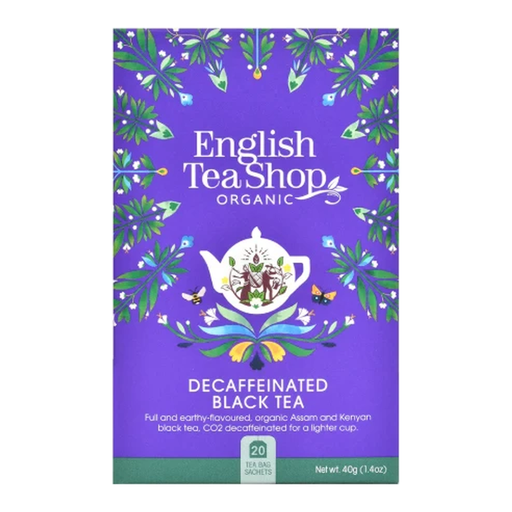 Image unavailable
An organic decaffeinated black-tea option if you want a conventional tea style with your snack. The product information gives a caffeine figure of ≤0.5 mg without a clear measurement basis; check the pack to establish what it measures and how many tea bags it contains.
 Image unavailable
An 80-bag option for a familiar mid-morning tea, with 2–3 minutes given as the brewing guidance. Check the physical pack’s decaf and ingredient wording, and its caffeine statement if the amount matters to you.
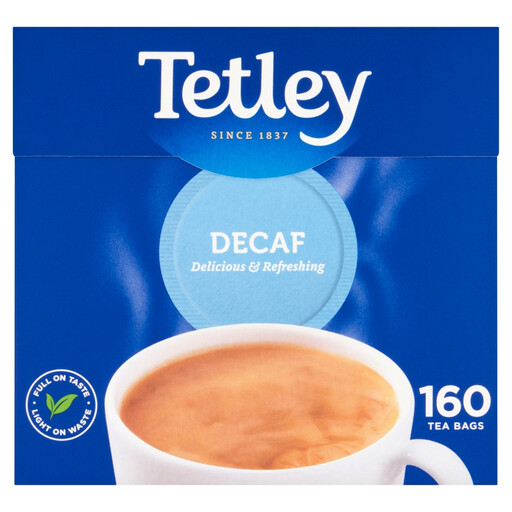 Image unavailable
A 160-bag decaffeinated black-tea pack for someone who regularly makes a mid-morning cup. The product information identifies Rainforest Alliance certification; check the pack for brewing instructions and caffeine wording where relevant.
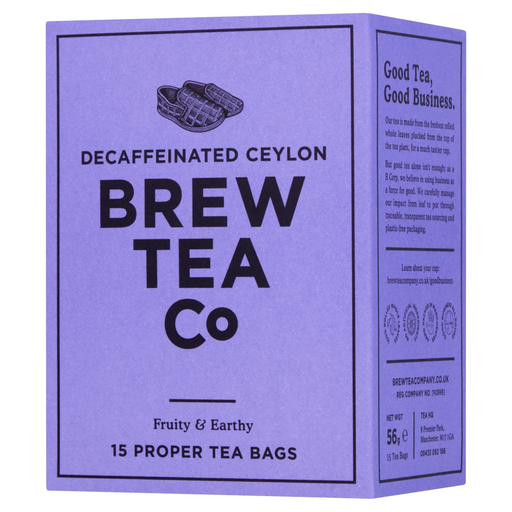 Image unavailable
A smaller stated pack of decaf Ceylon black-tea bags for trying this tea style with a snack. Check that the physical pack’s ingredients confirm decaffeinated tea, and check the basis of any caffeine figure before using it to compare drinks.
No. Twinings explains that traces can remain in decaffeinated tea, and Sainsbury’s lists PG Tips Decaf 70 bags as containing less than 0.2% caffeine. If complete avoidance matters to you, check the exact pack and consider a drink explicitly identified as caffeine-free.
Start with a decaffeinated black tea if you want a cup similar in style to your usual black tea. Compare the individual blend and ingredients: for example, Sainsbury’s lists natural flavouring in PG Tips Decaf 70 bags, while its Tetley 80-bag decaf listing identifies decaffeinated black tea.
Use the instructions for the particular product, then adjust to your taste. Sainsbury’s gives 2–3 minutes for Tetley’s 80-bag decaf listing, Clipper suggests 2–5 minutes for Organic Everyday Decaf, and Typhoo suggests 1–5 minutes for its 80-bag decaf.
Not automatically. Check the exact pack’s disposal instructions and your council’s accepted-waste guidance; a biodegradable or plant-based claim alone does not establish what a local collection will take.