Tea drinkers reducing caffeine
Decaf black tea keeps tea leaves in the drink while removing most of their caffeine. It is not the same as a caffeine-free infusion: University Hospitals of Leicester NHS Trust notes that very low levels can remain.


For a familiar cup that can be served with milk, start with an unflavoured decaf black tea; choose a named breakfast blend or Earl Grey when that flavour difference matters. If the aim is to avoid caffeine rather than reduce it, compare fruit or herbal infusions and check their ingredients: decaf black tea can still contain traces of caffeine. Match the pack size to how often tea will be served, rather than assuming one blend or box size suits everyone.
In a retirement shop, the useful distinction is what someone wants in their cup—not an assumption about their age or reason for choosing decaf.
Decaf black tea keeps tea leaves in the drink while removing most of their caffeine. It is not the same as a caffeine-free infusion: University Hospitals of Leicester NHS Trust notes that very low levels can remain.
Someone looking for an unflavoured black tea to serve with milk can compare plain decaf options from Yorkshire Tea, Tetley and PG Tips. Twinings English Breakfast Decaffeinated offers a more specifically defined blend of Assam, Kenyan and Ceylon teas.
Clipper describes its Everyday Decaf as organically grown black tea blended with Assam. Its decaf Earl Grey is a different choice: Clipper lists black tea and natural flavouring, so check which style the person receiving the tea actually wants.
Decide whether the requirement is less caffeine, a particular black-tea flavour or a different kind of drink altogether. Then check preparation, ingredients and pack size for the exact product.
| Priority | What to check | When it matters to me |
|---|---|---|
| Caffeine | Distinguish decaffeinated tea leaves from fruit or herbal infusions. Yorkshire Tea states 1.5 mg to 2 mg per 200 ml cup brewed for five minutes; do not apply that figure to another product or brewing method. | I want to reduce caffeine but keep drinking black tea—or I need to check an infusion’s ingredients because avoiding caffeine is the requirement. |
| Blend style | Check whether the tea is plain black tea, a named breakfast blend or flavoured Earl Grey. Twinings identifies Assam, Kenyan and Ceylon teas in its English Breakfast Decaffeinated; Clipper lists natural flavouring in its decaf Earl Grey. | For a familiar cup with milk, I would start with plain black tea. If the flavour itself is the point of the purchase, I would choose the named blend deliberately. |
| Preparation and pack | Follow the exact pack’s brewing directions. Waitrose & Partners gives a two- to three-minute recommendation for Tetley Decaf 80 Tea Bags, while Yorkshire Tea’s stated caffeine figure uses a five-minute brew. Compare bag counts with expected use. | I need a straightforward tea to serve regularly, with a pack size that fits how often it will be used. |
| Ingredients | Read the current label, particularly for flavoured blends or a specific ingredient exclusion. Clipper lists its decaf Earl Grey as 95% black tea and 5% natural flavouring. | If I am choosing for someone with an allergy, intolerance or ingredient restriction, I need to check the exact pack before serving it. |
Decaffeination does not necessarily remove every trace. Yorkshire Tea states 1.5 mg to 2 mg of caffeine in a 200 ml cup brewed for five minutes, and University Hospitals of Leicester NHS Trust notes that decaf tea can retain very low levels.
Decide whether reduced caffeine is enough. If it is not, compare suitable fruit or herbal infusions and read their ingredient lists rather than relying on the word ‘herbal’ alone.
An unflavoured black tea, Twinings’ Assam, Kenyan and Ceylon English Breakfast blend, and Clipper’s flavoured decaf Earl Grey are different choices for the cup.
Choose the blend style before choosing a brand: plain black tea for an unflavoured cup, a breakfast blend for that specified mix, or Earl Grey when its flavouring is wanted.
Yorkshire Tea’s caffeine figure is tied to a five-minute brew. Waitrose & Partners gives a two- to three-minute recommendation for Tetley Decaf 80 Tea Bags, so the Yorkshire Tea figure cannot describe a Tetley cup.
Check the directions on the product being served and keep any caffeine figure attached to its stated cup size and preparation method.
A flavoured blend can contain ingredients absent from plain black tea, and product recipes may change.
For an allergy, intolerance or other ingredient exclusion, check the current pack label before buying or serving the tea.
These examples illustrate different blend styles and pack choices; a brand name alone does not establish the caffeine content or ingredients of every product it makes.
Its Decaf is a Kenyan black-tea option for an everyday cup.
English Breakfast Decaffeinated is a named blend of Assam, Kenyan and Ceylon teas.
Its Everyday Decaf and decaf Earl Grey offer different choices within decaffeinated black tea.
Tetley Decaf is a plain decaffeinated black-tea option.
PG Tips Decaf is another black-tea option for regular brewing.
These options cover bagged decaf black tea, including plain and organic or Fairtrade-labelled choices. Compare the stated pack quantities with expected use, and check the current label when caffeine level or ingredients are decisive.
 No image available
An everyday decaf black-tea option when organic and Fairtrade labelling matters. The pack contains 80 tea bags; check its current directions and caffeine information if either affects your choice.
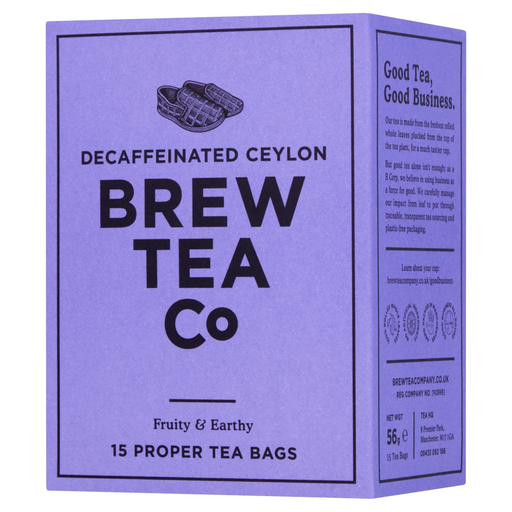 No image available
A smaller bagged-tea pack to consider when 15 bags better match expected use. Decaffeinated tea should not be treated as caffeine-free; check the current pack if a particular threshold matters.
 No image available
A plain decaf black tea for a familiar cup. Waitrose & Partners gives a two- to three-minute brewing recommendation for the Tetley 80-bag product; follow the directions on the current pack.
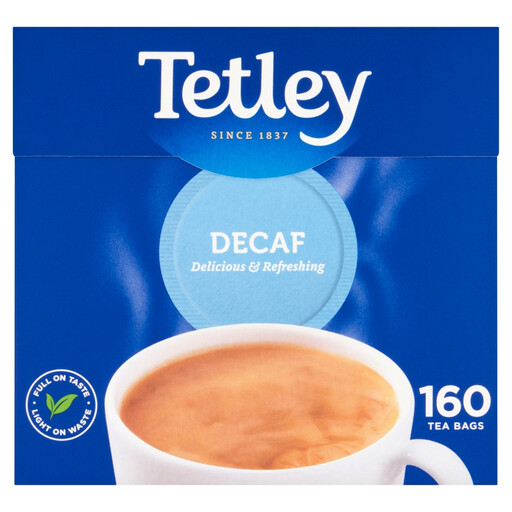 No image available
A larger pack of plain decaf black tea to compare with the 80-bag Tetley option when tea will be served regularly. Check the current pack for its preparation directions and any caffeine information you need.
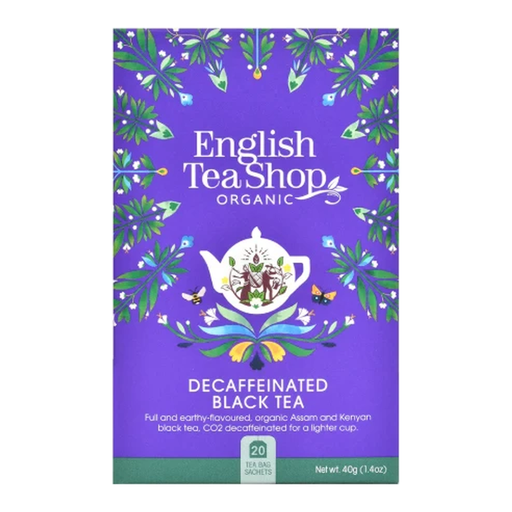 No image available
An organic decaf black-tea option in a 20g pack. Check the current pack for its serving format and brewing directions before choosing it for regular tea service.
No. Decaf tea can retain traces of caffeine. Yorkshire Tea states 1.5 mg to 2 mg in a 200 ml cup of its Decaf brewed for five minutes; that figure does not apply to every blend or brewing method. If avoiding caffeine is essential, compare fruit or herbal infusions and check their ingredients.
Start with an unflavoured decaf black tea if you want a familiar milk-tea cup: Yorkshire Tea Decaf, Tetley Decaf and PG Tips Decaf are examples. If you specifically want an English Breakfast blend, Twinings English Breakfast Decaffeinated contains Assam, Kenyan and Ceylon teas. Follow the directions for the product you choose.
Compare the number of bags with how often tea will be served, rather than choosing the largest pack automatically. Yorkshire Tea lists 40-, 80- and 160-bag options, while the Tetley products shown here contain 80 or 160 bags. Check the exact variant before buying.
Read the current pack label before buying or serving the tea, especially for a flavoured blend or an allergy requirement. For example, Clipper lists natural flavouring in its decaf Earl Grey; an unflavoured decaf black tea is a different ingredient choice. Do not rely solely on an older online listing, as recipes can change.