Hosts serving both regular and decaf tea
Keep the decaf clearly identified alongside the other hot drinks. If you expect repeat rounds, a larger box may also supply tea for the household after Bonfire Night.


For a Bonfire Night tea station, buy clearly labelled decaf tea bags for the drink and treat a jar as separate storage, not as proof that its contents are decaf. An 80-bag box is a lower-commitment choice for occasional serving; consider 160 bags if guests may have repeat cups and the household will use what remains. Choose a particular blend or sourcing claim when that matters to you, and check the pack if a guest needs precise caffeine information.
Keep the decaf clearly identified alongside the other hot drinks. If you expect repeat rounds, a larger box may also supply tea for the household after Bonfire Night.
An 80-bag box offers a smaller commitment than a 160-bag box when you are unsure how much decaf guests will drink.
Twinings describes its English Breakfast Decaffeinated tea as a Kenyan-tea blend. Clipper states that its 20-pyramid-bag decaf black tea is organic and Fairtrade and uses a carbon-dioxide decaffeination process. Check the claims on the exact pack you choose.
Start with the tea itself and the number of cups you expect to serve. Then compare the blend, pack instructions and any storage container you want for the tea station.
| Priority | What to check | Your needs |
|---|---|---|
| Tea identity | Check that the tea is labelled decaffeinated and read its ingredient information. Check a jar's contents separately from its title or appearance. | I want guests to be able to identify the decaf tea at a self-serve drinks station, rather than mistake a storage jar for a pack of tea. |
| Pack size | Compare bag counts and the current unit price for the packs you would actually use. Consider both guest servings and what the household will drink afterwards. | For an occasional decaf option, I would rather start with fewer bags. If we regularly drink decaf, a 160-bag box may be practical beyond Bonfire Night. |
| Blend and brewing | Read the selected pack's blend description and brewing instructions. Twinings recommends two to three minutes for its 80-bag English Breakfast Decaffeinated tea; other products may give different directions. | I want to know what sort of black tea I am serving and be able to follow that product's instructions when making several mugs. |
| Caffeine information | Distinguish a decaffeinated label from a claim of zero caffeine. If a precise amount matters, check current pack information and ask the manufacturer to clarify it. | A guest may need more detail than the word “decaf” provides, so I would confirm the product information before serving it to them. |
| Sourcing claims | Check claims on the exact variant, including organic or Fairtrade statements, rather than assuming they apply to every tea from a brand. | Specific sourcing or packaging information may influence my choice as much as bag count or blend. |
| Storage | Check the tea's storage directions and whether a proposed jar is suitable for keeping opened tea airtight. Tesco advises airtight storage after opening its 80-bag decaf tea. | If I want to decant tea for the drinks station, I will choose the tea and container separately and keep the decaf identifiable. |
A jar may be intended for storage rather than supplied as decaf tea. Joe's Tea Co. describes one jar page with a decaf title, yet its page text says the organic black tea contains caffeine.
Choose tea with clear decaffeinated labelling first. If you also want a jar, check what it contains and keep the tea's identity clear after decanting.
A separate jar is another item to obtain and may still need to be filled with tea bought separately.
A 160-bag box leaves more tea after the gathering if decaf is rarely drunk at home. Pack size alone also does not establish which current listing has the lower unit price.
Estimate guest cups and likely household use, then compare the current price per bag or per kg for the exact packs under consideration. Check whether a displayed offer has a loyalty condition.
Blend descriptions and preparation directions differ. Twinings advises two to three minutes for its 80-bag English Breakfast Decaffeinated tea, so a general rule may not match the pack you serve.
Read the chosen product's directions before making the first round, particularly if you are preparing several mugs at once.
A decaffeinated designation does not, by itself, give a guest an exact caffeine amount. Different fields on the Twinings product page give conflicting figures, while a Joybuy Tetley listing pairs “Decaffeinated” with a generic “Zero Caffeine” field.
If a specific caffeine threshold matters to a guest, check the physical pack and seek clarification from the manufacturer before serving.
These references describe particular decaf tea lines and pack formats, not every product made by each brand.
Yorkshire Tea presents its decaf blend as an option for people reducing caffeine; Tesco lists a 160-bag format.
Tesco lists Tetley decaffeinated black tea in an 80-bag pack and also shows a 160-bag format in its decaf category.
Tesco lists PG Tips Decaf Black Tea as a 160-bag, 464g box.
Twinings describes its 80-bag English Breakfast Decaffeinated tea as a blend using Kenyan teas.
Clipper describes its 20-pyramid-bag decaf black tea as organic and Fairtrade and says it uses carbon dioxide for decaffeination.
Tesco's own-brand Decaff Original Tea is listed as 80 bags in a 250g pack.
These tea options span smaller packs, an 80-bag format and a 160-bag format for a Bonfire Night drinks station or later household use. The jar, if wanted, is a separate storage choice; check each tea pack for the details that matter to your guests.
 No image available
An 80-bag decaf option for a gathering where you do not expect to use a larger box. Tesco's listing for this Tetley 80-bag product advises brewing for two to three minutes; check the pack's ingredient and decaf labelling before serving.
 No image available
An 80-bag choice if the stated organic and Fairtrade attributes matter for the tea station. Follow the directions on this pack rather than those for Clipper's separate 20-pyramid-bag product.
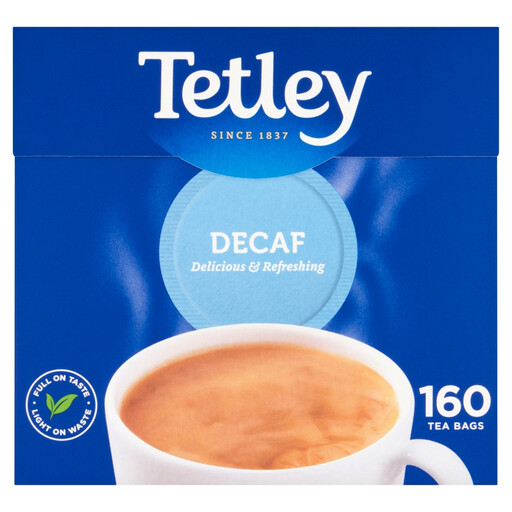 No image available
The 160-bag count is worth considering for repeat rounds and later household use. Check this pack's brewing directions and current labelling rather than assuming they match the smaller Tetley pack.
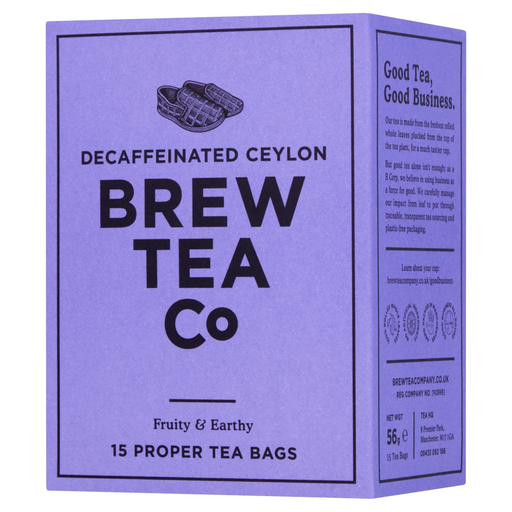 No image available
A 15-bag option when you want fewer servings than a large box provides. Check the current pack's decaf labelling and brewing instructions before preparing it for guests.
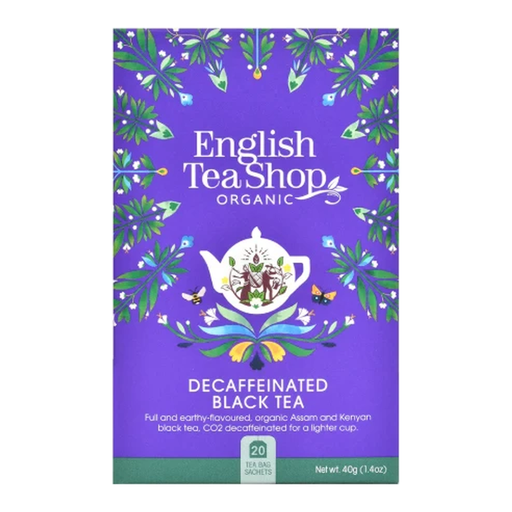 No image available
This 20g pack is an option to examine if organic decaf black tea interests you. Check its serving format, quantity and brewing directions before using it to plan drinks for guests; do not treat the pack weight as a cup count.
Buy tea with clear decaffeinated labelling for the drink; add a separate airtight jar only if you want to decant and store it. Do not assume a jar contains decaf tea from its title: Joe's Tea Co. has a jar page with decaf wording whose product text says the tea contains caffeine.
Allow for the cups you expect to serve, possible repeat rounds and whether your household will use the leftovers. An 80-bag pack makes a smaller commitment than 160 bags; the larger count is more relevant if you regularly serve or drink decaf afterwards.
No. Twinings and Tetley give two-to-three-minute directions for the specific 80-bag products described here, while other packs may instruct you differently. Follow the directions on the tea you actually buy.
Do not use the word “decaf” alone as a zero-caffeine guarantee. If a precise threshold matters, check the current pack and contact the manufacturer for clarification; conflicting or generic figures on a listing should not settle the question for a guest.
Check the purchased pack's current ingredients and allergen information before serving it. Tesco cautions that online food information can change, so an earlier listing should not replace the label on the tea you use.