Late-evening tea drinkers
If you normally take black tea with milk, look at plain everyday decaf first. A named English Breakfast blend is another option when its black-tea composition appeals to you.


For guests expecting tea with milk, start with a plain decaffeinated black-tea blend and follow its pack’s brewing instructions. Choose decaf English Breakfast for a named, robust black-tea blend, or decaf Earl Grey when bergamot flavour is part of the appeal. Check the current pack if residual caffeine or tea-bag disposal affects your choice.
The useful starting point is how the tea will be served: a familiar cup after dark, a choice for guests with different tastes, or a pack selected partly for its ingredients and disposal instructions.
If you normally take black tea with milk, look at plain everyday decaf first. A named English Breakfast blend is another option when its black-tea composition appeals to you.
A plain decaf black tea covers guests who expect a conventional cup. Decaf Earl Grey offers a separate bergamot-flavoured choice rather than a substitute that will taste the same.
Compare plain black tea with flavoured blends, and check the particular pack for sourcing claims and tea-bag disposal instructions. These details can differ even among decaf products.
Choose the flavour direction first, then check the pack details that affect serving several cups outdoors.
| Priority | What to check | Your needs |
|---|---|---|
| Blend style | Check whether the tea is plain decaffeinated black tea, a named English Breakfast blend or bergamot-flavoured Earl Grey. Twinings names Assam, Kenyan and Ceylon teas in its English Breakfast blend; Clipper lists natural flavouring in its decaf Earl Grey. | I want a familiar cup with milk for most guests, but might offer Earl Grey separately to anyone who wants bergamot. |
| Residual caffeine | Read the current pack’s caffeine wording rather than treating decaf as a statement that the tea contains none. If a precise limit matters, confirm the product details with its manufacturer. | A lower-caffeine choice matters to me, and I need to know whether the labelled amount meets any restriction I have been given. |
| Brewing | Use the instructions for the exact pack. Tesco’s Tetley Decaf information advises 2–3 minutes before adding milk, while Joybuy’s Yorkshire Tea Decaf 500g listing specifies 4–5 minutes; those times should not be transferred to other packs. | Guests may want different strengths, so I would rather start with the maker’s timing than judge a blend from a hurried cup. |
| Pack size | Compare bag count and net weight, then consider how many cups you expect to make. A weight alone does not tell you the number of bags in every pack. | For a gathering, I want enough bags for the expected guests and any second cups. |
| Sourcing and disposal | Check sourcing claims separately from carton recycling and tea-bag disposal instructions. Follow the current packaging and your local council’s accepted-material rules. | If these details influence my choice, I want to know what the particular pack says and where its used bags can actually go. |
Plain black tea, a named English Breakfast blend and bergamot-flavoured Earl Grey offer different flavour directions. Earl Grey may surprise guests expecting an unflavoured cup with milk.
Make plain decaf your conventional option; add English Breakfast or Earl Grey when their particular blend or flavour is wanted.
Product information can describe residual caffeine, so the word decaf alone cannot establish an exact amount in a cup.
If you must keep to a medically advised caffeine limit, check the current pack and ask the manufacturer or a healthcare professional before relying on a particular tea.
Stated preparation times differ between products. For example, Waitrose lists 1–2 minutes for its PG Tips Decaf 70-bag pack, while Joybuy’s Yorkshire Tea Decaf 500g listing gives 4–5 minutes.
Start with the instructions on the pack you bought, then adjust your own cup to taste.
Words such as plant-based and biodegradable do not, by themselves, establish that a bag is suitable for home composting or accepted by a local food-waste service.
Read the pack’s disposal directions and check what your council collects before discarding the bags or carton.
These brand references describe particular decaf products and ranges, not every tea a brand makes or the products available in the selection below.
Its Decaf is a plain black-tea route for shoppers seeking a familiar cup. Yorkshire Tea describes the blend as retaining character after decaffeination.
Twinings English Breakfast Decaffeinated names Assam, Kenyan and Ceylon teas for shoppers who want a specified black-tea blend.
Clipper describes its plain Organic Decaf Black Tea as an organic and Fairtrade blend, while its decaf Earl Grey takes a bergamot-flavoured direction.
Tetley Decaf is an everyday decaffeinated black-tea option. Tesco lists a 160-bag, 500g pack and advises brewing for 2–3 minutes before adding milk.
PG Tips Decaf offers another black-tea route; Waitrose lists decaffeinated black tea as the ingredient in its 70-bag pack.
These options focus on decaf tea bags for a familiar black-tea cup at a Bonfire Night gathering, with different pack sizes and stated blend details. Check the individual pack if you need a particular brewing time, ingredient list or residual-caffeine specification.
 No image available
An everyday decaf tea-bag option for guests who want a conventional cup with milk. The pack contains 80 bags and weighs 250g; follow its brewing directions when serving.
 No image available
A plain decaf black-tea option when you expect to serve several guests or offer second cups. This pack contains 160 bags and weighs 500g; follow its own preparation instructions.
 No image available
A decaf everyday-tea option if the pack’s organic and Fairtrade positioning matters to your choice. It contains 80 bags and weighs 277g; use the current tea-pack instructions for brewing.
 No image available
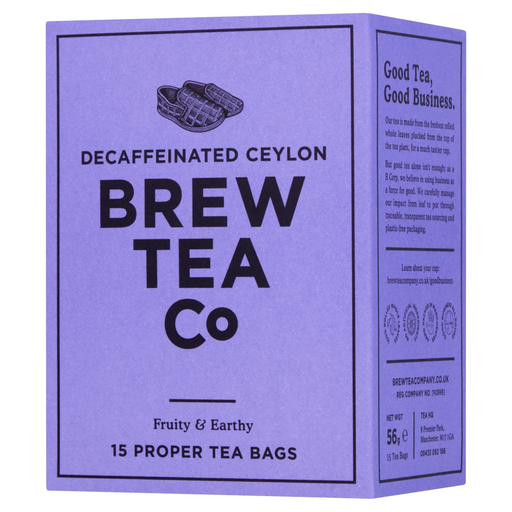
A smaller decaf tea-bag pack if you are serving fewer cups or offering another blend alongside it. The pack contains 15 bags and weighs 56g; a larger gathering may need more than one pack.
 No image available
A Yorkshire Tea decaf option for a familiar black-tea cup. This is a 250g pack; check its bag count and brewing instructions when planning how many guests it will serve.
Start with a plain decaffeinated black tea if guests expect a conventional tea-and-milk cup. Tetley’s Decaf product information, for example, advises brewing before adding milk; choose a named English Breakfast blend instead when its specified black-tea profile is what you want.
Twinings describes its English Breakfast Decaffeinated as a blend of Assam, Kenyan and Ceylon teas. Clipper’s decaf Earl Grey contains natural flavouring for a bergamot direction, so choose it for that flavour rather than expecting it to taste like plain black tea.
Do not assume it contains none: decaf product information can specify residual caffeine. If you have a medically advised limit, check the current pack and confirm the relevant details with the manufacturer or a healthcare professional rather than relying on the word decaf alone.
Follow the instructions for the blend and pack you are using. Tesco’s Tetley Decaf information says 2–3 minutes before milk, whereas Joybuy’s Yorkshire Tea Decaf 500g listing says 4–5 minutes; neither time is a rule for every decaf tea.
That depends on the bag and the collection service. Read the current pack’s disposal instructions and your local council’s accepted-material guidance; a plant-based or biodegradable description alone does not establish that a bag belongs in home compost or a particular food-waste collection.