Hosts of recurring meetings
Compare the bag count with expected attendance and cups per meeting before choosing a large pack. A place to keep opened tea dry matters too.


For a recurring book club, start with the expected number of cups: a larger box of decaf tea bags may suit regular meetings, while a smaller pack avoids keeping more tea than the group is likely to use. Individually wrapped catering tea offers a different serving format, and a named blend or documented organic and Fairtrade sourcing may matter more to some groups than pack size. If you want a jar on the table, choose the tea separately and use a clean, dry, food-safe container.
The useful pack size and serving format depend on how often the club meets and what members want to drink.
Compare the bag count with expected attendance and cups per meeting before choosing a large pack. A place to keep opened tea dry matters too.
Keep the pack available so members can check the particular tea. Decaffeinated does not necessarily mean caffeine-free.
Check the ingredients and sourcing statements on the particular product rather than choosing by bag count alone. Clipper describes its Everyday Decaf in these terms.
Work out likely servings first, then choose the pack and blend; treat a jar as a separate way to serve or store the tea.
| Priority | What to check | Your needs |
|---|---|---|
| Pack quantity | Estimate attendees, cups per person and meetings before restocking. Compare stated bag or envelope counts: the cited ranges include 40, 80 and 160 bags, as well as Clipper's 250-envelope catering pack. | If only a few members drink decaf, I would rather choose a count we can use than keep a large opened carton between meetings. |
| Serving format | Check whether bags are individually wrapped or packed together, and whether there is dry storage between meetings. Clipper describes its 250-envelope format as catering tea. | For a shared table or meetings in different places, I want to know how the bags will be portioned and carried. |
| Caffeine information | Read the specific pack if caffeine intake matters; do not equate decaf with caffeine-free. Twinings gives inconsistent residual-caffeine figures on its English Breakfast product page, so confirm any exact figure with the pack or manufacturer. | I want members to be able to check what the tea says about caffeine rather than assume every decaf blend is identical. |
| Blend | Compare an everyday decaf black tea with a named blend. Twinings describes its English Breakfast Decaffeinated as a Kenyan-tea blend; Yorkshire Tea describes the intended character of its own decaf blend. | Some of us want a familiar tea with milk, while others may prefer to try a specifically named English Breakfast blend. |
| Ingredients and sourcing | Check the exact product statement. Clipper says its Organic Everyday Decaf contains decaffeinated organically grown black tea, is traded in compliance with Fairtrade standards and uses carbon dioxide for decaffeination. | When organic ingredients or Fairtrade sourcing matter to our club, I want those details tied to the pack we buy. |
| Jar presentation | Check the tea's actual pack format separately from any serving container. If transferring tea, use a clean, dry, food-safe container and keep the original pack information. | I want a jar on the refreshment table, but I do not need the tea itself to be sold in one. |
A jar-style serving station and a product supplied in a jar are different things. The identified tea-bag and envelope options do not establish a tea-filled jar format.
Choose the pack and serving quantity first. Add a separate clean, dry, food-safe container if you want a jar on the table.
That assumption matters when a member needs to keep track of caffeine from tea and other drinks. Twinings describes its English Breakfast tea as decaffeinated but gives inconsistent residual-caffeine figures on its product page.
Keep the purchased pack available for label checks. If an exact caffeine specification is essential, confirm it with the manufacturer rather than relying on the word ‘decaf’.
A 160-bag carton or 250-envelope catering pack requires room for dry storage and may be more than an infrequent group will use.
Estimate cups across several meetings, then compare that figure with the stated pack count and how you will store the tea.
These references describe particular decaf products and listings, not every tea made or stocked by each name.
Everyday decaf black tea; Tesco Groceries lists a 160-bag, 500 g pack.
Everyday decaf tea listed in several bag counts by Tesco Groceries.
Decaf tea bags with pack-size examples in Tesco Groceries and Joybuy listings.
Its English Breakfast Decaffeinated is a named blend sold as an 80-bag pack on the Twinings site.
Organic Everyday Decaf appears as an 80-bag pack and a 250-envelope catering format on Clipper's site.
A retailer reference for comparing listed decaf tea formats, including its own 80-pack and branded products.
These Joybuy options include tea-bag packs in several stated quantities and a Yorkshire Tea decaf pack whose serving format should be checked. They are choices for the tea itself; a jar-style station calls for a separate container.
 No image available
The stated 80-bag count gives a club a quantity to compare with expected servings. The product listing describes decaffeinated organically grown black tea and Fairtrade positioning; check the pack if either characteristic is central to your choice.
 No image available
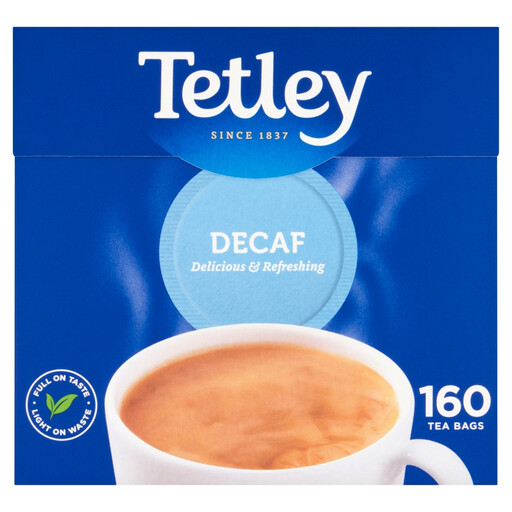
Consider this 160-bag pack when expected decaf servings across recurring meetings justify the quantity. The listing identifies decaffeinated black tea; plan somewhere dry to keep the tea between meetings.
 No image available
The 80-bag count may be easier to match to a smaller or less frequent club than Tetley's 160-bag pack. The listing identifies black tea and gives a 2–3 minute brewing instruction.
 No image available
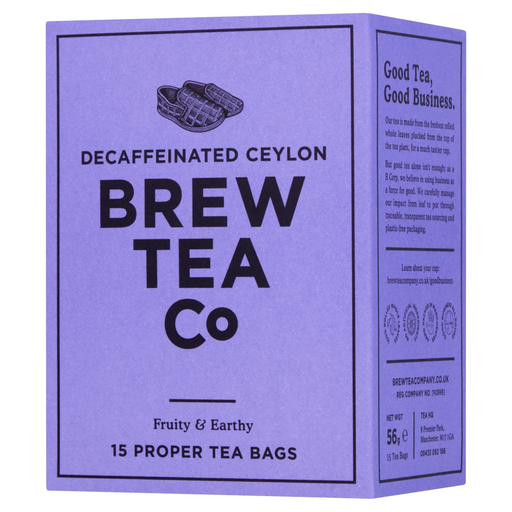
A 15-bag pack is worth considering when expected servings are modest; check that the count will cover the meeting. The listing describes decaffeinated Ceylon tea and a CO2 decaffeination method.
 No image available
If you are considering Yorkshire Tea for the club, check this 250 g pack's serving format and count before planning cups around it. The product description identifies decaffeinated black tea and specifies cool, dry storage.
No. You can choose the tea by blend, serving format and pack count, then use a separate clean, dry, food-safe container if you want a jar on the table. Do not assume a tea-bag pack is supplied in a jar.
Estimate attendees, cups per attendee and how many meetings the pack needs to cover, then compare that with its stated count. The documented options include 40- and 80-bag cartons, 160-bag packs and Clipper's 250-envelope catering format; no one count suits every club.
Do not assume it is. Twinings describes its English Breakfast tea as decaffeinated but gives inconsistent residual-caffeine figures on its product page. Check the particular pack or contact the manufacturer if an exact specification matters.
Food Standards Scotland's September 2024 guidance recommends a daily limit of 200 mg of caffeine during pregnancy and says to count tea alongside other sources. A decaf label alone does not establish the caffeine in a cup, so check the specific product information and seek appropriate professional advice for individual circumstances.
Keep it cool and dry, following the purchased pack's instructions; Clipper specifies cool, dry storage, and the Joybuy Yorkshire Tea listing also says to avoid direct sunlight. If you transfer tea to a serving container, retain the original packaging information, including its best-before date and any allergen details.