Hosts serving a mixed group
If guests have different preferences, start with a conventional decaf black tea and offer milk separately. Yorkshire Tea, PG Tips, Tetley and Tesco have everyday-style options, but their stated brewing methods differ.


For a mixed book-club group, a familiar decaf black tea with clear brewing instructions is a practical starting point. Yorkshire Tea Decaf gives a preparation-specific caffeine figure; Twinings offers a named English Breakfast blend, while Clipper suits a preference for organic and Fairtrade sourcing. Choose the pack size for your attendance, and do not assume that decaf means caffeine-free.
If guests have different preferences, start with a conventional decaf black tea and offer milk separately. Yorkshire Tea, PG Tips, Tetley and Tesco have everyday-style options, but their stated brewing methods differ.
Decaffeinated tea is not necessarily caffeine-free. Yorkshire Tea states an average 1.5–2mg of caffeine for a 200ml cup brewed for five minutes; that figure should not be applied to a differently prepared cup.
Clipper describes its Everyday Decaf as organically grown black tea blended with Assam. Twinings names Assam, Kenyan and Ceylon teas in its English Breakfast Decaffeinated blend. Check the current pack for any sourcing credential that matters to your group.
Settle on a blend style, then check the caffeine statement, brewing instructions and number of bags for the people you expect.
| Priority | What to check | Your needs |
|---|---|---|
| Blend style | Look for an everyday black tea or a named breakfast blend. Twinings identifies Assam, Kenyan and Ceylon teas; flavour descriptions from brands are not independent taste comparisons. | I want a familiar cup for several guests, or a more distinctive English Breakfast option for those who prefer it. |
| Caffeine information | Check both the stated amount and its preparation basis. Yorkshire Tea gives an average 1.5–2mg per 200ml cup brewed for five minutes; Tesco's PG Tips listing gives less than 0.2% caffeine, which is not a comparable per-cup measure. | If someone is monitoring caffeine, I need a statement they can interpret without assuming that decaf contains none. |
| Brewing method | Follow the instructions for the exact pack. Tesco's listings give 1–2 minutes for PG Tips Decaf and 2–3 minutes for Tetley's 80-bag decaf pack. | I need to prepare several cups together without applying one steeping time to every blend. |
| Pack size | Compare the stated bag count with expected attendance and how often the club meets. Check a pack's bag count rather than assuming it from its weight. | For an occasional meeting, I may want fewer bags; a group meeting regularly may use a larger pack. |
| Sourcing | Read the current ingredient and certification statements on the exact pack. Clipper describes organically grown black tea and a CO2 decaffeination method; check its packaging for the Fairtrade credential. | Our group may care about organic ingredients or a particular sourcing credential as well as the type of tea. |
Yorkshire Tea states an average 1.5–2mg for a specified 200ml, five-minute brew. Tesco's PG Tips percentage uses a different measurement basis, so the two statements cannot establish which prepared cup contains less caffeine.
If a guest needs to monitor intake closely, keep the current pack available and use only caffeine information that applies to the product and preparation being served.
Product instructions vary: Tesco's PG Tips listing says 1–2 minutes, while its Tetley 80-bag listing says 2–3 minutes. One fixed time may not produce the cup guests expect from each blend.
Follow the chosen pack's directions and make a small first pot before preparing tea for the whole table.
Food formulations and packaging information can change. A previous online listing is not a substitute for the pack being served when a guest has a strict dietary requirement.
Ask guests to mention relevant requirements in advance and retain the current packaging for them to check.
These references describe particular decaf products and blend styles, not every tea made by each brand.
Yorkshire Tea Decaf is an everyday black-tea option with a caffeine statement tied to a defined brew.
English Breakfast Decaffeinated names Assam, Kenyan and Ceylon teas for guests who want an identifiable breakfast blend.
Organic Everyday Decaf is a black-tea option for groups interested in organic ingredients and the product's sourcing credentials.
PG Tips Decaf is a familiar black-tea option with a short stated brewing time.
Tetley Decaffeinated provides another conventional black-tea choice for a shared table.
Tesco Decaff Original is an own-label black tea listed in an 80-bag pack.
These decaf black teas cover familiar everyday blends, an organic and Fairtrade-labelled option, and different bag counts for book-club gatherings.
 No image available
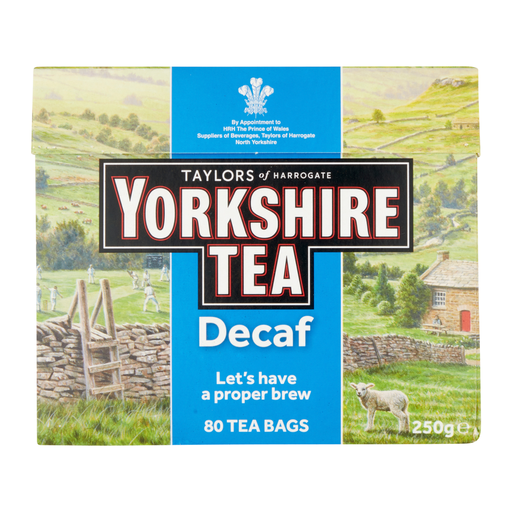
A familiar black-tea choice for a mixed group. Yorkshire Tea states an average 1.5–2mg of caffeine for a 200ml cup brewed for five minutes; the figure applies to that preparation. Check the pack's bag count when planning how many guests it will serve.
 No image available
For a group interested in organic ingredients and Fairtrade labelling, this everyday decaf black tea comes in an 80-bag pack. Check the current packaging for certification details and brewing instructions before making a group pot.
 No image available
An 80-bag decaf black-tea pack for serving a group. Tesco's listing for the 80-bag product recommends a 2–3 minute brew before adding milk. Guests monitoring caffeine should check the current pack rather than assume decaf means none.
 No image available
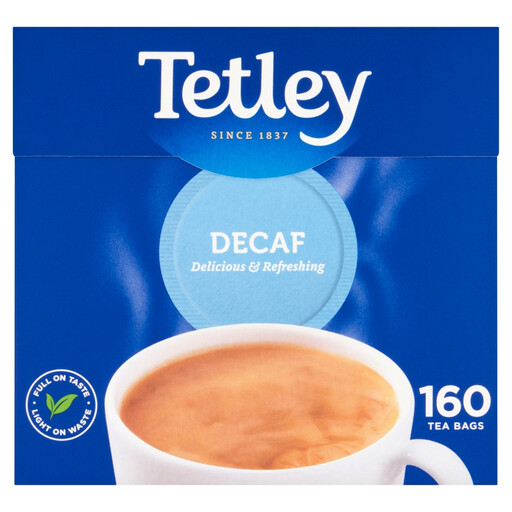
The stated 160-bag pack offers a larger supply of Tetley decaf black tea for repeated meetings. Follow this pack's own brewing directions; do not assume instructions for a different Tetley pack apply to it.
 No image available
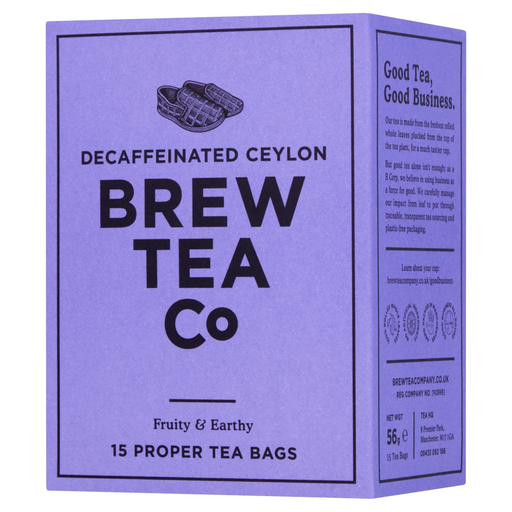
This decaffeinated Ceylon black tea comes in a 15-bag pack, which may suit a smaller gathering. Check the current pack for brewing directions and any caffeine information guests need; the product name alone cannot establish a prepared cup's caffeine content.
No: decaf should not be treated as proof of zero caffeine. Yorkshire Tea states an average 1.5–2mg in a 200ml cup brewed for five minutes. Tesco's PG Tips listing instead states less than 0.2% caffeine, so those figures cannot be compared as prepared cups.
Start with a familiar decaf black tea whose brewing instructions suit group serving. Yorkshire Tea Decaf is an option when preparation-specific caffeine information matters; choose a pack with enough bags for expected attendance, and offer milk separately.
Both Yorkshire Tea Decaf and Twinings English Breakfast Decaffeinated are black-tea options to consider. Twinings explicitly suggests a splash of milk with its blend; serve milk on the side so guests can choose for themselves.
Use the directions on the exact pack rather than one timing for every tea. Tesco's listings recommend 1–2 minutes for PG Tips Decaf, 2–3 minutes for Tetley's 80-bag product and a 4–5 minute pot brew for Tesco Decaff Original. Try a small pot before making a larger round.
Yes. Check the current ingredients and allergen information on the physical pack before serving someone with a strict requirement, as food product information can change. Keep the packaging available for guests to read.