For a black tea with milk alongside a full English breakfast, start with a decaffeinated English Breakfast blend: Twinings describes its English Breakfast Decaffeinated as a robust blend made for that style of cup. If you prefer your usual everyday tea, compare everyday decaf black teas instead; check the exact pack’s caffeine statement, because decaf does not necessarily mean caffeine-free.
Who is this for?
The choice depends on whether your breakfast priority is a traditional black-tea style, a familiar everyday cup or particular product credentials.
Breakfast-tea drinkers reducing caffeine
If you take milk with tea beside a cooked breakfast, a decaffeinated English Breakfast blend is a starting point. An everyday decaf black tea may suit you better if you want a cup closer in style to your usual household tea.
Households keeping track of caffeine
Decaf black tea lets you keep a familiar tea-making routine, but the caffeine declaration belongs to the specific product. Read the pack rather than assuming that ‘decaf’ means no caffeine.
Shoppers checking organic and Fairtrade claims
If those credentials matter alongside a decaf black tea, Clipper identifies its Organic Everyday Decaf as organic and Fairtrade. Check the claims on the exact pack you choose.
What should you check?
Choose the style of black tea you want with breakfast, then check the caffeine wording and the details of the particular pack.
| Priority | What to check | Your needs |
|---|
| Breakfast-tea style |
Look for a named decaffeinated English Breakfast blend if that style matters. Twinings describes its English Breakfast Decaffeinated as a robust black-tea blend and its English Breakfast range as suitable with milk. |
I take milk with tea beside a cooked breakfast and want a recognisable breakfast-tea style, rather than choosing by the word ‘decaf’ alone. |
| Residual caffeine |
Read the exact pack’s caffeine declaration and ingredients. The cited PG Tips product states less than 0.2% caffeine; cited Tetley and Twinings products state decaffeination to 0.2%. Those statements are product-specific, not zero-caffeine guarantees. |
If I need to keep track of caffeine, I want to know what the tea I am buying actually says, rather than treating every decaf as caffeine-free. |
| Product credentials |
Check organic and Fairtrade claims separately on the chosen product. Clipper identifies its Organic Everyday Decaf as both; a stated decaffeination method is a different claim. |
Organic ingredients or Fairtrade sourcing matter to me, even though neither tells me how strong the tea will taste with breakfast. |
| Pack and brewing |
Check the tea-bag count, net weight and brewing directions for the exact format. Tesco’s listings give 1–2 minutes for the cited PG Tips decaf and 2–3 minutes for the cited Tetley decaf. |
For regular household breakfasts, I want a pack size that fits how often we make tea and instructions I can follow before judging the cup. |
Common buying mistakes
-
Assuming decaf means no caffeine
The cited decaf black teas carry product-specific declarations of 0.2% or less, rather than a universal zero-caffeine statement. That distinction matters if you need to control your intake closely.
Read the caffeine wording and ingredients on the exact pack. If you need to avoid caffeine, do not rely on ‘decaf’ alone; seek appropriate professional advice about individual requirements.
-
Choosing by the word ‘breakfast’ alone
A named English Breakfast blend describes a style, not a guarantee that every drinker will find it stronger than an everyday decaf.
If you take milk, consider a decaffeinated English Breakfast blend such as the one Twinings describes for that style of cup. If familiarity matters more, try an everyday decaf before committing to a larger pack.
-
Treating different product claims as interchangeable
Organic status, Fairtrade sourcing and a decaffeination method describe different aspects of tea. None by itself establishes how the cup will taste with milk.
Decide which claim matters to you and check it on the exact product: Clipper identifies its Organic Everyday Decaf as organic and Fairtrade, while separately describing a carbon-dioxide process for its cited Organic Decaf Black Tea.
Brand and retailer references
These references distinguish named breakfast blends from everyday decaf teas; brand descriptions are not comparative taste tests or a list of products available in this article’s selection.
Twinings
Twinings presents English Breakfast Decaffeinated as a robust black-tea blend for a traditional breakfast-tea style.
- Twinings describes a blend of Assam, Kenyan and Ceylon teas and states that the product is decaffeinated to 0.2%.
- The brand’s description does not establish that it tastes stronger than other decaf teas.
Yorkshire Tea
Yorkshire Tea positions its Decaf as an everyday black tea rather than a named English Breakfast blend.
- The brand says it developed the blend to retain the character of its tea after decaffeination.
- That flavour description is a brand claim, not a comparison with other products.
PG Tips
The cited PG Tips Decaf is an everyday decaffeinated black tea.
- Tesco’s listing for the 70-bag product states less than 0.2% caffeine and gives a 1–2 minute brewing direction.
- Its smooth, balanced flavour description is product marketing, not independent tasting evidence.
Tetley
The cited Tetley products offer an everyday decaffeinated black-tea route in different pack formats.
- Tesco’s cited 40-bag listing identifies decaffeinated black tea and states decaffeination to 0.2%; its cited Tetley brewing guidance is 2–3 minutes.
- Check credentials and caffeine wording on the particular pack rather than applying one product’s label to every Tetley format.
Clipper
Clipper identifies its Organic Everyday Decaf as an organic and Fairtrade everyday black tea.
- Clipper also describes carbon-dioxide decaffeination for its cited Organic Decaf Black Tea product.
- The Everyday Decaf is not named as an English Breakfast blend; check claims against the exact format you choose.
Tesco
Tesco is a retailer reference for comparing decaf tea listings, rather than a product-specific recommendation here.
- Its cited listings provide ingredients, caffeine wording or brewing directions for particular branded products.
- A decaf category listing does not establish the specifications of a Tesco own-label tea; check its product label before comparing it.
Decaf tea options on Joybuy
These are everyday decaf tea-bag options for a breakfast cup, including familiar black teas and products with stated sourcing or decaffeination details. The selection does not establish which tea will taste strongest with milk.
 Image unavailable
Tetley 80 Decaffeinated Tea Bags 250g
An everyday decaf black tea for a cup with milk at breakfast. The listing specifies 80 bags, 250g and a 2–3 minute brew; check the current pack’s caffeine wording if you need a particular limit.
 Image unavailable
Clipper Organic Fairtrade Decaf Everyday 80 Tea Bags 277g
Consider this everyday decaf black tea if organic and Fairtrade claims matter to you. The pack is labelled as 80 tea bags and 277g; check its caffeine statement on the current pack if you need a particular limit.
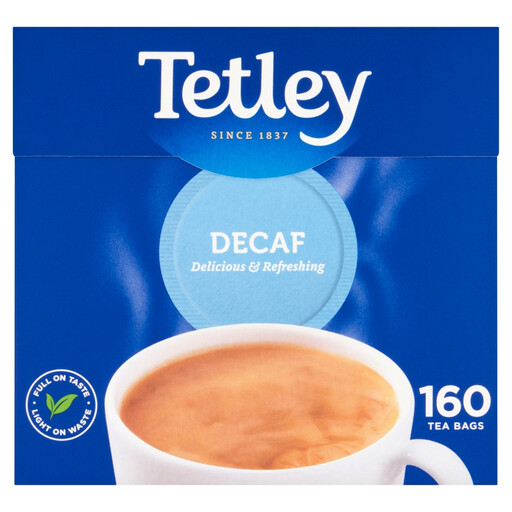 Image unavailable
Tetley 160 Decaf Tea Bags 500g
A larger everyday decaf black-tea format for a household that makes tea regularly. The title specifies 160 bags and 500g; check this pack’s own brewing and caffeine directions rather than assuming they match another Tetley format.
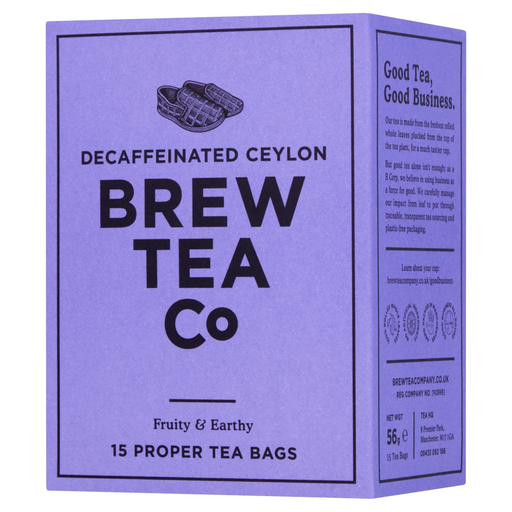 Image unavailable
Brew Tea Co CO2 Decaffeinated Tea, 15 Tea Bags, 56g
The listing describes decaffeinated Ceylon black tea and a CO2 decaffeination method in a 15-bag, 56g format. Its ingredient line says ‘Organic Black Tea’ without the decaf qualifier used elsewhere in the listing, so check the exact pack before relying on its decaf status.
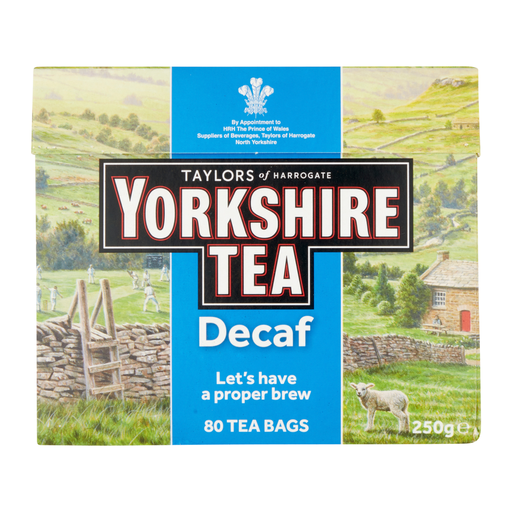 Image unavailable
Taylors of Harrogate Yorkshire Tea Decaf 250g
An everyday decaffeinated black tea to consider if Yorkshire Tea is your familiar household choice. This listing specifies a 250g pack; check its current caffeine statement if you need a particular limit.
Questions about decaf tea
Is decaf black tea caffeine-free?
Not necessarily. The cited PG Tips, Tetley and Twinings black teas use product-specific declarations of 0.2% caffeine or less, so read the exact pack rather than assuming ‘decaf’ means zero. Twinings distinguishes fruit and herbal infusions from tea made with tea leaves.
Which decaf style goes with a full English breakfast?
Start with a decaffeinated English Breakfast blend if you want a traditional black-tea style with milk: Twinings describes its English Breakfast Decaffeinated in those terms. Choose an everyday decaf such as Yorkshire Tea, PG Tips or Tetley if familiarity with your usual tea matters more than a named breakfast blend.
How long should I brew decaf tea?
Follow the instructions for your particular tea rather than applying one time to every decaf. Tesco’s cited PG Tips Decaf listing gives 1–2 minutes, while its cited Tetley decaf guidance gives 2–3 minutes.
Do organic and Fairtrade tell me how much caffeine a tea contains?
No. They describe different product credentials, not a caffeine measurement. Clipper identifies its Organic Everyday Decaf as organic and Fairtrade; check caffeine wording separately on the exact pack.


