Car boot sale refreshment organisers
Choose a pack you can keep dry and portion for the expected number of cups. If you use a separate container, keep the original packaging nearby so its product information remains available.


Choose a decaf tea-bag pack according to how many cups you expect to serve: a larger pack suits repeated servings, while individual envelopes make a small self-serve table easier to organise. Treat a jar as storage rather than a substitute for the tea’s packaging, and keep the original pack available for product information.
Choose a pack you can keep dry and portion for the expected number of cups. If you use a separate container, keep the original packaging nearby so its product information remains available.
Individual envelopes are worth considering when visitors will pick up their own tea bag and you expect relatively few servings.
Look for a product explicitly labelled decaffeinated. If complete caffeine avoidance matters, do not assume that the word “decaf” means caffeine-free.
Estimate servings before choosing a pack size, then check how you will store, identify and prepare the tea at the stall.
| Priority | What to check | Your needs |
|---|---|---|
| Pack format | Compare the stated bag count with expected cups. Check whether bags come in individual envelopes if visitors will help themselves. | I expect repeated servings and can keep a larger pack dry, or I would rather set out individual portions for a smaller table. |
| Decaf labelling | Check the exact tea type and decaffeination wording on the pack. Do not treat “decaf” alone as a caffeine-free claim. | I want to offer a decaffeinated choice without promising guests that it contains no caffeine. |
| Storage and information | Keep tea dry and retain its original packaging alongside any clearly labelled jar or canister. Check the pack for ingredients, allergens and date information. | A container would help organise my stall, but people still need access to the product information. |
| Preparation | Read the chosen pack’s brewing instructions and make them available to anyone preparing drinks. Clipper gives a 2–4 minute brew time for its Organic Everyday Decaf catering pack. | Several people may make tea during the sale, so I want them to follow the same product instructions. |
A guest who needs to avoid caffeine completely may rely on that distinction. Twinings describes its English Breakfast product as decaffeinated, but its product page gives inconsistent precise caffeine figures.
Check the current physical pack and seek clarification from the manufacturer if an exact caffeine statement is necessary.
Decanting can separate the tea from its ingredient, allergen and date information.
Label the container clearly and keep the original pack available at the serving area.
A 250-count pack offers more portions than a 20-envelope pack, but may leave tea unused after a small sale.
Estimate likely cups first, then choose a pack count and format that fit how visitors will be served.
The Food Standards Agency says people who supply or sell food at community events may be considered food businesses, depending on their activity.
Ask the organiser and the relevant local authority what applies to your refreshment setup before the sale.
These are format references, not a comparison of flavour or a list of products available in the Joybuy selection below.
Yorkshire Tea offers a decaf black-tea blend; Tesco Groceries lists a 160-bag format.
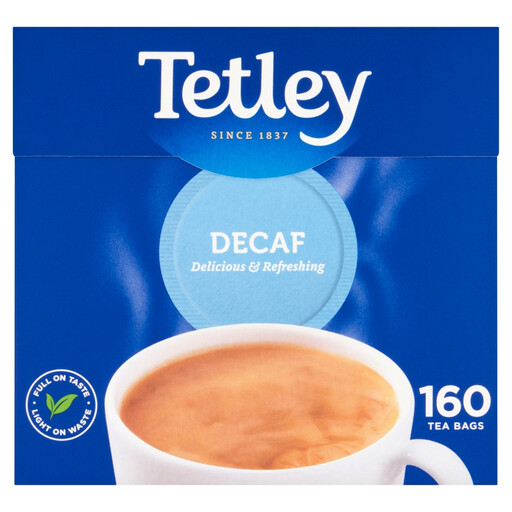
Tetley has a 160-bag decaf black-tea product identified by Joybuy.
Tesco Groceries lists PG Tips decaf black tea in 70- and 160-bag formats.
Twinings offers English Breakfast Decaffeinated in a 20-envelope pack.
Clipper lists an Organic Everyday Decaf catering product with 250 tea portions.
These decaf tea products offer stated pack sizes for planning refreshments; the selection includes both black tea and green tea. Check the individual pack if envelope format or detailed brewing instructions matter to your setup.
 No image available
The stated 80-bag count gives you a quantity to plan around for a moderate serving run. Check the pack if individual wrapping or an exact caffeine statement matters.
 No image available
This 80-bag pack offers a stated quantity for a moderate serving run. Check its own pack for brewing directions and whether the bags are individually wrapped.
 No image available
The 160-bag count suits a plan involving repeated servings, provided it fits expected demand. Joybuy identifies the ingredients as decaffeinated black tea and advises cool, dry storage; check the pack for brewing directions.
 No image available
This is a 50-bag decaffeinated green tea, rather than the black tea in the other Tetley packs shown here. Check that the tea type suits your guests and follow the pack’s hot-brewing directions.
 No image available
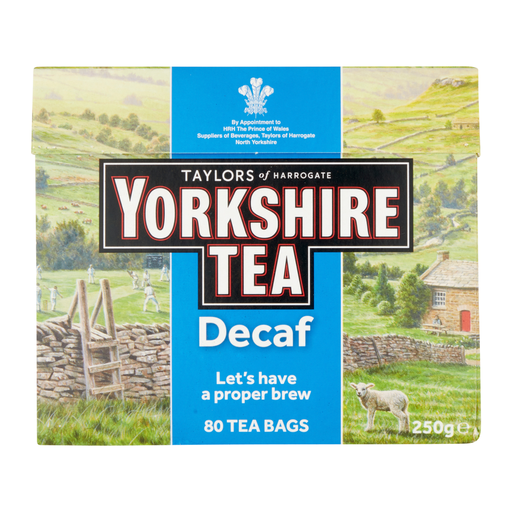
This decaf black-tea option states a 250g net weight. Check the physical pack for its bag count before estimating how many cups it will provide, and for brewing directions before serving.
Choose the tea itself by its pack format and expected servings; use a clean, dry, labelled jar or canister only if it helps you store or organise it. Keep the original tea packaging alongside the container for ingredients, allergens and date information.
Choose a larger pack when you expect repeated servings and can keep it dry; Clipper lists a 250-count catering product, while Tesco Groceries lists several 160-bag decaf teas. Twinings’ 20-envelope English Breakfast Decaffeinated pack is a smaller option for guests choosing their own portion.
Do not assume so from the word “decaf” alone. Check the current pack or ask the manufacturer if a guest needs an exact caffeine statement; the Twinings page for English Breakfast Decaffeinated gives inconsistent precise figures.
Keep each tea’s original packaging at the serving area, particularly if you put bags in another container. That lets you check the specific product’s ingredients, allergen information, date and preparation instructions rather than relying on the jar label alone.
Yes—ask the organiser and your local authority what applies to the way you will supply or sell refreshments. The Food Standards Agency says supplying or selling food at community events can bring food-business requirements into consideration; Food Standards Scotland also advises event organisers to keep preparation areas and equipment clean.