Care-home catering teams
Teams choosing an everyday decaf black tea for shared service need a pack size that suits turnover without losing sight of residents’ established preferences.


Choose a decaf tea style residents want to drink, then match the pack size to regular demand. Decaf is not necessarily caffeine-free, so check the exact product when residual caffeine matters. For a resident with a swallowing plan, prepare the finished drink to that individual plan rather than relying on the choice of tea bag.
Teams choosing an everyday decaf black tea for shared service need a pack size that suits turnover without losing sight of residents’ established preferences.
Where a resident has requested less caffeine, staff need to distinguish decaffeinated tea from a caffeine-free drink and check information for the exact product served.
The resident’s documented fluid-consistency requirements govern preparation. South Tees Hospitals NHS Foundation Trust advises that thickened fluids follow speech and language therapist or doctor advice, with the required level and dosage recorded in the care plan.
Start with the drinks residents prefer and the way each drink must be served; use pack size and product information to narrow the options.
| Priority | What to check | Your needs |
|---|---|---|
| Familiar drinks | Ask which tea styles residents prefer. Check whether they need assistance, a particular vessel or a serving temperature specified in their plan. | I want residents to have drinks they recognise and will choose. NHS North East London’s care-home hydration guidance emphasises regular opportunities and support to drink. |
| Residual caffeine | Check the exact product and how any figure is measured. Yorkshire Tea reports 1.5–2 mg per 200 ml cup brewed for five minutes; Tesco Groceries lists Tetley’s 160-bag decaf tea as decaffeinated to 0.2%. These are different measures. | Where someone has asked for lower caffeine, I need product information rather than assuming that “decaf” means none remains. |
| Swallowing plan | Follow the individual care plan and clinical advice, including the fluid level and thickener dosage if prescribed. Do not choose or change a thickness on the basis of the tea brand. | The finished tea must meet a resident’s documented requirements. South Tees Hospitals NHS Foundation Trust says thickened fluids should be given only following speech and language therapist or doctor advice. |
| Pack size | Compare bag count with actual demand and storage space. Yorkshire Tea lists 40-, 80- and 160-bag decaf formats; Tesco Groceries lists Tetley’s 160-bag, 500 g format. | For a regularly requested black tea, a larger box may mean fewer replacements. I would try a less-requested style in a smaller quantity before making it routine. |
| Range of choice | Consider another decaf style where residents request one, and keep ordinary, decaf and other drinks clearly distinguishable during service. | I need more than one drink option when preferences differ. For regulated services in England, the Care Quality Commission’s Regulation 14 guidance requires providers to take account of people’s preferences and religious and cultural backgrounds when providing food and drink. |
Small amounts can remain. Yorkshire Tea’s brewed-cup estimate and the 0.2% decaffeination information given for Twinings and Tetley do not describe caffeine in the same way.
Use the wording for the exact tea being served, including its brewing basis where stated. If avoiding caffeine entirely is required, check the ingredients of an alternative drink rather than assuming every herbal or fruit blend qualifies.
Changing the tea bag does not determine a safe finished-drink consistency. Wirral Community Health and Care NHS Foundation Trust advises a personalised approach to thickened fluids, including assessment and review.
Follow the resident’s documented plan and seek speech and language therapist or clinician advice rather than thickening tea independently.
A shared everyday decaf may not suit residents who prefer another style or need a different way of being served a drink.
Ask residents about preferences and try alternatives in quantities that reflect demand. In England, the Care Quality Commission’s Regulation 14 guidance requires food and drink provision to take account of assessed needs and personal, religious and cultural preferences.
A slow-moving variety also takes up storage space and may remain unused.
These brand ranges illustrate different tea styles and pack formats; a range description does not establish which drink an individual resident will prefer.
Decaf black tea offered in 40-, 80- and 160-bag formats, according to Yorkshire Tea.
Decaf black tea listed by Tesco Groceries in a 160-bag, 500 g format.
A decaf black-tea option listed by Tesco Groceries in a 160-bag format.
A decaf range spanning black-tea styles and green tea, according to Twinings.
Decaf black tea that includes a 250-envelope catering product listed by Clipper Tea Shop.
Tesco Groceries lists an 80-pack Tesco Decaff Original Tea alongside named decaf brands.
These options include decaf black tea for regular service and a decaf green tea for residents who prefer that style. Match the pack to demand, and follow individual drink-service plans regardless of the product chosen.
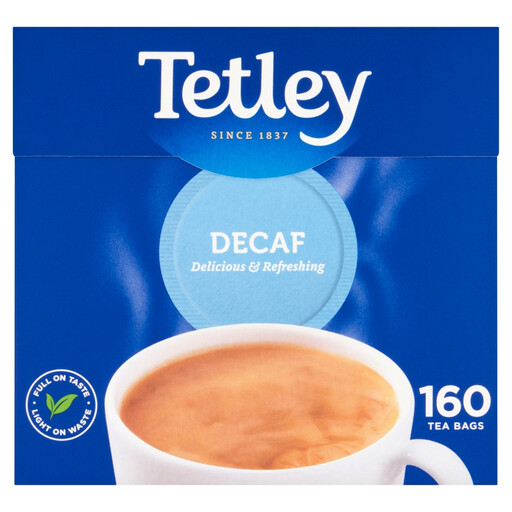 No image available
A decaf black-tea pack to consider for regular shared service where residents request it. Tesco Groceries lists this 160-bag Tetley product as decaffeinated to 0.2%; that is not a caffeine-per-cup figure. Check the pack’s brewing directions before routine service.
 No image available
A green-tea choice for residents who prefer it to decaf black tea. The named pack contains 50 tea bags and weighs 100 g. Check its preparation directions and product-specific caffeine information if either affects service.
 No image available
An 80-bag decaf black-tea option to consider where that pack size suits demand. The organic and Fairtrade wording is a product-listing claim; check it against any procurement requirements. Check the pack for preparation and residual-caffeine information when needed.
 No image available
An 80-bag decaf tea pack to consider for a trial or lower-volume service. The named pack weighs 250 g. Check the exact pack information if a resident needs a product-specific residual-caffeine figure; do not treat “decaffeinated” as a promise of zero caffeine.
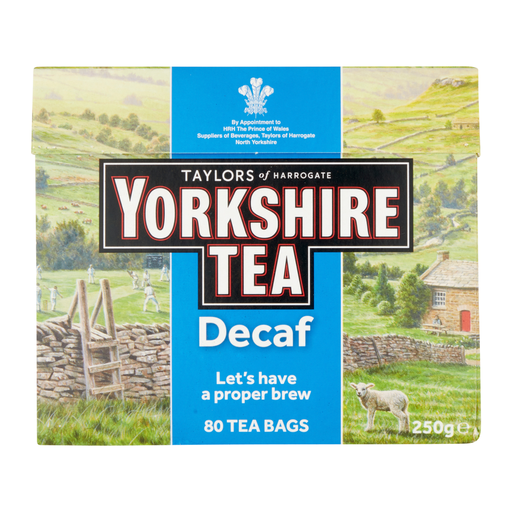 No image available
A decaf black tea to consider where residents prefer that style. The named product weighs 250 g; check the pack format before planning how many drinks it will serve. Yorkshire Tea’s published brewed-cup caffeine figure should not be assumed to describe this specific 250 g listing.
No: small traces can remain. Yorkshire Tea reports 1.5–2 mg caffeine in an average 200 ml cup brewed for five minutes, while Twinings and the Tetley product listed by Tesco Groceries give decaffeination information expressed as 0.2%. Check the exact product when a caffeine requirement matters.
Yes. NHS Humber and North Yorkshire Integrated Care Board’s care-home hydration leaflet includes tea among fluids that count towards intake. An individual care plan may still specify drinking support or monitoring.
Staff should not introduce thickener as a routine response. South Tees Hospitals NHS Foundation Trust says thickened fluids should follow speech and language therapist or doctor advice, with the required level and dosage in the resident’s care plan. Seek clinical advice rather than changing the drink independently.
A shared tea can be part of the drinks offered, but it should not displace individual needs and preferences. For regulated services in England, the Care Quality Commission’s Regulation 14 guidance requires providers to meet people’s nutrition and hydration needs and take account of personal, religious and cultural preferences.
Consider a larger box when residents regularly request that tea and the home can use and store the pack appropriately. Yorkshire Tea lists 40-, 80- and 160-bag decaf formats, and Tesco Groceries lists a 160-bag Tetley decaf pack; try less-requested styles in quantities that reflect demand.