Hosts serving a mixed group
Start with a recognisable decaf black tea for guests who expect a conventional cup. Add a second drink when you know the group wants another flavour or a caffeine-free option.


For a coffee morning, start with one familiar decaf black tea if guests expect a conventional cup, and add another blend only for a known flavour or organic preference. If someone needs to avoid caffeine altogether, offer a separately labelled herbal, fruit or rooibos infusion and check its ingredients: decaffeinated tea can retain traces of caffeine.
A small choice works better when each drink serves a distinct preference: a familiar black tea, a different flavour or an infusion for someone avoiding caffeine.
Start with a recognisable decaf black tea for guests who expect a conventional cup. Add a second drink when you know the group wants another flavour or a caffeine-free option.
An everyday, English Breakfast or Earl Grey decaf keeps the choice within familiar tea styles. Decaffeination removes most caffeine, but traces can remain, as Twinings explains for decaffeinated tea.
A herbal, fruit or rooibos infusion offers a different route from decaffeinated black or green tea. Check the complete blend for caffeine-containing additions such as mate or guarana before serving it.
Decide whether the main drink should taste like conventional tea, then check caffeine status, ingredients and the number of bags you are likely to use.
| Priority | What to check | Your needs |
|---|---|---|
| Familiar tea style | Look for decaffeinated black tea if guests expect an everyday or breakfast-style cup. Check the pack’s brewing and serving directions. | I want a recognisable tea that guests can choose with or without milk, rather than making an infusion the only option. |
| Caffeine status | Distinguish decaffeinated tea from herbal, fruit and rooibos infusions. Twinings notes that minor traces of caffeine can remain in decaf tea; check an infusion’s full ingredients for additions such as mate or guarana. | Someone needs to avoid caffeine, not merely reduce it, so I need a clearly identified alternative to decaf black tea. |
| Flavour choice | Check the exact tea style rather than assuming every decaf tastes alike. Twinings lists decaffeinated English Breakfast, Earl Grey and green tea among its UK options. | If guests regularly ask for Earl Grey or another particular style, a second box has a purpose; otherwise one familiar tea may suffice. |
| Ingredients | Read the current pack’s ingredients, allergen information and any relevant dietary statement. Keep the packaging available when serving several drinks. | Guests need to identify what is in their own cup; a label such as ‘decaf’, ‘herbal’ or ‘vegan’ cannot answer every ingredient question. |
| Pack size | Compare the stated bag count with expected attendance and whether the remaining tea will be used. A smaller speciality pack may serve a different purpose from a larger everyday pack. | I would rather open an extra variety for a known preference than leave several partly used boxes after a small gathering. |
Decaffeinated black or green tea can retain traces of caffeine, according to Twinings. That distinction matters when a guest is avoiding caffeine rather than simply drinking less of it.
Offer a clearly identified herbal, fruit or rooibos infusion for that guest, and check the full ingredients for additions such as mate or guarana.
A second style is useful when it meets a known need, but several opened boxes may be left over after a small gathering.
Choose one familiar decaf black tea first. Add a flavoured decaf, an organic option or an infusion when guests’ preferences give you a reason to do so.
Consider whether you will use the remaining bags after the event, particularly before opening a larger pack.
Ingredients and allergen information apply to the individual product, not to every decaf or herbal tea. Guests cannot check a particular blend from its category name alone.
Keep its box or envelopes available, and let guests read the current ingredient and allergen information before choosing.
These brand references illustrate different tea styles and pack formats; check the particular product rather than assuming every tea in a range is decaffeinated.
A familiar black-tea reference for the main coffee-morning choice. Joybuy identifies a Yorkshire Tea Decaf pack of 40 tea bags, weighing 125 g.
A range to consider when guests want a particular tea style as well as a standard decaf black tea.
An organic-preference route that still offers a black-tea format.
A conventional decaf tea option for hosts considering an everyday format.
A further decaf black-tea reference for hosts comparing larger pack formats.
Tesco Groceries’ decaf-tea listing provides a place to compare listed brands and pack formats.
These options include decaf teas in different bag counts and a lemon-and-ginger infusion for guests who want a different kind of drink. Choose by the preferences at your gathering, not by pack size alone.
 No image available
A lemon-and-ginger option to serve alongside decaf black tea. The product description calls it a naturally caffeine-free herbal infusion; check the current ingredients when choosing for someone avoiding caffeine, and do not expect it to taste like black tea.
 No image available
An everyday decaf option when guests expect conventional tea. The 80-bag, 250 g format may suit a shared table or later use; decaf is not a guarantee of zero caffeine, so check the current pack before serving someone who needs to avoid it.
 No image available
Consider this 80-bag, 277 g decaf option when an organic-labelled everyday tea is a stated preference. It remains decaffeinated tea rather than a caffeine-free infusion; check the current ingredients and allergen information for guests.
 No image available
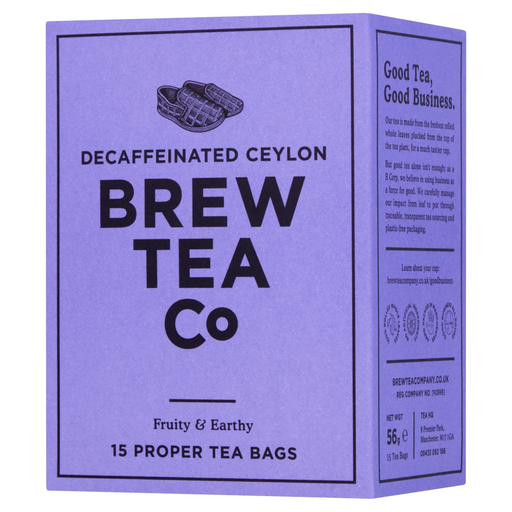
The 15-bag, 56 g format is a smaller second tea option if guests want another black-tea style. Its title identifies it as decaffeinated, while the ingredient wording describes organic black tea; confirm the current pack’s decaffeination and ingredient details before choosing it for that purpose.
 No image available
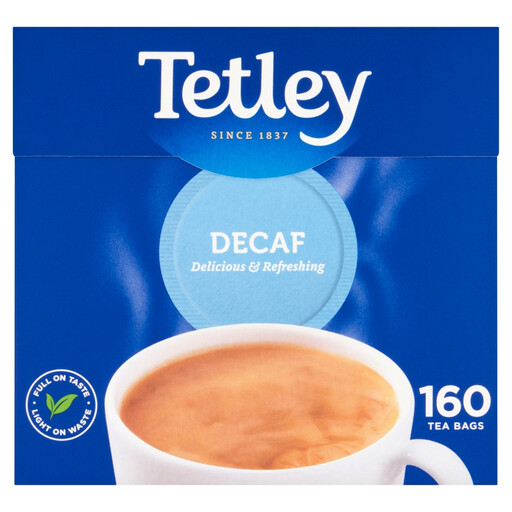
The 160-bag, 500 g pack is worth considering for a larger gathering or if the remaining tea will be used later. It is a decaf choice, not a substitute for checking a caffeine-free requirement; retain the pack for ingredient and allergen checks.
No. Twinings explains that decaffeinated tea can retain minor traces of caffeine. Herbal, fruit and rooibos infusions offer a different option, but check each blend for caffeine-containing additions such as mate or guarana.
One familiar decaf black tea is a practical starting point when guests expect conventional tea. Add a flavoured decaf or an infusion if you know someone wants that distinction; consider whether you will use any remaining bags before opening several boxes.
Yes. The original boxes or envelopes let guests check the particular blend’s ingredients and allergen information. Do not infer suitability for an allergy or dietary requirement simply from a ‘decaf’ or ‘herbal’ label.
Match the bag count to expected attendance and whether you will use the tea afterwards. A larger everyday pack may make sense for repeat use, while a smaller pack can provide a second style without opening as many bags.