Conference organisers planning self-service breaks
Estimate how many decaf cups guests may take across the full programme, then allow for storage and replenishment between breaks.


Choose a decaf black-tea pack by estimating servings across every conference break: Twinings lists 20 envelopes for a small separate selection, ASDA lists Tetley in a 160-bag pack, and Clipper Tea Shop lists 250 envelopes for catering. A larger pack makes sense only if expected use justifies it; label decaf separately from caffeine-free drinks and check the delivered tea pack and any milk or alternatives before service.
Estimate how many decaf cups guests may take across the full programme, then allow for storage and replenishment between breaks.
Choose a decaf tea format staff can prepare consistently, and keep information about the tea, milk and any alternatives accessible during service.
Make decaf easy to identify without describing it as caffeine-free. Provide a separately labelled alternative when a guest needs to avoid caffeine altogether.
Work out the number of servings first, then check the delivered product and how the drinks will be presented at each break.
| Priority | What to check | Your needs |
|---|---|---|
| Serving capacity | Count bags or envelopes; estimate decaf cups across all breaks; decide where spare stock will be kept. | I need enough decaf for later breaks as well as the first one, without choosing a large box solely for its size. |
| Caffeine wording | Use the delivered pack’s wording; distinguish decaf from caffeine-free; retain any product-specific brewing conditions when quoting a caffeine figure. | If a delegate asks about caffeine, I need to identify the tea served without promising it contains none. Yorkshire Tea states an average of 1.5mg to 2mg per 200ml cup of its decaf brewed for five minutes. |
| Ingredients and allergens | Check the delivered tea, milk and alternative-drink labels; keep current product information available; follow the venue’s allergen-information procedure. | Someone asking about an ingredient should be able to get an answer for the drinks actually being served, not just for the tea bags. |
| Tea format | Check whether the product is decaf black tea; compare loose bags with individual envelopes; read the pack’s brewing instructions. | For a conventional tea station, I want a decaf black-tea option. Individual envelopes may be more useful for a small, separate decaf tray. |
| Storage and service | Check the pack’s storage directions; allow space for remaining stock; give staff the chosen brewing instructions. | If tea will be used over several breaks or events, I need a practical place to store it and a consistent way to prepare it. |
Decaf can still contain caffeine. Yorkshire Tea states an average of 1.5mg to 2mg per 200ml cup of its decaf when brewed for five minutes.
Label the station “decaf tea”, keep the product information available and offer a separately labelled option for guests who need to avoid caffeine entirely.
A large box may leave unused tea after a small meeting, while a small pack may run out before the final break.
Estimate decaf cups across the programme before comparing formats such as Twinings’ 20 envelopes, Tetley’s 160 bags and Clipper’s 250 catering envelopes.
The information used for planning may not describe the particular pack delivered for the event.
Check its label and current supplier information before service, including the labels of milk, alternative drinks and refreshments supplied alongside the tea.
An attendee’s question may concern the milk or alternative drink served with the tea, rather than the tea bag alone.
Keep the relevant product information accessible and make sure serving staff know the venue’s procedure for answering ingredient and allergen questions.
These brand references show how pack format and product information can affect conference service.
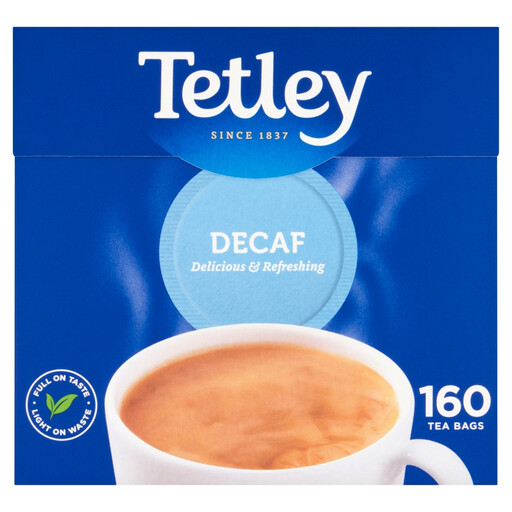
A decaf black-tea option with a listed 160-bag format.
A decaf black-tea option listed by ASDA in a 160-bag, 500g pack.
A decaf black-tea option listed by Tesco in a 160-bag, 464g pack.
English Breakfast Decaffeinated is listed by Twinings as 20 individual envelopes.
Clipper Tea Shop lists Organic Everyday Decaf Tea in a 250-envelope catering format.
Tesco Groceries lists Tesco Decaff Original Tea in an 80-pack, 250g format.
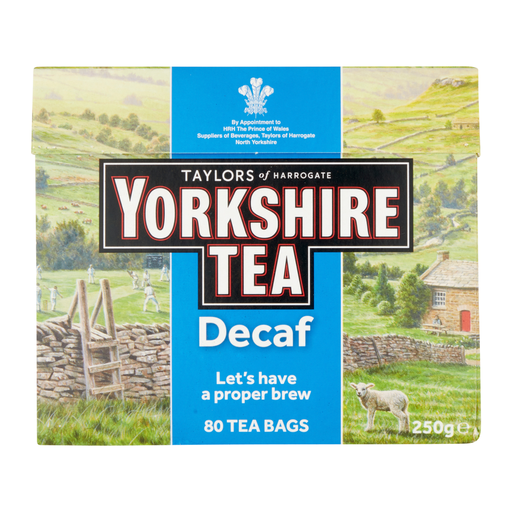
These options include Tetley packs with stated counts of 160 and 80 bags, plus a Yorkshire Tea Decaf 250g pack. Check the Yorkshire Tea pack’s bag count before using it to plan conference servings.
 No image available
The stated 160-bag count gives you a basis for planning a decaf allocation across conference breaks. ASDA’s listing for this product identifies decaffeinated black tea; check the delivered pack before communicating its caffeine content.
 No image available
The stated 80-bag count may suit a smaller decaf allocation or a top-up; compare it with expected cups across every break. Do not describe the tea as caffeine-free on the basis of its decaffeinated name.
 No image available
This 250g decaf pack is another option for the conference tea station. Check its bag count before calculating servings, and confirm the delivered pack’s details before using Yorkshire Tea’s published brewed-cup caffeine figure in guest information.
No. Yorkshire Tea states that a 200ml cup of its decaf averages 1.5mg to 2mg of caffeine when brewed for five minutes. Label the tea as decaf, and offer a separately labelled alternative for anyone who needs to avoid caffeine entirely.
Estimate decaf servings across all scheduled breaks, then compare that estimate with the stated pack count. Twinings lists 20 envelopes, ASDA lists Tetley in a 160-bag pack, and Clipper Tea Shop lists a 250-envelope catering format; the right quantity depends on attendance and expected decaf use.
No. Follow the delivered pack’s instructions and give staff a consistent method for the tea selected. Tetley’s referenced 160-bag listing recommends 2 to 3 minutes, while Clipper’s catering decaf information gives 2 to 4 minutes.
Check the delivered tea, milk and any alternative-drink labels, and keep their product information accessible. Staff should follow the venue’s allergen-information procedure when answering guests’ questions about the drinks served.
Follow the storage directions on the pack and retain its identifying information with the remaining stock. If another event will use the tea, include those remaining bags in the next serving estimate.