For a cream tea served with milk, start with a robust decaffeinated black tea rather than choosing by the word “decaf” alone. Twinings describes its English Breakfast Decaffeinated as a robust blend, and says the English Breakfast style is often enjoyed with milk; an everyday decaf may suit guests who prefer a more familiar cup, but check the particular blend, brewing directions and caffeine statement before serving.
Who is this choice for?
The useful distinction is whether you need a tea for milk service, a familiar everyday brew or a particular sourcing preference.
Hosts serving tea with milk
If guests will add milk alongside scones, cream and jam, begin with a decaffeinated black tea described as robust or full-bodied. Twinings describes its decaf English Breakfast blend as robust and says the English Breakfast style is often enjoyed with milk. Brew a cup as you intend to serve it before settling on a blend.
Everyday black-tea drinkers choosing decaf
A familiar black-tea style may matter more to your guests than a distinctly breakfast-style blend. Yorkshire Tea describes its Decaf as a characterful brew, while the product descriptions for Tetley Smooth Decaf, PG Tips Decaf and Tesco Decaff Original use different terms for their flavour. Those descriptions are a starting point, not a substitute for trying the tea.
Shoppers checking tea sourcing
If sourcing is part of your choice, check the claim on the exact pack. Clipper presents Organic Everyday Decaf as an organic black-tea option, while retailer product information identifies Rainforest Alliance certification for Tetley Smooth Decaf and PG Tips Decaf. These details do not, on their own, tell you how the tea will taste with milk.
What should you check?
Choose the tea style first, then check how you will brew and serve the particular pack.
| Priority |
What to check |
Your needs |
| Body with milk |
Look for a stated black-tea blend and its flavour description. Check whether the maker gives milk-serving guidance; try the brewed tea with the milk you plan to use. |
I want the tea to remain noticeable when guests add milk. Twinings describes its decaf English Breakfast as robust and the English Breakfast style as commonly served with milk. |
| Blend style |
Distinguish English Breakfast decaf from an everyday black-tea blend or a deliberately flavoured tea. Check the named tea ingredients and any added flavourings on the pack. |
A traditional black-tea cup matters more to me than an added flavour; if guests prefer a flavoured tea, I would choose it deliberately rather than assuming every decaf tastes alike. |
| Brewing |
Follow the chosen pack’s water and brewing directions. If you will add milk, compare cups prepared the way you intend to serve them. |
I want to make a consistent pot for guests, not judge one blend after a short infusion and another after a much longer one. |
| Caffeine wording |
Read the exact pack’s caffeine statement and ingredients. Where a precise figure matters to a guest, ask the manufacturer about that product rather than applying a category-wide figure. |
Someone at the table may have a specific caffeine requirement, so I need information for the tea I will actually serve. |
| Sourcing |
Check whether organic, Fairtrade or Rainforest Alliance wording applies to the exact product and pack. Keep this separate from claims about flavour or milk service. |
I would like sourcing information to guide my shortlist, while still choosing a tea style that suits the cream-tea table. |
| Pack size |
Check the tea-bag count or other format and the pack weight. Make sure the format suits the number of guests and any tea you expect to use afterwards. |
For a gathering, I want a clear serving format; for occasional cream teas, I also want a pack size that makes sense for my household. |
What can go wrong?
-
Choosing by the “decaf” label alone
Decaf describes caffeine removal, not whether the tea is a black-tea blend, a flavoured tea or another style. A guest expecting black tea with milk may find a different style an unexpected choice.
For a traditional milk-served cream tea, shortlist decaf English Breakfast or everyday black teas, then try one cup with the milk you will put on the table.
-
Taking flavour descriptions as a taste test
Words such as “robust”, “smooth” and “rich” come from product or brand descriptions. They help distinguish what is being offered but cannot establish which cup your guests will prefer.
Use the blend and brewing directions to narrow the choice, and try the tea before preparing it for a group.
-
Assuming every decaf has the same caffeine content
Products use their own caffeine wording. Twinings’ English Breakfast Decaffeinated product page gives conflicting percentage statements, so neither figure should be treated as a dependable value for a guest’s individual requirement.
Check the current physical pack and ask the manufacturer about the exact product if a precise caffeine figure is needed.
Decaf tea brand references
These descriptions concern the named decaf lines, not every tea made by each brand.
Yorkshire Tea
Yorkshire Tea presents its Decaf as a blend for people choosing less caffeine in an everyday-style brew.
- The brand says it blends the teas to retain character after decaffeination.
- For a milk-served cream tea, check the directions on the chosen pack and try the prepared cup.
Twinings
Twinings English Breakfast Decaffeinated is a named breakfast-style option for shoppers seeking a robust black-tea blend.
- Twinings identifies Assam, Kenyan and Ceylon teas in the decaf blend and says the English Breakfast style is often enjoyed with milk.
- Its product page gives conflicting caffeine percentages; use the current pack and contact Twinings if an exact figure matters.
Tetley
Tetley Smooth Decaf is presented as an everyday decaffeinated black tea.
- Tesco’s description of Smooth Decaf calls its African-origin tea smooth yet robust and well-rounded.
- Those are retailer-carried product descriptions, not an independent comparison of how it tastes beside other blends.
PG Tips
PG Tips Decaf is positioned as a smooth everyday black-tea option.
- The Tesco product listing describes the tea as smooth and balanced and carries product-specific caffeine wording.
- Check the current pack for the directions and caffeine statement that apply to the product you buy.
Clipper
Clipper Organic Everyday Decaf offers an Assam-led black-tea style for shoppers checking sourcing claims.
- Clipper describes this decaf as a full, rich Assam blend made with organically grown black tea.
- A stated sourcing or decaffeination method does not establish how it compares with another tea in taste or suitability with milk.
Tesco
Tesco Decaff Original is an own-label everyday black-tea option.
- Tesco describes this tea as full-bodied, smooth and rounded, and its preparation guidance allows serving it with or without milk.
- Follow the directions on the current pack when preparing it for guests.
Joybuy decaf tea options
These options focus on everyday decaf tea, including packs for a group and organic choices. For a cream tea with milk, check the serving and brewing directions of the particular pack rather than assuming they apply to every decaf blend.
 No image available
Tetley 80 Decaffeinated Tea Bags 250g
The stated 80-bag format gives a cream-tea host a clear pack count for planning a group serving. Check the current pack for preparation directions and its caffeine statement if either matters to your guests.
View on Joybuy
 No image available
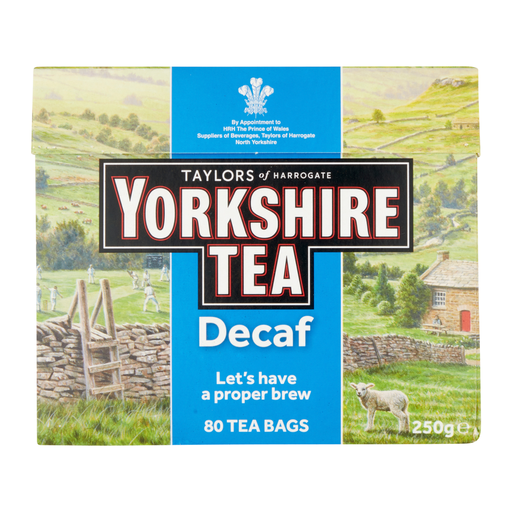
Taylors of Harrogate Yorkshire Tea Decaf 250g
This is a 250g Yorkshire Tea Decaf option for hosts considering a familiar everyday tea style. Before planning a milk-served cream tea around it, check the pack’s format and brewing guidance, and read its caffeine statement if a guest needs a precise figure.
View on Joybuy
 No image available
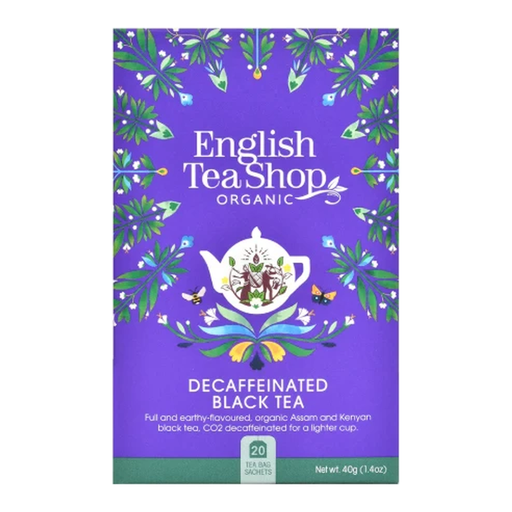
English Tea Shop Organic Decaffeinated Black Tea 20g
The named organic decaffeinated black-tea style may suit a host who wants that sourcing distinction. At 20g, check the pack format and quantity before planning tea for several guests; also check its directions for brewing and serving with milk.
View on Joybuy
 No image available
Clipper Organic Fairtrade Decaf Everyday 80 Tea Bags 277g
The stated 80 tea bags make this a pack-count option for a shared cream tea when organic and Fairtrade sourcing are priorities. Check the physical tea pack for brewing and milk-serving guidance, as well as its caffeine statement if a precise figure is needed.
View on Joybuy
Cream tea questions
Which decaf tea style should I serve with a cream tea?
Start with a robust decaffeinated black tea if guests are likely to add milk. Twinings describes its English Breakfast Decaffeinated as an Assam, Kenyan and Ceylon blend and says the English Breakfast style is often enjoyed with milk. An everyday decaf black tea is another option if that is the style your guests prefer; try it prepared as you plan to serve it.
Should I brew decaf tea for longer to make it stronger?
Follow the directions for the particular tea rather than adding time by default. Brew a test cup using the directions on its current pack, then try it with milk if that is how you will serve it.
Does “decaf” mean the tea contains no caffeine?
Do not use “decaf” as a promise of zero caffeine. Product statements differ: the PG Tips Decaf listing gives its own caffeine figure, while Twinings’ English Breakfast Decaffeinated page gives conflicting percentages. Check the current pack and ask the manufacturer about the exact tea if a precise figure matters.
How should I store decaf tea after opening?
Follow the storage directions on the chosen pack. Tesco advises keeping its Decaff Original Tea in a cool, dry place and using an airtight container after opening; check whether the tea you buy gives the same instructions.


