Hosts serving tea alongside coffee
A decaf black tea gives guests who normally drink tea a familiar option. If you know someone would rather have an infusion, offer that as a separate choice instead of assuming one flavour suits everyone.


For friends who usually drink conventional tea, start with a decaf black tea they can take with milk. Add a different style when you know their preference: Earl Grey or green decaf for a change of flavour, or a suitable herbal infusion for someone seeking a naturally caffeine-free drink. Check the exact pack before serving it to anyone avoiding caffeine, because decaf tea can retain traces.
The useful distinction at a coffee gathering is whether a guest wants familiar tea with less caffeine, a different flavour, or a drink without the black-tea base.
A decaf black tea gives guests who normally drink tea a familiar option. If you know someone would rather have an infusion, offer that as a separate choice instead of assuming one flavour suits everyone.
Decaf black tea retains the character of a conventional tea, but it is not necessarily caffeine-free. Twinings explains that minor traces can remain after decaffeination, so check the wording on the tea being served.
If organic ingredients, Fairtrade sourcing or the decaffeination method matters to a guest, compare the exact product labels. Clipper states that its Organic Decaf Black Tea is organic and Fairtrade and uses a carbon-dioxide decaffeination process; those details should not be assumed for every decaf tea.
Choose the drink style first, then check its caffeine wording and preparation instructions. Pack size matters differently for an occasional visit and for regularly serving a group.
| Priority | What to check | Your needs |
|---|---|---|
| Caffeine wording | Read the exact pack’s caffeine statement and ingredients. Twinings says decaffeinated tea can retain minor caffeine traces; check the ingredients of an infusion rather than assuming every blend is caffeine-free. | I want to offer less caffeine without telling a guest that decaf means none. If avoiding caffeine is important to them, I need a suitable infusion whose ingredients I can check. |
| Tea style | Distinguish everyday decaf black tea from English Breakfast, Earl Grey, green decaf and herbal infusions. Twinings describes its English Breakfast decaf as an Assam, Kenyan and Ceylon blend; flavour descriptions are not a guarantee of preference. | My guests usually take tea with milk, so I want a conventional black-tea option. For someone with a known preference, I would choose that style rather than another everyday blend. |
| Serving and pack size | Follow the instructions for the exact tea: Tesco lists a 1–2 minute brew for PG Tips Decaf 40 Pack. Compare the stated bag count with how often you expect to serve it; do not apply one product’s brew time to another. | When friends arrive without much notice, I want instructions I can follow while making several drinks. A larger pack is relevant if I expect to serve decaf regularly. |
| Ingredients and sourcing | Check the exact product’s ingredient and sourcing statements. Clipper describes its Organic Decaf Black Tea as organic and Fairtrade and states that it uses carbon dioxide for decaffeination; check other packs separately. | Organic ingredients, Fairtrade sourcing or a stated decaffeination method matter to me, as well as whether my guests want a black tea. |
Decaffeinated black tea can retain traces of caffeine. Twinings distinguishes decaffeinated tea from naturally caffeine-free infusions, so the terms should not be used interchangeably when serving a guest.
Read the exact pack’s caffeine wording. If an infusion is needed, check its ingredients too, particularly in blends that may contain caffeine-bearing additions.
Organic or Fairtrade attributes do not tell you whether someone who expects an ordinary tea with milk will enjoy a particular blend.
Keep a familiar decaf black tea available for conventional tea drinkers. Choose a speciality blend when its tea style or sourcing attributes match a stated preference.
Clipper’s Organic Decaf Black Tea comes in a 20-pyramid-bag format, which may mean replacing the pack sooner if you serve it regularly.
Instructions vary by product: Tesco lists a 1–2 minute brew for PG Tips Decaf 40 Pack, while Yorkshire Tea’s general brewing guidance allows more time for its tea to develop flavour.
Follow the pack you are using. For tea brewed directly in a mug, Yorkshire Tea advises adding milk after brewing because milk cools the water.
A retailer’s category page can show several pack formats, but it does not replace the ingredient and caffeine wording for the particular pack you pick up.
Check the individual listing and the pack label, especially when changing retailer or bag count.
These references show the types of tea and product details worth comparing; a brand’s wider range should not be treated as the specification of every pack.
Its Decaf is a conventional black-tea choice for guests who want a familiar cup.
Tetley Original Decaf is another everyday decaf black-tea format.
Its Decaf is an everyday black-tea option with preparation guidance for a listed 40-bag pack.
Twinings offers decaf tea styles for guests who have a more specific flavour preference.
Clipper’s Organic Decaf Black Tea is relevant when stated sourcing attributes and decaffeination method matter.
Tesco is a retailer reference for comparing individual decaf tea listings, not a tea-style recommendation.
These options include decaf tea for guests who want a conventional cup or stated sourcing attributes, plus a peppermint infusion for a different kind of drink. The peppermint infusion is not decaf black tea.
 No image available
A decaf tea-bag option when several friends want a conventional tea alongside coffee. The stated pack contains 160 bags and weighs 500g. Check the pack’s caffeine wording if a guest needs to avoid caffeine; decaf does not necessarily mean caffeine-free.
 No image available
A decaf tea choice when the stated organic and Fairtrade attributes matter to your guests. This pack specifies 80 tea bags and 277g. Follow its own brewing instructions and check its caffeine wording if either is important for serving.
 No image available
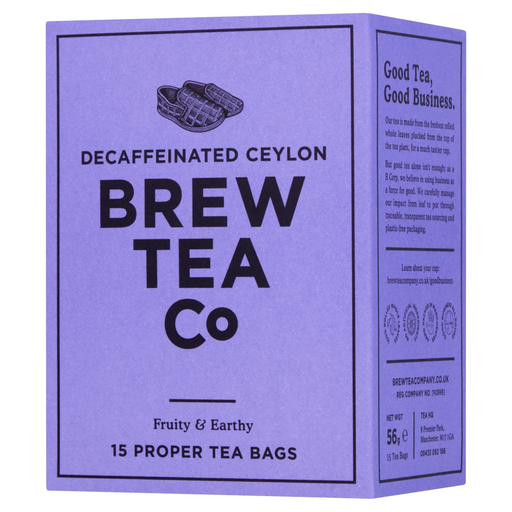
A smaller stated pack for offering decaf tea to occasional guests: the title specifies 15 tea bags and 56g and identifies CO2 decaffeination. Check the exact pack’s caffeine statement rather than assuming decaffeination guarantees none remains.
 No image available
A familiar decaf tea option for guests who would otherwise take a conventional cup of tea. This listing identifies a 250g pack. Check its bag count, brewing instructions and caffeine wording on the exact pack before planning servings.
 No image available
A peppermint infusion for a guest who would prefer something other than black tea. The title specifies an 80-pack. It is a different drink style from decaf tea, so check the pack’s ingredients and brewing directions before serving.
No. Twinings explains that minor caffeine traces can remain in decaffeinated tea. If a guest is seeking a naturally caffeine-free drink instead, choose an appropriate herbal or fruit infusion and check its ingredients; do not rely on the word “decaf” as a zero-caffeine promise.
A decaf black tea bag with clear instructions is a straightforward option for guests who normally drink tea. Tesco lists a 1–2 minute brew for PG Tips Decaf 40 Pack, but follow the instructions on the product you actually serve. If brewing in a mug, Yorkshire Tea advises adding milk after the tea has brewed.
One familiar decaf black tea may be enough when guests have not expressed another preference. Add a contrasting infusion if someone prefers a non-black-tea flavour or asks for a naturally caffeine-free option, checking the ingredients of the particular blend.